Sign-up and sign-in
Users complete registration quickly via email and can start using the app right away.
Cybersecurity · Mobile app
LiMP VPN is a mobile VPN service for iOS and Android built for the mass consumer market. It's a B2C product for user privacy and security: traffic encryption, a no-logs policy and one-tap connection. The service already runs on iOS and Android and is available to users across the CIS countries.
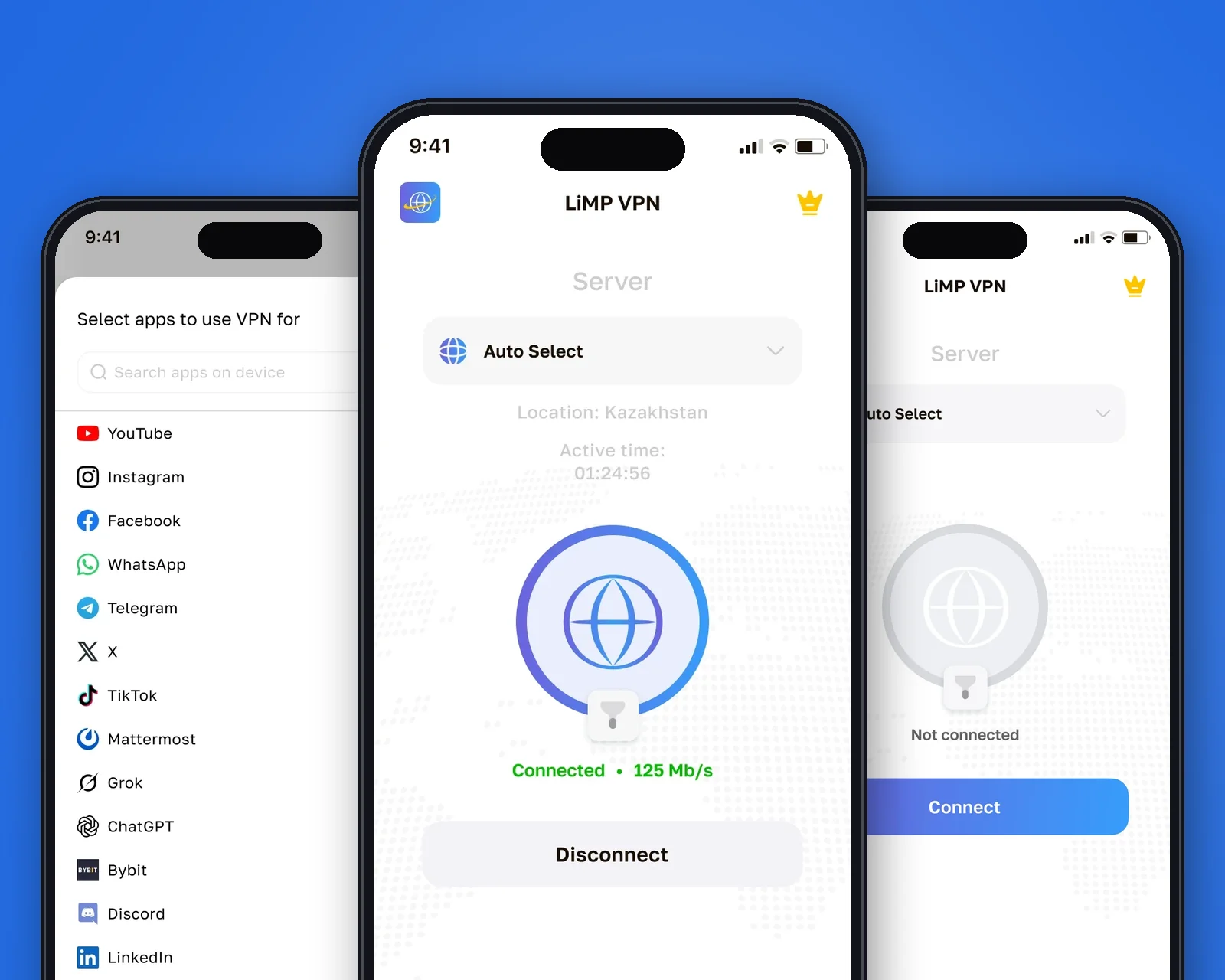
In short: what the product is and who we built it for.
LiMP is a consumer VPN that hides all the complexity of encryption behind a single button. We designed it not as a corporate tool with a dozen settings, but as a mass-market B2C product: a person downloads the app, signs up with an email, and gets a protected connection in one tap — no manuals, no configs.
The product monetizes through subscriptions, so recurring billing, a premium tier and in-app auto-renewal were built in from day one. The audience is users across the CIS countries, for whom privacy on public networks and a clear, localized interface with local-currency payment matter.
The team's task was to build a reliable mobile VPN with recurring monetization (subscriptions) that solves users' key problems:
Security threats on public Wi-Fi and open networks.
Lack of privacy — traffic interception by internet providers and tracking by ad networks.
Anonymity to protect against surveillance and deanonymization.
How we built the product, from architecture to process.
We went with native clients: iOS in Swift and Android in Kotlin. This gives direct access to system VPN APIs — iOS NetworkExtension and Android VpnService — a stable background tunnel and minimal battery drain, which is critical for a service that keeps a connection running constantly. A shared backend on PHP Symfony handles accounts, server infrastructure and subscription billing.
The key engineering decision was a WireGuard-compatible stack instead of OpenVPN: compact code, a fast handshake and modern ciphers. Work followed Scrum in short sprints — analysis and threat modeling, B2C interface design, MVP development across all platforms, then billing and store publication. This order let us bring the core to market quickly and grow features iteratively.
Tools chosen to fit the product’s goals.
 SwiftiOS native app
 KotlinAndroid native app
 PostgreSQLAccount data
 DockerInfrastructure
For a mass-market mobile VPN, a WireGuard-compatible stack outperforms OpenVPN on power consumption, handshake speed and audit surface: roughly 4,000 lines of code versus about 600,000 for OpenVPN. Modern ciphers — Curve25519 and ChaCha20-Poly1305 — integrate with iOS NetworkExtension and Android VpnService using standard tools, and the handshake takes under a second even when switching networks.
Code-size estimates and protocol characteristics are based on publicly available WireGuard and OpenVPN data and fit within industry benchmarks.
Key capabilities that solved the business problem.
Users complete registration quickly via email and can start using the app right away.
Behind a simple interface sits real data protection: traffic encryption on a WireGuard-compatible stack (Curve25519, ChaCha20-Poly1305).
Quick access to all app features and key documentation, plus a link to support.
The flexibility of split tunneling — users decide which apps use the VPN. Easy to toggle right from the menu.
Comparative traffic and speed stats, unlimited session time, automatic server reconnection, and an in-app premium subscription purchase.
Key product screens, step by step.
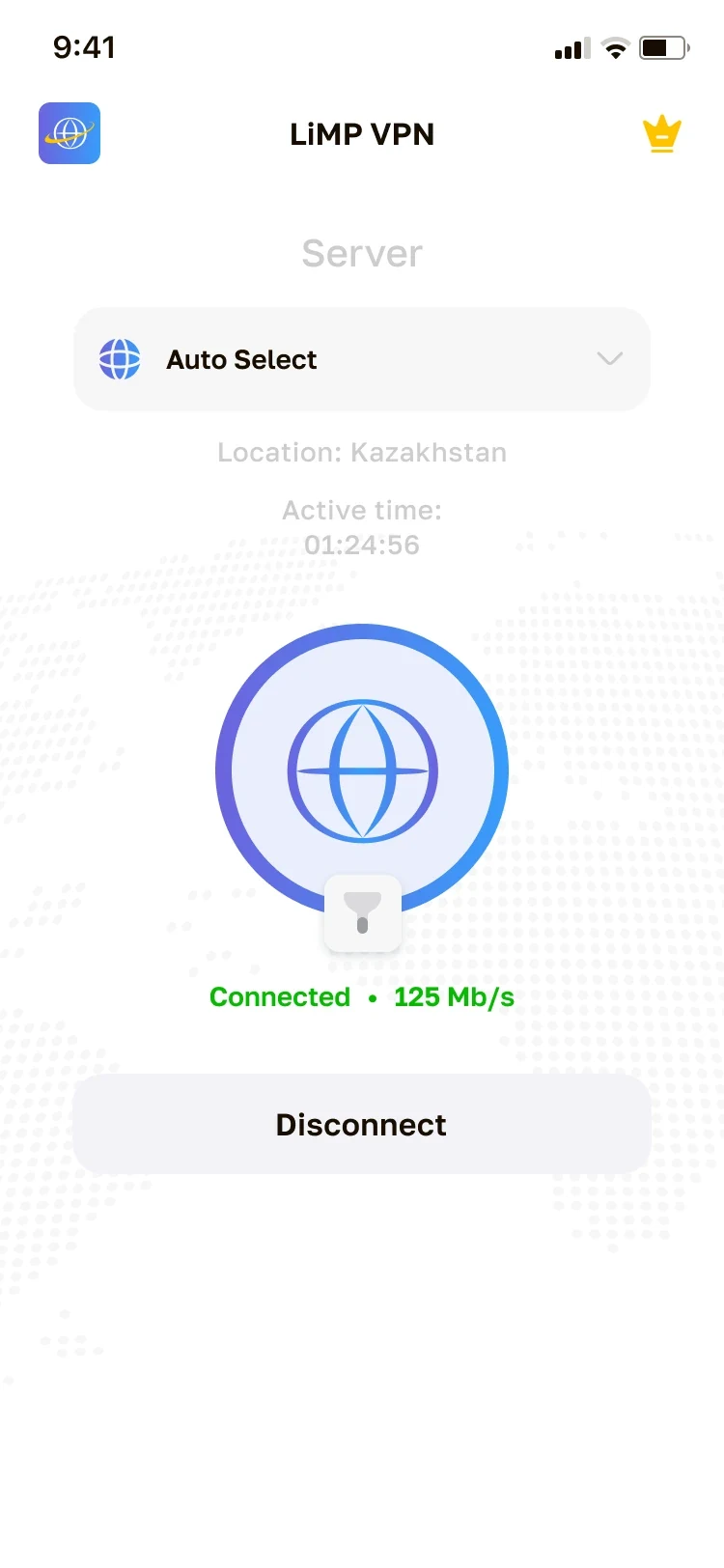
The main screen is built around a single large connect button: behind the simple interface is traffic encryption on a WireGuard-compatible solution (Curve25519, ChaCha20-Poly1305). Users pick a server and connect in one tap, with a handshake under a second even when switching networks.
Sign-up happens via email — right after that, the app is ready to use. A quick menu gives access to all features, documentation and support.
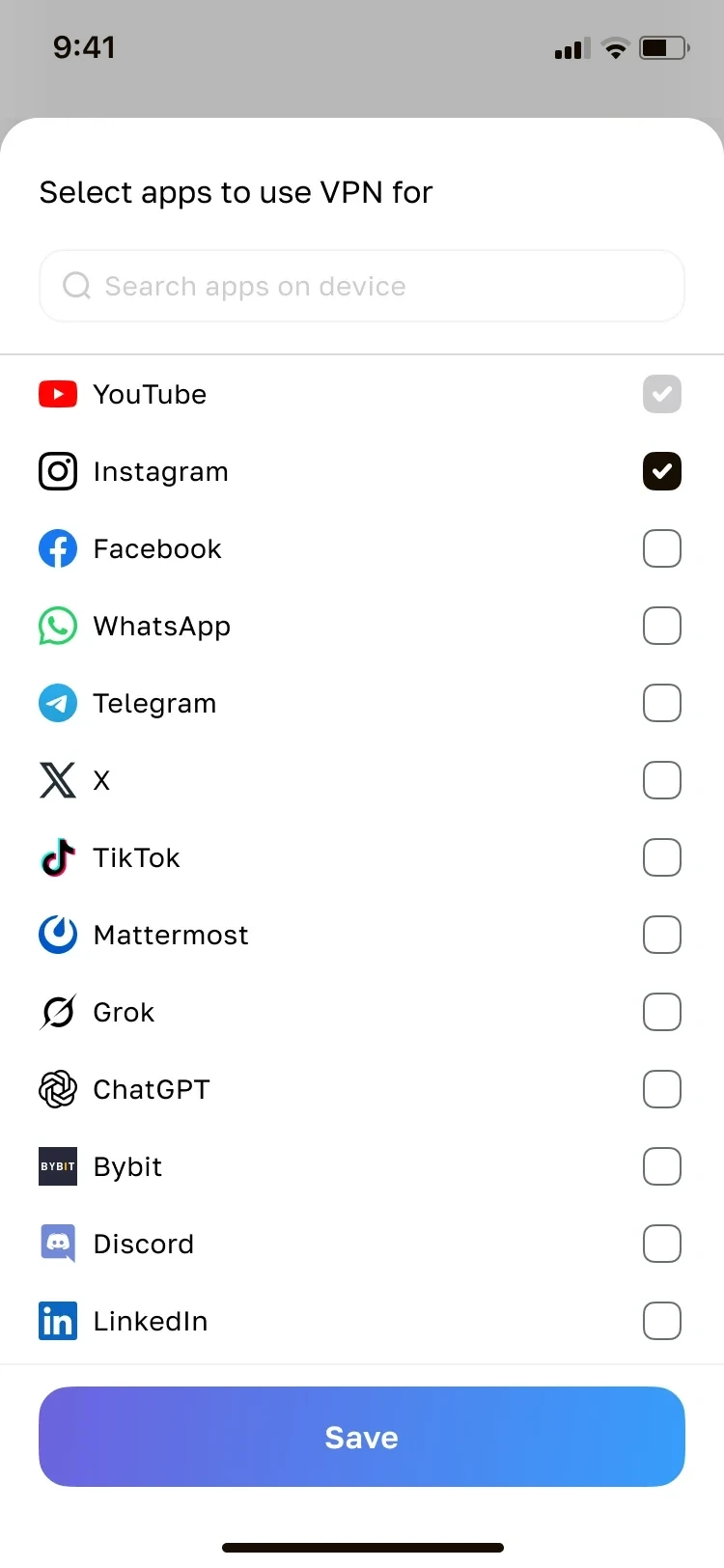
Split tunneling is the key feature: users decide with a toggle which apps go through the VPN and which traffic goes directly. This reduces load on the connection and saves data.
The same screen shows comparative traffic and speed stats, unlimited session time, automatic server reconnection, and an in-app premium subscription purchase.
The core LiMP VPN user journey in 20 seconds: one-tap connection, server choice, the quick menu and picking which apps go through the VPN.
Animated from the app's Figma screens.
The LiMP VPN interface is localized, payment runs through local acquiring, and support operates on a set working-hours schedule. Billing and account data are hosted on local servers, while the traffic infrastructure runs outside the country where account data is hosted. The target audience is CIS countries, including Kazakhstan and Belarus.
Data processing follows the requirements of the client's jurisdiction, with account and billing data stored separately from traffic metadata and role-restricted access across the system.
Cost depends heavily on scope: a typical MVP covers authentication, tunneling, a single paid tier and store distribution, while a full commercial launch adds split tunneling, multi-hop, promo codes and an audit-ready no-logs backend. Exact figures for this project are not disclosed and fall within standard industry ranges for this project class.
For new builds in 2026, yes. WireGuard wins on power consumption, throughput and audit surface: roughly 4,000 lines of code versus about 600,000 for OpenVPN. Modern ciphers — Curve25519 and ChaCha20-Poly1305 — and clean integration with iOS NetworkExtension and Android VpnService make it the default choice.
No-logs combines RAM-only server images that lose state on reboot, ephemeral session keys rotated client-side, and log pipelines that strip session identifiers early. Payment data is stored separately from traffic metadata.
iOS uses a PacketTunnelProvider under NetworkExtension with a hard memory limit of about 15 MB. Android uses VpnService paired with a foreground service to survive aggressive battery optimizers like MIUI and EMUI, plus support for Always-on VPN. Both provide a system-level tunnel, but the permission model and memory budget differ.
Plan for 12–20 weeks for an MVP with authentication, tunneling, one paid tier and distribution. Add roughly 6 weeks for split tunneling and multi-hop, and 4–6 weeks for promo codes and an expanded subscription. App Store and Google Play publication adds 4–10 weeks for review.
Companies from retail, medtech, logistics and e-commerce that we helped build digital products.




The full spectrum of development — from native mobile apps to web platforms, AI and cloud. Pick a direction or order a turnkey project.
Native iOS & Android plus cross-platform Flutter and React Native — from MVPs to apps with millions of installs.
Learn moreNative Swift / SwiftUI iOS apps — with Apple Pay, Sign in with Apple, App Store Connect deployment pipelines.
Learn moreNative Kotlin / Jetpack Compose Android apps — Material 3, Google Play release pipelines, Firebase integration.
Learn moreSingle Dart codebase across iOS, Android, web and desktop — with native modules where needed.
Learn moreProduction web apps on React, Next.js, Vue and Node — SaaS dashboards, B2B portals, marketing-conversion stacks.
Learn moreREST, GraphQL and gRPC APIs — designed for partners, mobile clients and internal microservices.
Learn moreBespoke platforms for mid-market and enterprise teams — internal tools, vertical SaaS, mission-critical backends. Discovery to launch in 12–36 weeks.
Learn moreFocused MVPs in 12–20 weeks — one or two integrations, real users on day one, telemetry built-in.
Learn moreEnd-to-end ownership of a digital product — design, build, ship and continuous evolution.
Learn moreTool-using agents that plan, retrieve, act and self-evaluate — in customer service, ops automation, internal copilots.
Learn moreAWS, Azure and GCP architecture, Kubernetes, Terraform/Pulumi, CI/CD and observability — SRE-grade operations for product teams.
Learn moreTechnical SEO, Core Web Vitals, structured data, internal-link architecture — built into your engineering process.
Learn moreRelated cases
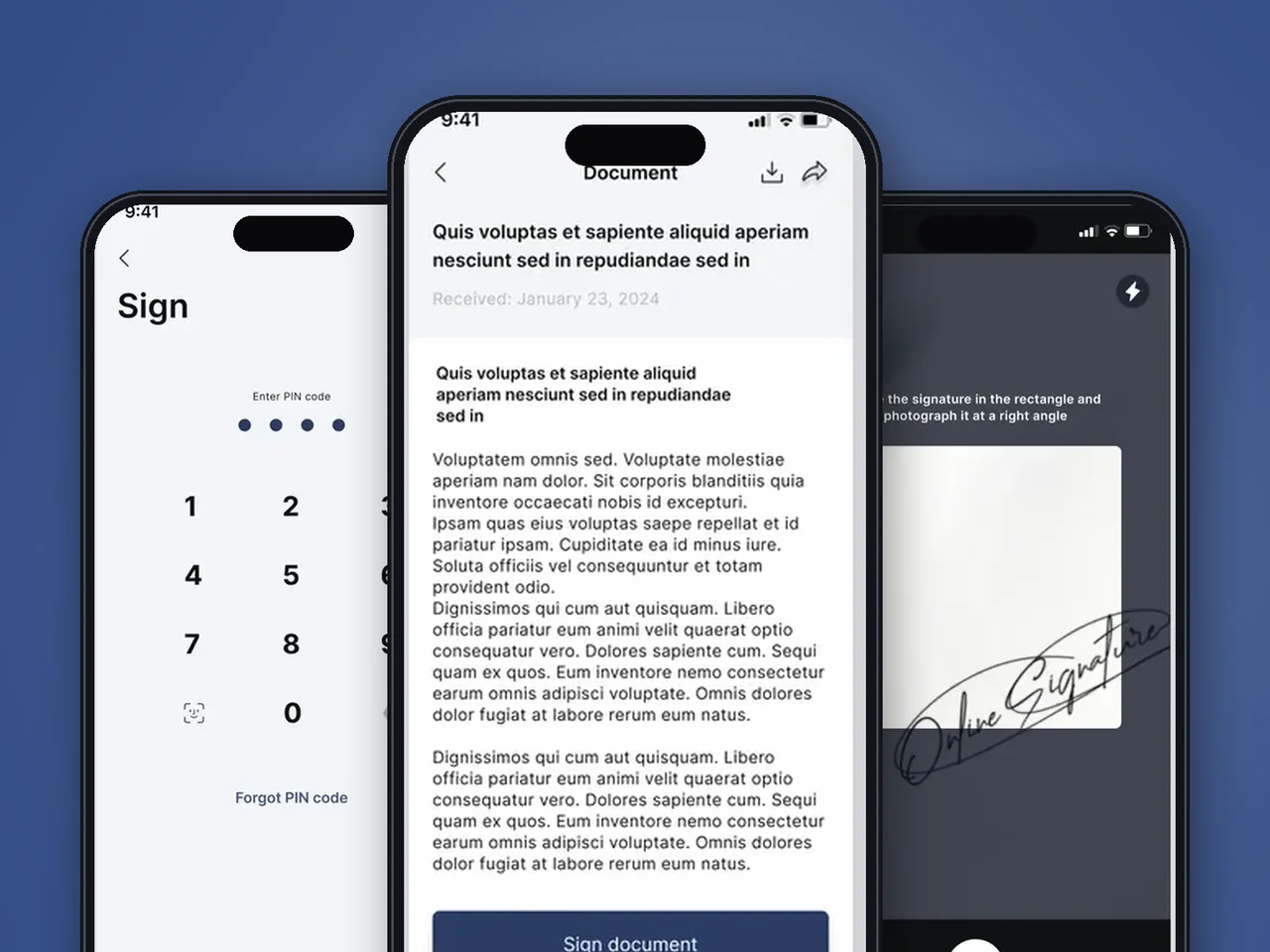
Native iOS and Android e-signature clients with a Symfony + React CRM for a cross-border law firm — KYC onboarding and a defensible evidence trail for US & EU matters.
View case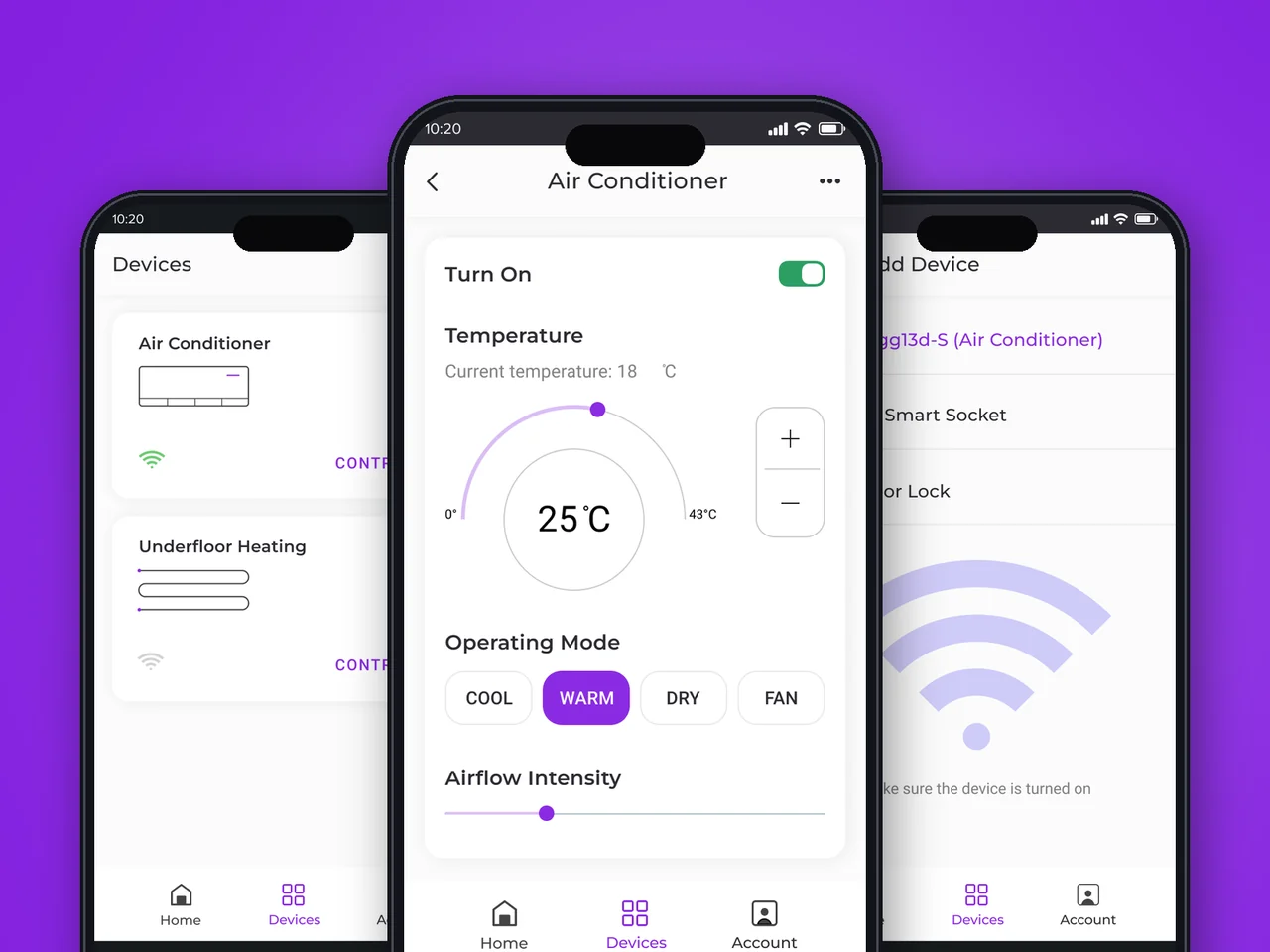
Native iOS & Android app for remote HVAC and underfloor-heating control — presets, scenarios, and one-tap modes for connected homes in the US & EU.
View case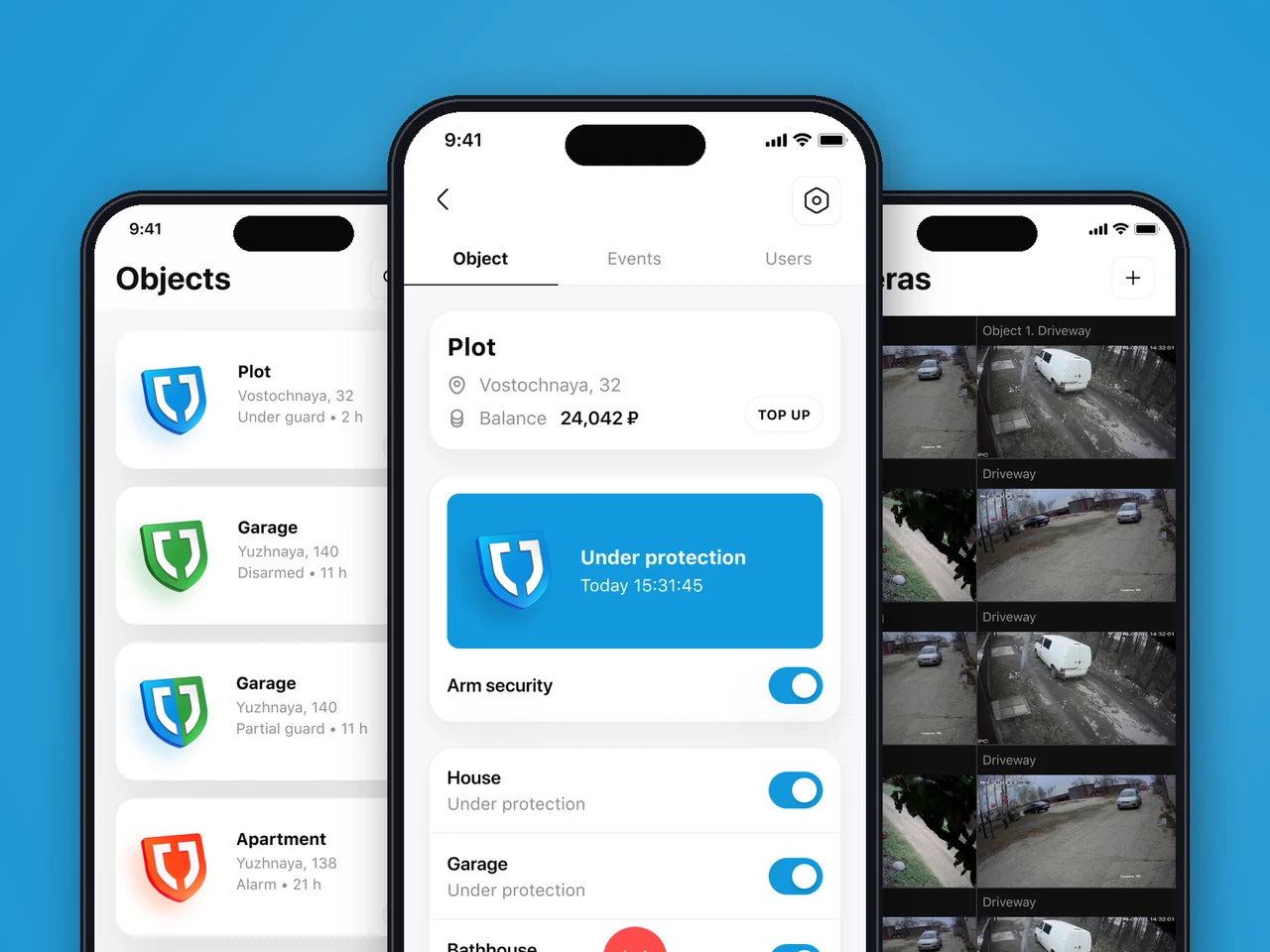
Unified iOS & Android app for remote alarm, embedded video and smart-home control across the US & EU — zonal entitlement, role-based access.
View case20 articles across 5 categories — engineering-led guides on AI, SaaS, MVP, compliance and mobile for US and EU product teams.

Performance-tested comparison of RN (New Architecture) and Flutter (Impeller) across hiring, time-to-market and EU/US compliance.
Read article
Real cost ranges by region (US onshore, Western EU, EU nearshore), team and feature scope. With a worked fintech example.
Read article
Data-driven framework for choosing iOS-first or Android-first in 2026 — US & EU market share, ARPU, review timelines, EU DMA.
Read articleTell us about your target audience and threat model, and we'll help you design a VPN app with the right balance of simplicity, encryption and subscription monetization. Let's discuss how a similar platform could work for your business.
Share a few details and a senior consultant will reply within one business day.
Email: sales@yusmpgroup.com
Phone: +374 44 871 811
Offices: KAMAR Business Center, Vazgen Sargsyan St. 2, Yerevan, Armenia · Remote — East-Coast US overlap (9 AM–1 PM ET)