Paper freight
CMR and waybills still travel on paper. We digitize with eFTI-ready data layers that authorities can accept across borders.

GDPR eFTI AI-native
Hire a dedicated engineering team to build your TMS, WMS, last-mile, or fleet platform — production-grade logistics software for shippers, 3PLs, carriers, and mobility operators across the US and EU. Nine years, 80+ senior engineers, NPS 71. We integrate EDI and REST/API carrier connections from day one and typically ship a focused first release in 8–16 weeks, replacing brittle spreadsheets and rigid off-the-shelf suites with systems that mirror how your dispatch, warehouse, and customer-visibility workflows actually run.
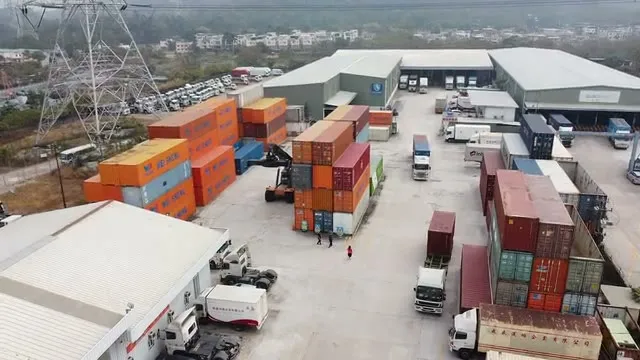
We deliver Transportation Management Systems (TMS), Warehouse Management Systems (WMS), Order Management (OMS), last-mile dispatch apps, fleet telematics platforms, and freight/customs tools — engineered as one connected stack or as discrete modules that plug into what you already run. Every build includes EDI and REST/GraphQL integrations with carriers, brokers, and marketplaces; ELD and IoT telematics ingestion; and a route-optimization engine tuned to your constraints — time windows, capacity, multi-stop, hazmat, driver hours, and cross-border rules. Compliance posture: GDPR-aligned, ISO 27001 ready, SOC 2 Type II in progress, CCPA-acknowledged. Explore how we deliver this through our Mobile App Development service.
Challenges
CMR and waybills still travel on paper. We digitize with eFTI-ready data layers that authorities can accept across borders.
Mixed fleets mean four telematics vendors and three data formats. We normalize CAN, FMS and ELD into a single stream.
Tachograph rules, posting and cabotage are unforgiving. Our planners enforce them before a load is dispatched.
Last mile eats margin. We rebuild routing with real-time traffic, parking constraints and EV charging windows.
CSRD pushes scope 3 transport emissions into board reports. We compute them per shipment with auditable methodology.
Shippers want live ETA, not phone calls. We deliver tracking with confidence intervals, not just dots on a map.
Solutions
Order intake, planning, dispatch, settlement and analytics for asset-based and brokerage operators.
VRP solvers with time windows, multi-depot, EV charging and driver-rest constraints.
Telematics ingestion, geofencing, predictive maintenance and driver coaching dashboards.
Driver apps, proof of delivery, locker integration and dynamic dispatch for couriers and CEP.
WMS extensions, slotting, dock scheduling and yard management with handheld and forklift UX.
MaaS, ride-hail, micromobility and shared-fleet operations with payments and pricing engines.
What we build
Most logistics stacks grow by accretion: a TMS bought a decade ago, a WMS bolted on during a warehouse move, and spreadsheets filling every gap in between. We build the systems that close those gaps — as one connected platform or as individual modules that integrate with what you already run. Every engagement is led by senior engineers through our custom software development practice, with infrastructure handled by our Cloud & DevOps team.
Delivery spans both sides of the Atlantic: US operators get FMCSA-aware builds with East-Coast overlap hours, EU operators get GDPR, eFTI and Mobility Package fluency by default. The sections below describe each system class we build; for the deeper industry context — market shifts, build-vs-buy math and stack choices — our logistics software cost & stack guide is the long-form companion to this page.
Order intake, rating, load planning, dispatch, carrier tendering, settlement and margin analytics for asset-based fleets and brokerages. We design the planning core around your real constraints — driver hours, cabotage, hazmat, time windows, EV charging — instead of forcing dispatchers to work around a generic engine. For US operators we build FMCSA HOS / ELD-aware workflows; for EU fleets we encode Mobility Package rules directly into the planner. For module architecture, integrations and realistic cost ranges, see our TMS development guide.
Receiving, putaway, slotting, wave and batch picking, packing, dock scheduling and cycle counting — with the handheld scanner UX designed alongside the web dashboards, not as an afterthought. Our warehouse platform work doubled throughput for a stock-management operator precisely because the mobile scanner client shipped in the same sprints as the back office. Larger rollouts run through our enterprise software development practice. Planning a build? Our WMS development guide covers the four core modules, ERP integration and cost ranges.
Telematics ingestion from CAN bus, FMS, ELD and OEM feeds over MQTT and Kafka, with geofencing, driver coaching, predictive maintenance and fuel analytics on top. Mixed fleets usually mean three or four telematics vendors — we normalize them into one stream so operations sees a single fleet, not a patchwork of vendor portals. See our fleet management software development guide for the telematics architecture, TCO impact and 2026 cost ranges.
Vehicle routing is where logistics software earns its keep — and where generic engines quietly lose money. We build VRP solvers on OR-Tools and custom heuristics with the constraints that off-the-shelf routing ignores: hard and soft time windows, multi-depot and multi-trip planning, heterogeneous fleets, EV range and charging windows, driver-rest rules and hazmat corridors. Objective functions are tuned to your blend of cost, CO2 and SLA, and we validate against your historical routes before a single dispatcher has to trust the output. On mobile, incremental re-optimisation keeps recalculation instant even as stops are added or completed mid-shift — the approach we proved in production on xRouten.
X12 and EDIFACT document flows (204, 214, 210, 990, DESADV, IFTSTA), AS2 connectivity, and REST/GraphQL APIs for partners who have moved past EDI. We build translation and orchestration layers so onboarding the next carrier or 3PL customer becomes configuration, not a development project. The full picture is in our EDI integration guide for logistics.
Shipment-level tracking portals with live ETAs computed from telematics and traffic — confidence intervals rather than a dot on a map. Customer notifications, proof-of-delivery capture and exception workflows ship as web portals and driver apps built by our mobile app development team. For the build-vs-buy math across all of these modules, see our logistics software cost & stack guide.
Integrations
Logistics runs on data exchange, and in 2026 that still means EDI. Retailers and large shippers mandate X12 in North America and EDIFACT in Europe; carriers expect 204 load tenders and return 214 status updates; warehouses live on 940/945 and DESADV flows. A logistics platform that cannot speak these dialects fluently will not survive its first enterprise customer.
We treat integrations as a first-class subsystem, not glue code. That means an EDI translation layer with schema validation and replayable message logs; AS2/SFTP transport with proper certificate management; REST and GraphQL APIs alongside EDI for partners who have modernized; and webhook-based event streams so your customers’ systems learn about exceptions the moment they happen. When a mapping breaks at 2 a.m. — and one eventually will — your team gets a readable error and a replay button, not a silently lost tender.
Typical integration targets we have connected: carrier and capacity APIs, telematics and ELD providers, customs and freight-document systems, ERPs (SAP, Microsoft Dynamics, NetSuite), e-commerce platforms and marketplaces, and payment or settlement providers. We cover the formats, the standards politics and realistic timelines in depth in our EDI integration in logistics guide.
Just as important is how integrations are delivered. Every partner connection ships with a test harness and a certification checklist, so you can onboard against a trading partner’s compliance suite without blocking the release train. In production we monitor message volumes and acknowledgement latency, alert on missing 997/CONTRL acknowledgements, and document every mapping so the knowledge survives team changes on either side of the connection.
Stack
Go, Java, Kotlin, Python, TypeScript, React Native, PostgreSQL, PostGIS, Redis, Kafka, MQTT, OR-Tools, OpenStreetMap, HERE, Google Maps, Mapbox, Kubernetes, AWS IoT, GCP, Terraform.
Compliance
GDPR-aligned · ISO 27001 ready · SOC 2 Type II in progress · HIPAA-capable · CCPA-acknowledged
Privacy is a vertical challenge here — driver location, telematics and customer data carry real regulatory weight on both sides of the Atlantic. We frame the operational requirements on this page and hand the deep implementation to our dedicated GDPR compliance consulting practice for lawful-basis mapping, retention design and data-subject-rights automation.
Integrations
Logistics software is only as good as the systems it talks to. Every build ships with the connectors your operation actually runs on — carriers and brokers, telematics devices, mapping engines, and the ERP and warehouse systems of record — through our API development and cloud & DevOps teams.
EDI (X12 204/210/214/990, EDIFACT IFTMIN/IFTSTA) and REST/GraphQL APIs for tendering, rating, track-and-trace and settlement with asset carriers, brokers, load boards and 3PLs.
CAN bus, FMS, J1939 and OEM telematics plus FMCSA-registered ELD feeds, ingested over MQTT and Kafka, normalized into one real-time signal stream with geofencing.
HERE, Google Maps, Mapbox and OpenStreetMap behind PostGIS and OR-Tools VRP solvers — time windows, multi-depot, EV charging and driver-rest constraints.
Two-way data sync with the systems of record logistics teams already run — SAP, Oracle, Microsoft Dynamics and NetSuite — plus warehouse and order-management platforms.
eFTI-ready data layers, customs and AES/ICS2 filings, HS classification and electronic freight documents authorities can accept across borders.
Freight audit and payment, invoicing, carrier settlement and ACH/SEPA rails, reconciled back into your accounting and finance systems.
Process
A repeatable, operations-first path from dispatch floor to production — compliance and integration constraints designed in from day one, not bolted on before launch.
We ride along on a dispatch or warehouse shift, map how planning, dispatch and visibility actually work, and inventory every carrier, telematics and ERP integration in scope.
Geo and real-time architecture on PostGIS, Kafka and OR-Tools; telematics-normalization and EDI/API contracts; GDPR, eFTI and FMCSA constraints designed in.
TMS, WMS and last-mile modules with a route-optimization engine tuned to your constraints — time windows, capacity, hazmat, driver hours, cross-border — web and mobile scanner/driver clients built in parallel.
Pick-accuracy and latency targets, VRP validation, telematics and EDI integration tests, and driver-rest / HOS rule enforcement verified before a load is dispatched.
Real-time fleet dashboards, ETA with confidence intervals, per-shipment CO2 for CSRD, and SLA monitoring — delivered through our custom software and enterprise engineering teams.
Predictive maintenance, driver-coaching feedback loops and continuous routing-model tuning as volumes, lanes and regulations change.
Who we serve
“Logistics software” means something different for a freight broker than it does for a same-day courier or a cold-chain distributor. The regulatory surface, the integrations that matter and the metrics your operation lives or dies by all shift with the segment. Below is how our work changes across the operators we build for.
Brokers and third-party logistics providers win on margin per load and on how fast they can onboard the next carrier or shipper. We build tendering, capacity-matching and settlement engines with EDI 204/214/210 flows and carrier-API fallbacks, plus margin analytics that show which lanes and customers actually pay. Multi-tenant customer portals let each shipper self-serve visibility without your dispatchers becoming a help desk.
Last-mile lives on the driver’s phone. We build offline-first delivery apps with proof-of-delivery capture, dynamic re-sequencing and live ETAs that survive dead zones and sync when signal returns. On the operations side, incremental route re-optimisation absorbs same-day order injects without a full recompute — the pattern we proved in production on xRouten.
For fulfillment operators the whole game is throughput per labour hour. We build WMS workflows — wave and batch picking, slotting, dock scheduling, cycle counting — with the handheld scanner UX designed alongside the back office, not bolted on later. That parity is exactly why our warehouse platform work doubled throughput for a stock-management operator.
When the cargo is vaccines, food or reagents, temperature is compliance. We build cold-chain platforms that ingest IoT sensor telemetry, alert on excursions in real time and keep an auditable chain-of-custody record for GDP and FSMA requirements. Predictive alerts flag a failing reefer unit before the load is lost, not after.
Omnichannel retail turns every store into a micro-fulfillment node and every promise date into an SLA. We connect order management, marketplaces and carrier networks so ship-from-store, split shipments and returns route automatically, and we expose accurate delivery promises at checkout backed by real capacity — work that dovetails with our e-commerce engineering practice.
Intermodal moves are where visibility gaps cost the most — a container can go dark for days between leg handoffs. We build platforms that reconcile ocean, rail and drayage milestones, integrate customs and freight-document flows, and give shippers a single track-and-trace view across carriers and modes instead of a folder of portal logins.
Cases
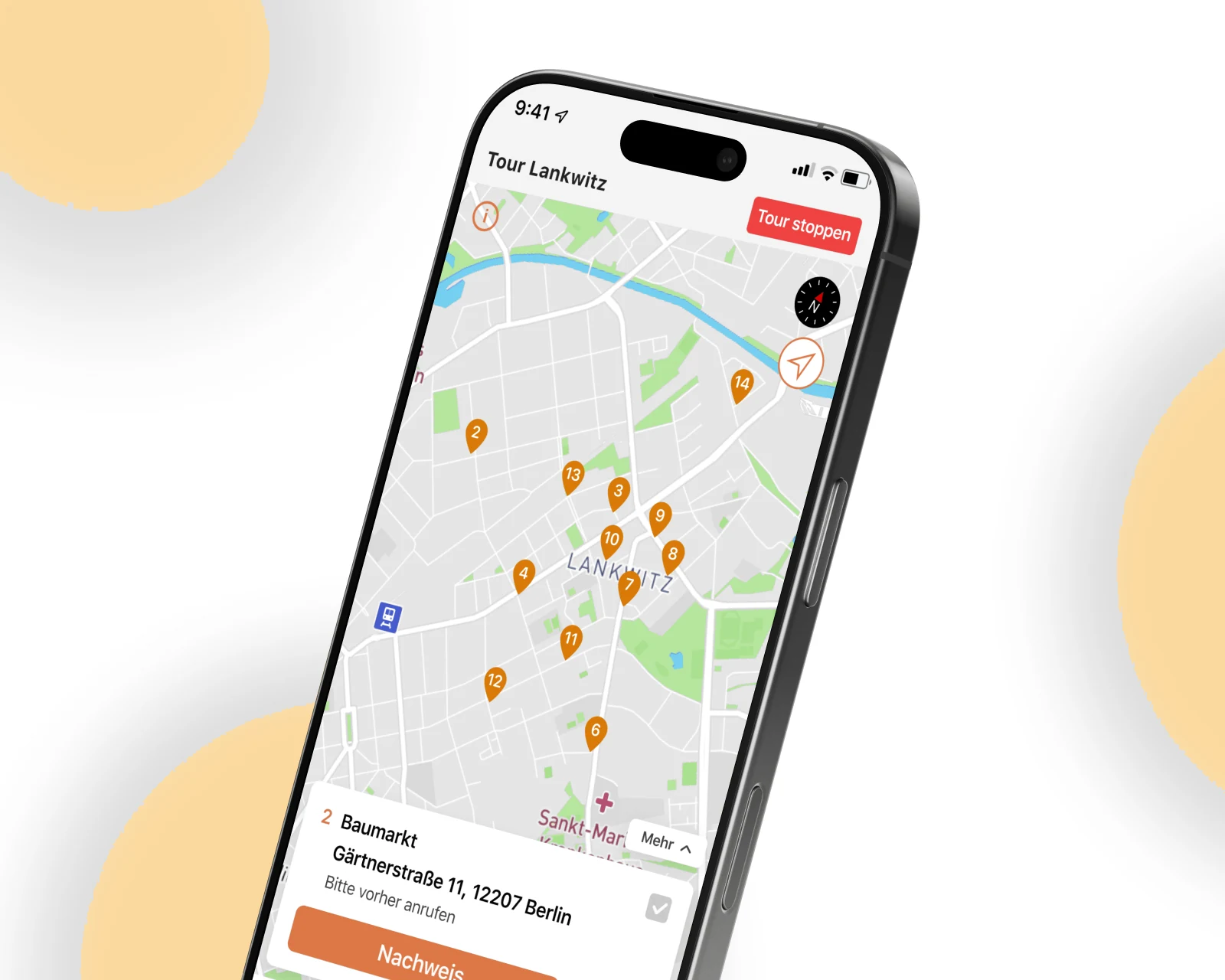
Android + iOS refactor and rebuild for a German last-mile logistics operator — multi-point route planning, real-time driver tracking and in-app invoicing live in the EU.
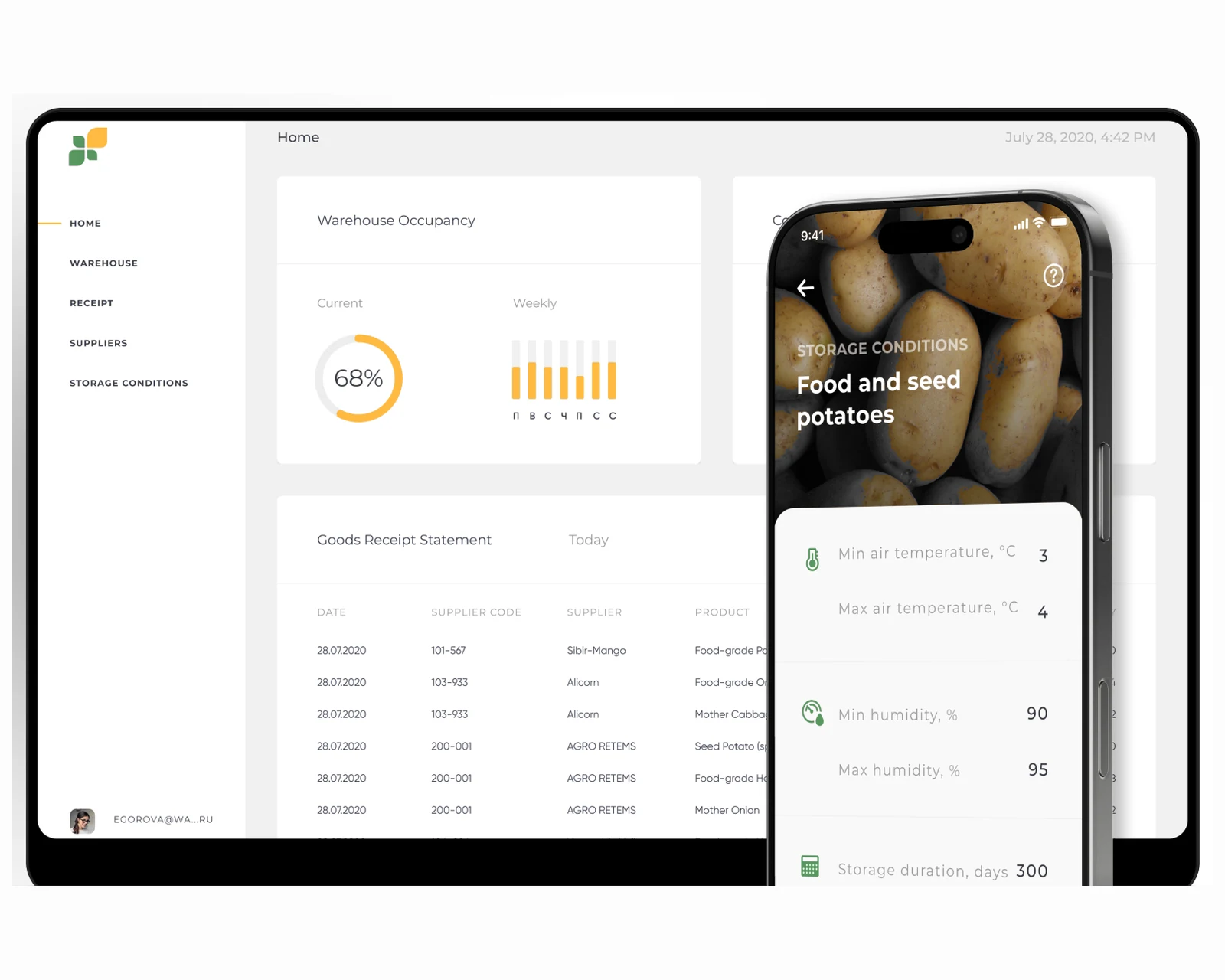
Warehouse management system with web dashboards and mobile scanners — throughput up 2×, errors down 78%, US & EU ready.
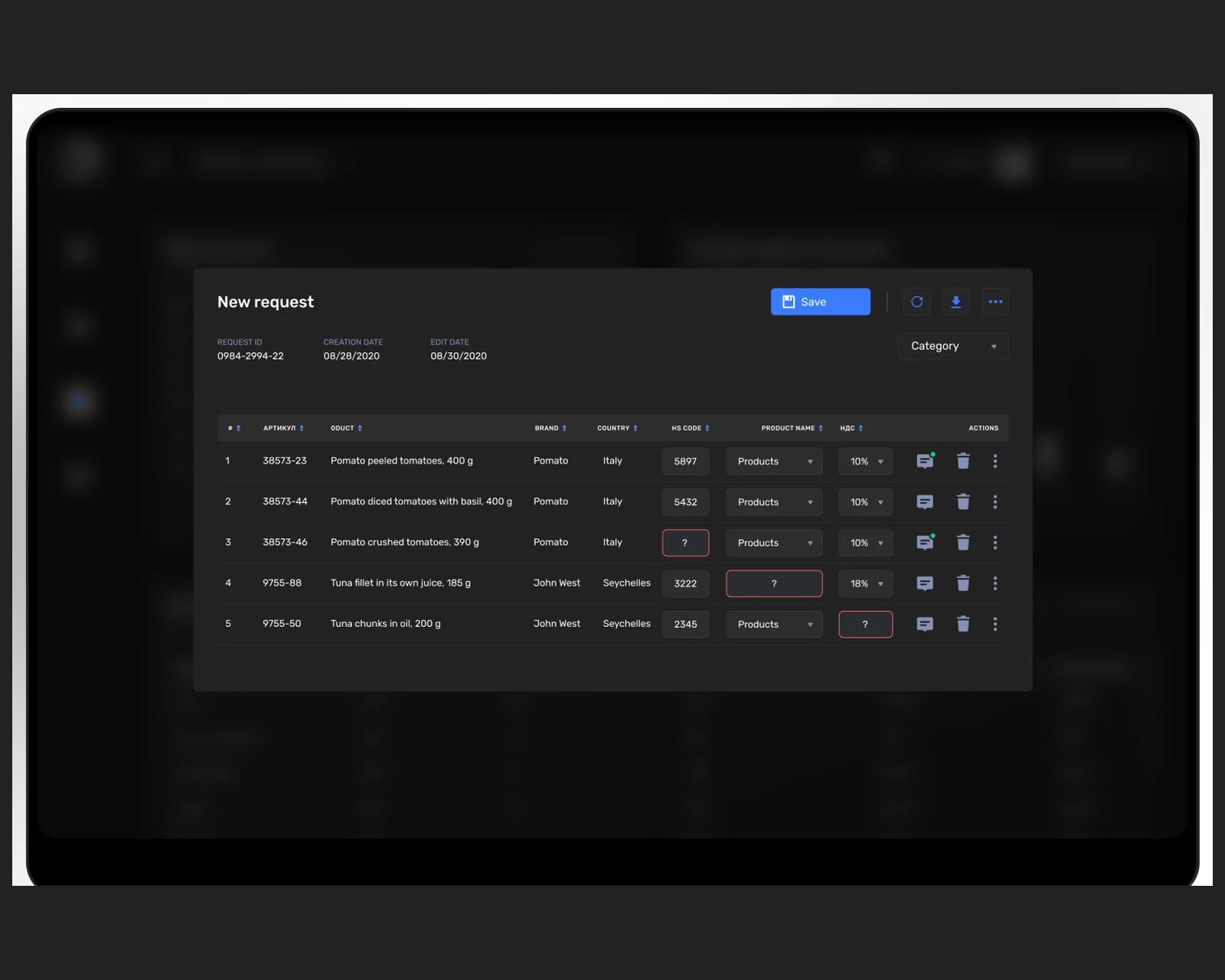
Laravel + React freight transportation cost calculator — four-role access, three-scenario auto-fill, self-learning knowledge base, US & EU ready.
Results
The numbers below come from shipped projects, not projections. Each links to a full case study with architecture and delivery detail.
A German last-mile logistics operator came to us with a legacy Android app whose route calculation failed, timed out or returned visibly suboptimal sequences that wasted driver hours and fuel. We rebuilt the multi-point route builder in Kotlin against a mapping-SDK matrix API with a 2-opt heuristic, regression-tested it against real German address fixtures and rolled it out behind a feature flag. The result: instant calculation of optimal paths across dozens of stops, incremental re-optimisation as drivers complete deliveries mid-shift, real-time driver tracking and in-app invoicing — live for production fleets in Germany. Building the iOS counterpart with full feature parity adds 14–20 weeks. Read the xRouten case study.
For a stock-management operator we built a warehouse management system with web dashboards and mobile scanner clients developed simultaneously. Warehouse throughput doubled, accounting errors fell 78% — removing manual transcription was the single largest contributor — and inventory shrinkage dropped 31% in the first six months. One hard-won detail: hardening for aged industrial Android terminals and patchy warehouse connectivity deserves a dedicated 4–6 weeks in any WMS budget. Read the warehouse case study.
B2B freight pricing hides hundreds of variables in spreadsheets and institutional memory. For EasyTrain we built a Laravel + React freight transportation cost calculator with four-role access, three-scenario auto-fill and a self-learning knowledge base. The client’s product manager estimates the ops team saves around three hours per quote. Extending the platform with multi-tenant deployment and a public EDI API adds 6–10 weeks. Read the EasyTrain case study.
These three projects share a pattern: a focused first release, measurable operational numbers, then extension modules priced in weeks rather than quarters. If your logistics roadmap looks similar, our custom software development team can scope it — or browse all case studies for more delivery detail.
Why YuSMP
Engineers who ride along on a dispatch shift before they design the schema.
PostGIS, Kafka and OR-Tools used in production, not as a slide.
EU Mobility Package, eFTI and tachograph 2 alongside US FMCSA HOS / ELD mandate — constraints we design with, not surprises at launch.
Budget
The honest answer to “what does logistics software development cost” depends on scope, integrations and compliance surface — but you should not have to start a conversation without a market ballpark. Based on our delivery history across US and EU logistics projects, these are realistic 2026 ranges:
What moves a project between tiers: the number of EDI and carrier integrations, real-time telematics volume, route-optimization complexity (constraints and fleet size), offline requirements for warehouse and driver hardware, and the US/EU regulatory surface you operate under. We don’t publish fixed hourly rates or packages — every engagement is scoped and quoted against your requirements. See how our pricing works or start with a custom software development conversation.
On timelines: most logistics engagements start with a two-to-three-week discovery in which we map your order-to-cash or dispatch-to-POD flow, audit the integration landscape and produce a scoped delivery plan with a fixed quote for the first release. From there, work runs in two-week sprints with a demo at the end of each — dispatchers and warehouse leads see working software early, which is exactly where TMS and WMS projects usually succeed or fail. For a broader 2026 view of price ranges beyond logistics, see our software development cost benchmark.
Large-scale WMS projects fail when the mobile scanner experience is an afterthought. YuSMP built web and mobile scanner clients simultaneously, so pick accuracy and system latency targets were hit from day one. Inventory shrinkage dropped 31% in the first six months.
B2B freight pricing involves hundreds of variables and institutional knowledge that lives in people’s heads. YuSMP built a four-role portal with auto-fill logic and a self-learning knowledge base. Our ops team saves an estimated three hours per quote, every day.
FAQ
Yes. We design data exchange layers compatible with eFTI Regulation 2020/1056 so digital freight documents are accepted by EU competent authorities.
We integrate smart tachograph 2 data, posting declarations and driver-rest rules into TMS workflows so dispatchers stay compliant in real time.
We deploy VRP solvers with time windows, multi-depot and EV constraints, and tune objective functions for cost, CO2 and SLA blends.
We ingest CAN bus, FMS, ELD and OEM telematics through MQTT and Kafka, normalize signals and build real-time fleet operations dashboards.
Yes. Location and driver behavior data are sensitive in both regions. For EU drivers we map GDPR lawful basis, minimize retention and automate data subject rights. For US drivers we apply CCPA/CPRA (California), plus Virginia VCDPA, Colorado CPA, Connecticut CTDPA and other state privacy laws — opt-out of sale, right to know, deletion — and align with FMCSA telematics retention rules.
As a market ballpark: a fixed-scope MVP (driver app, tracking portal, freight calculator) lands between 60k and 120k EUR in 8–16 weeks; a business-grade TMS/WMS system typically runs $50k–$150k over 3–6 months; enterprise platforms with EDI, telematics and compliance automation range $150k–$500k over 6–12 months, with full platforms from 250k EUR. Every engagement is scoped and quoted individually.
A focused first release ships in 8–16 weeks. Real deltas from our delivery history: adding a second mobile platform with offline-first sync to a WMS adds 8–12 weeks; building an iOS counterpart with full feature parity for a last-mile app adds 14–20 weeks; hardening for aged industrial Android scanners deserves a dedicated 4–6 weeks.
Buy where you are standard, build where you differentiate. Off-the-shelf suites cover commodity workflows well; custom development pays off in the one or two modules where your operation wins — routing logic, pricing, customer visibility — while integrating the rest. Our logistics software cost & stack guide walks through the build-vs-buy decision in detail.
Yes — that is the more common engagement. We build integration and orchestration layers over SAP, Microsoft Dynamics, NetSuite, Oracle and incumbent TMS/WMS suites via their APIs, EDI or database connectors, then add only the modules where you need an edge. You keep the systems that work and replace the spreadsheets and manual handoffs between them, rather than betting the operation on a big-bang rip-and-replace.
Yes. Delivery and warehouse work happens in dead zones — loading bays, rural routes, refrigerated storage — so our mobile apps queue proof-of-delivery, scans and status updates locally and sync when signal returns, with conflict handling on the server. We build both Android (including rugged industrial scanners) and iOS, and design the driver UX for gloved hands and one-handed use, not a boardroom demo.
Yes. We ingest IoT temperature and humidity telemetry from reefer units and sensor tags, alert on excursions in real time, and maintain an auditable chain-of-custody record for GDP (pharma) and FSMA (food) requirements. Predictive alerting flags a drifting unit before the load spoils, and the compliance report is generated from the same data your operations team already trusts.
Both. A fixed-scope engagement suits a well-defined first release — a driver app, a tracking portal or a freight calculator — where the deliverable and budget are clear up front. A dedicated team suits an evolving platform roadmap where priorities shift sprint to sprint. Many clients start fixed-scope to prove value, then move the same engineers onto a dedicated team once the platform is live.
Comparing vendors? See our independent ranking of the top nearshore development companies in Europe.
Response within 1 business day. NDA on request.
In-depth guides on building logistics software — cost, integrations and the right stack.



Share a few details and a senior consultant will reply within one business day.