Discovery & warehouse model
Floor walk-through, container and storage-condition modeling, hardware inventory (industrial scales, aged Android terminals), and GDPR + CCPA data-ownership posture mapping.

Case study · Logistics · WMS
How we shipped a production warehouse management system — a React web control plane, native iOS and Android operator scanners, QR-tagged containers, and industrial scale integration — that roughly doubled throughput and cut accounting errors by 78%, built for operations teams across the United States and the European Union under GDPR and CCPA expectations from day one.
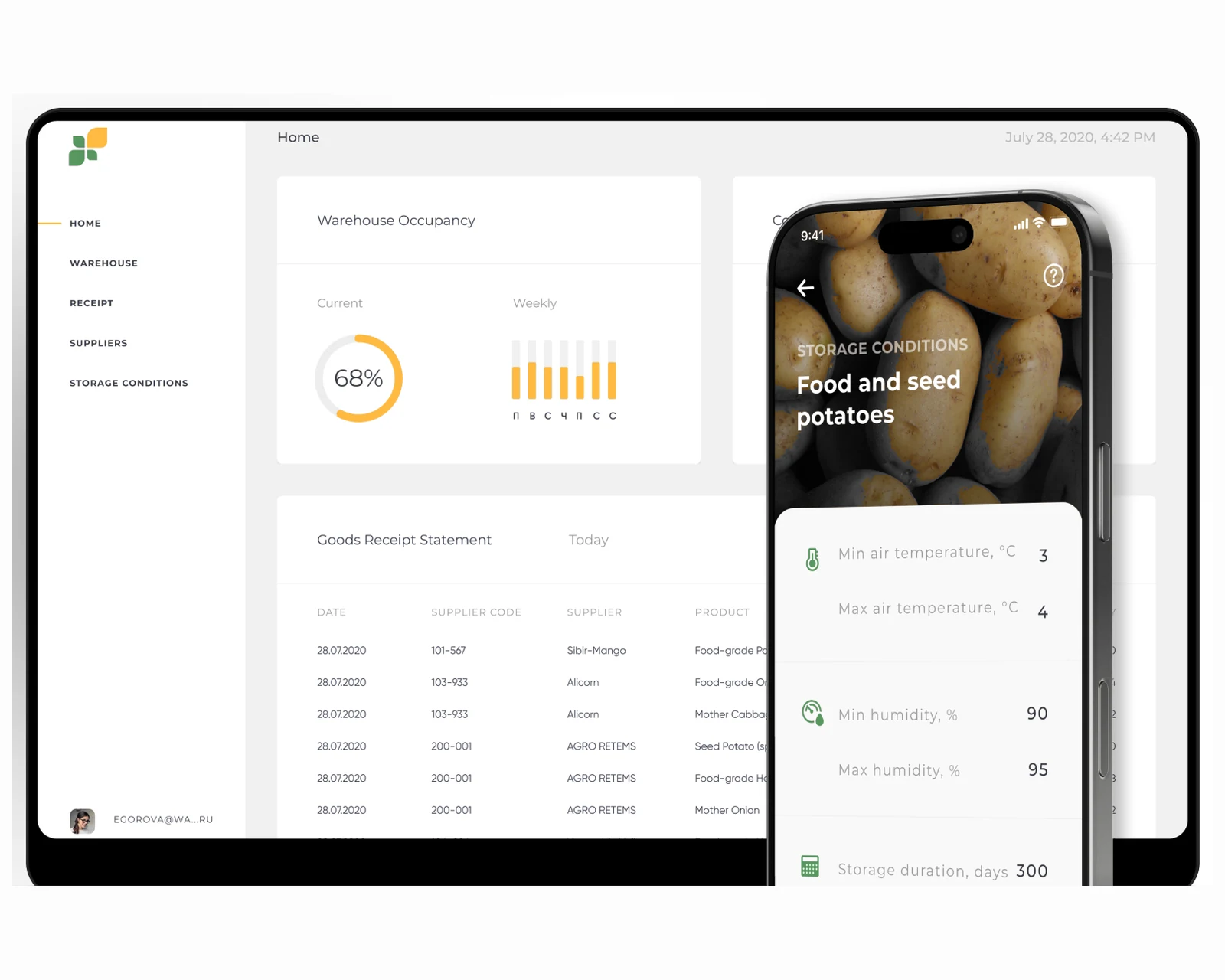
The client ran a high-volume storage operation where the source of truth lived in spreadsheets, paper receipts, and an operator's memory. For operations teams in the United States and the European Union, that model breaks the moment volume scales: stock counts drift from physical reality, expired goods sit undetected, and a manager has no live view of occupancy or what arrived this morning. The brief was to digitize the entire physical warehouse — automate the logistics of goods coming in and going out, track every container at the unit level, integrate the industrial scales already on site, and give managers a remote, real-time picture across the US and EU. Off-the-shelf inventory platforms failed the first acceptance test: they assume a generic pallet-and-shelf warehouse and could not model container-level storage conditions, perishable shelf life, or the exact scale and terminal hardware on the floor. We built the system from first principles at YuSMP Group as a unified platform — a React web control plane, native iOS and Android operator clients, QR-tagged containers, and an offline-first sync layer — engineered with our custom software development practice for the US and EU markets.
A snapshot of what the warehouse build delivered across web, two mobile platforms, and a hardware-integrated sync layer in its first production cycle.
The platform decision dominates every other architectural choice in a warehouse build. We chose a custom system over packaged inventory software because the operation's physical reality — container-level storage conditions, perishable shelf life, industrial scales, and QR-tagged units — does not fit the generic pallet-and-shelf template that off-the-shelf products assume. The configuration tax of bending a packaged platform to those rules typically exceeds a clean custom build, and it leaves the most operationally important behavior locked behind a vendor's roadmap. A custom WMS let us model the real warehouse, integrate the exact hardware already installed, and own the data end-to-end — which matters for US and EU companies that have to answer to GDPR and CCPA obligations.
The trade-off most teams underweight is hardware and field reality. Packaged WMS suites rarely speak to the specific industrial scales on a given floor, and they almost never run cleanly on the aged industrial Android data terminals operators actually carry. Building the clients ourselves meant the scale stream, the QR resolution path, and the offline queue were first-class concerns rather than plugins, and the entire stack — web control plane, mobile scanners, sync layer — is open and maintainable for the long run.
| Dimension | Custom WMS (this build) | Off-the-shelf platform | Spreadsheets / paper |
|---|---|---|---|
| Physical warehouse model | Container-level, storage conditions, shelf life | Generic pallet/shelf assumptions | None — lives in memory |
| Industrial scale integration | Native stream binding — no manual entry | Limited or add-on connector | Manual transcription |
| QR / barcode tracking | Opaque container IDs, one-tap resolution | SKU-level, often not container-level | Handwritten labels |
| Offline behavior in dead zones | Offline-first queue with idempotent replay | Often requires connectivity | N/A |
| Aged Android terminal support | Built and tested for old OS versions | Modern-device assumptions | N/A |
| Data ownership (GDPR / CCPA) | Full ownership and residency control | Vendor-hosted, shared tenancy | Uncontrolled |
| Real-time occupancy view | Live dashboards, remote monitoring | Varies; often batch | None |
Platform references: React documentation, Laravel documentation, Android hardware / USB reference.
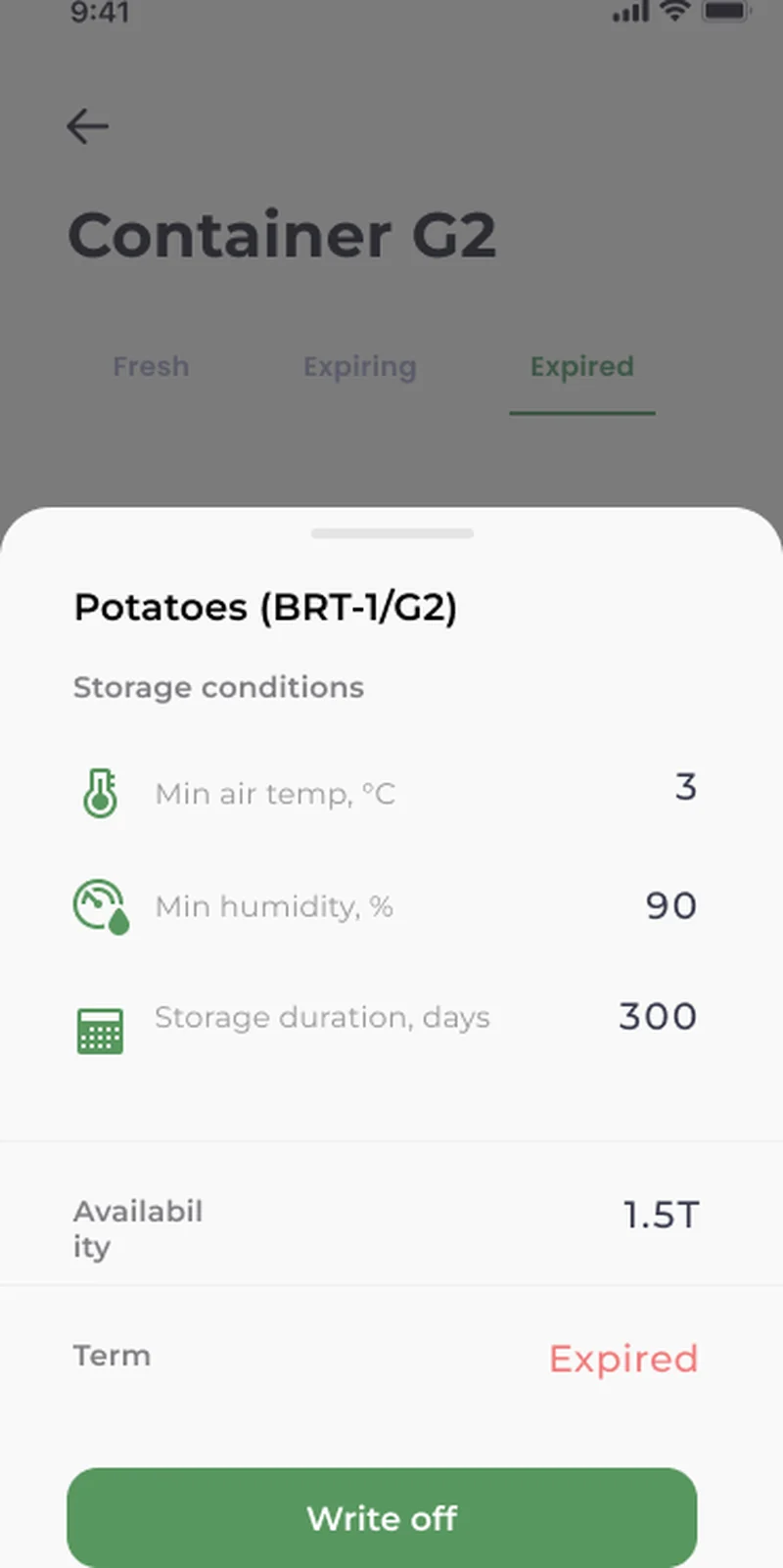
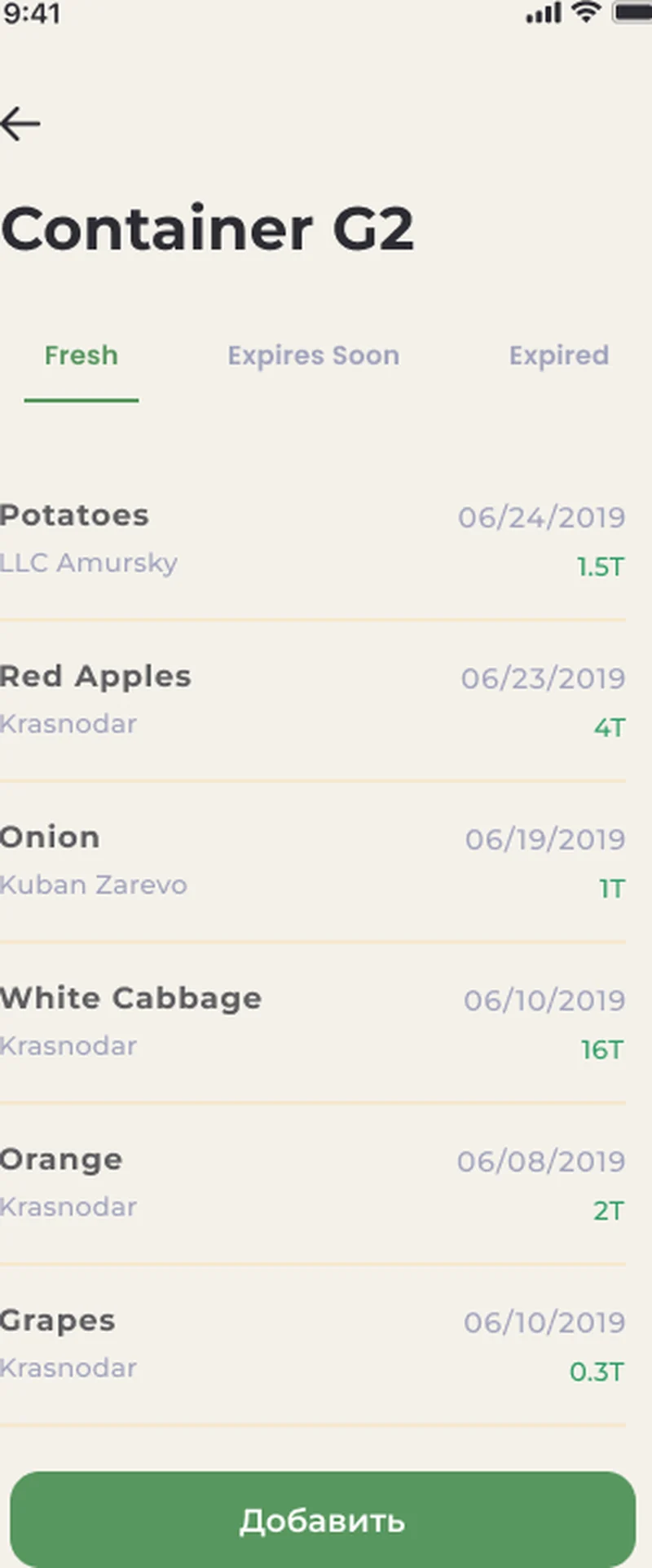
The iOS client is built in Swift and is the tool operators actually hold on the warehouse floor. The whole interaction collapses into a scan-first loop: point the camera at a QR-tagged container, and the app resolves the opaque container ID server-side into the full record — product, supplier, storage conditions, remaining shelf life, and current availability. From there an operator runs the two operations that matter most, goods receipt and write-off, each bound to a live weight reading from the integrated industrial scale rather than a hand-typed number. Removing that manual transcription step is the single largest contributor to the 78% drop in accounting errors.
The screen design assumes a gloved, in-a-hurry user: large tap targets, a contents list segmented into Fresh, Expiring Soon, and Expired so spoilage surfaces before it becomes a loss, and a single primary action per screen. Because warehouses are full of connectivity dead zones, the iOS client never blocks on the network — every scan and weight read is written locally first and queued for sync. The end-to-end iOS surface is delivered as part of our mobile app development practice.
The Android client mirrors the iOS scanner so operators on either device family run the same scan-bind-confirm loop, with extra attention paid to the aged industrial Android data terminals already deployed on site. Those terminals run old OS versions and have constrained hardware, so the Android build was deliberately kept lean and tested against the real devices rather than emulators — the foreground scanning service, the scale binding, and the offline queue all had to behave on hardware several Android generations behind a current phone. The same engineering team carries iOS and Android in lockstep as part of our iOS and Android engineering practice.
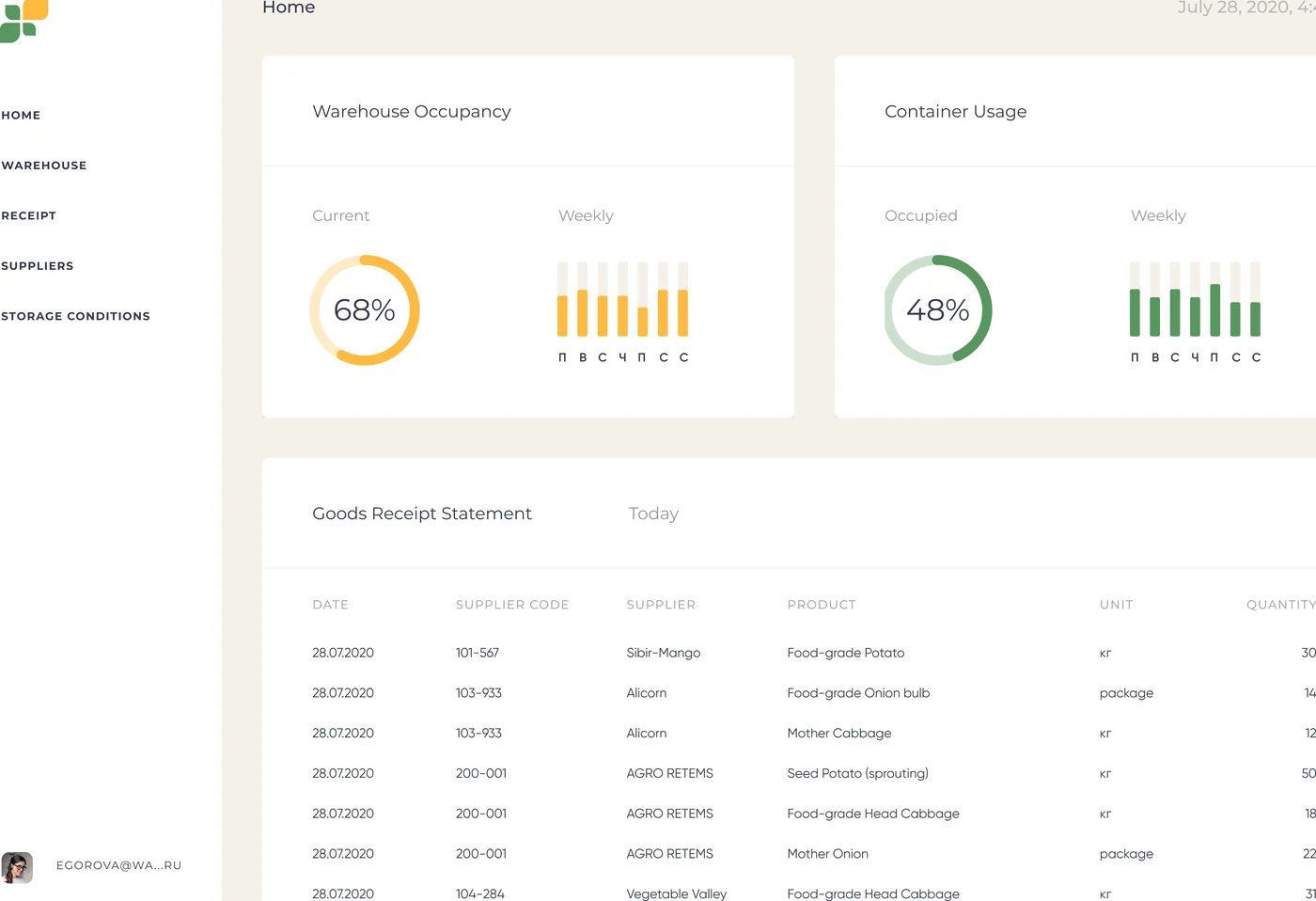
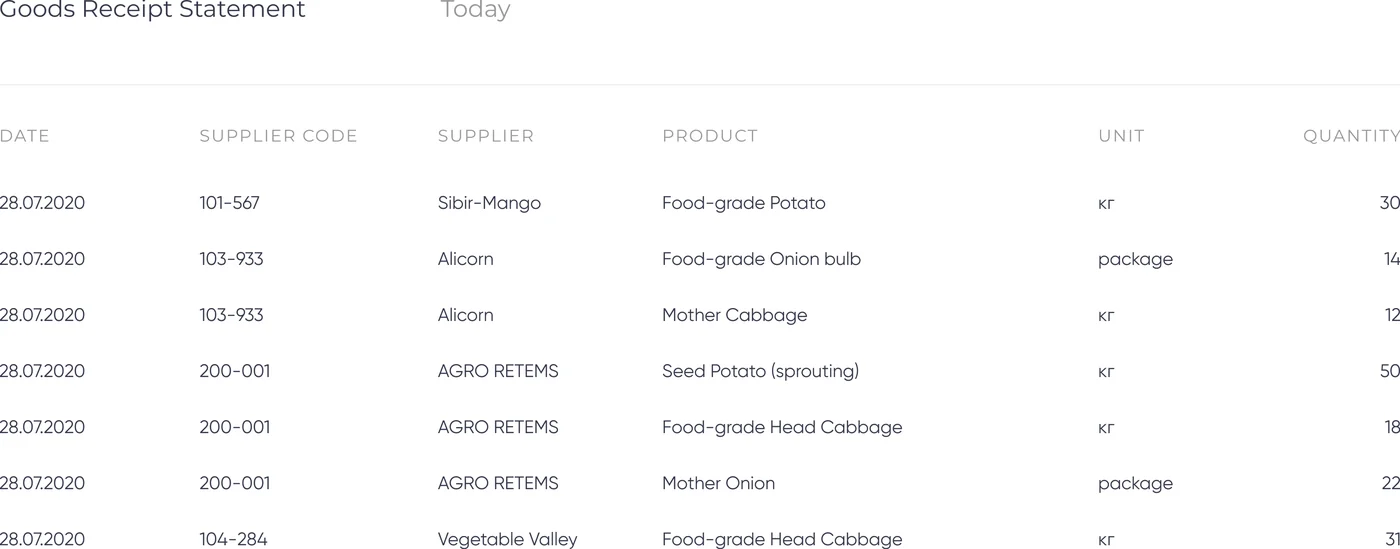
The web side is a React control plane backed by a Laravel API. Managers get a real-time picture without walking the floor: current and weekly warehouse occupancy, container usage, and a live goods-receipt statement showing date, supplier, product, unit, and quantity as stock arrives. A 3D model of the warehouse with adjustable dimensions lets a planner reason about space the way the physical building actually works. The whole control plane is engineered on our cloud & DevOps foundation so the API, the sync workers, and the dashboards scale together as the operation grows.
The offline-first sync layer is the backbone that makes the field data trustworthy. Every scan, weight reading, and write-off is written to a local store first and queued for sync; when the network returns, the queue replays against the Laravel API with idempotent operation IDs so a double-send never double-counts stock. Conflicts are resolved with last-write-wins on independent fields and explicit operator prompts on true collisions, keeping the on-device ledger and the server ledger eventually consistent. Storage-condition records — minimum and maximum air temperature, humidity, and storage duration per container — travel with the same pipeline, so a manager monitoring remotely sees the same numbers an operator sees on the floor.
Because the client owns its own deployment, data ownership and residency are design choices rather than vendor defaults. Operational data can be pinned to US or EU infrastructure for future data-residency commitments, role-based access keeps operator, manager, and admin views separated, and the system aligns with GDPR obligations for users in the European Union and CCPA / CPRA obligations for users in California and the broader United States — making a future readiness review a documentation exercise rather than an architectural retrofit.
Compliance posture: GDPR-aligned · ISO 27001 ready · SOC 2 Type II in progress · HIPAA-capable · CCPA-acknowledged.
A five-phase build that took the warehouse system from a paper-driven operation to a live web and mobile platform with integrated hardware.
Floor walk-through, container and storage-condition modeling, hardware inventory (industrial scales, aged Android terminals), and GDPR + CCPA data-ownership posture mapping.
React + Laravel control plane skeleton, QR container-ID scheme, scale-stream binding contract, and the offline-first queue with idempotent operation IDs.
Swift iOS scanner and native Android client on real terminal hardware, React web dashboards, goods receipt, write-off, and storage-condition monitoring.
Industrial scale integration, dead-zone offline QA, conflict-resolution testing, and validation on aged Android OS versions in the live warehouse environment.
Operator onboarding, role-based access rollout, real-time occupancy and usage dashboards, and telemetry across US and EU deployments.
Beyond the scan-and-track core, the platform carries a 3D modeling subsystem that renders the warehouse as an adjustable digital twin. A planner sets the building's real dimensions and lays out container zones the way they exist physically, so occupancy is reasoned about as space rather than as an abstract count. That model feeds the same real-time data pipeline as the scanners: as containers move through goods receipt and write-off, the digital twin reflects the change, and managers monitoring remotely across the US and EU see capacity pressure building before a zone overflows. The subsystem was built with extensibility in mind — adding a new storage zone type, a different container geometry, or a forecasting overlay that projects occupancy from incoming-goods schedules is a configuration change against the modeling service rather than a code release. It is the layer that turns a warehouse management system from a digital ledger into an operational planning tool, and it is where the platform earns its keep for operations leaders who have to commit to inbound volume weeks in advance.
The system shipped as a single English-language build serving operations teams across the United States and the European Union, without a separate codebase per region. It serves users in California, New York, Texas, Florida, and Washington in the US, and users in the Netherlands, Germany, France, Ireland, and Sweden in the EU. Because the client owns its own deployment, data-handling practices are aligned with GDPR for users in the EU and with the US state-privacy patchwork — CCPA / CPRA (California), VCDPA (Virginia), CPA (Colorado), CTDPA (Connecticut), UCPA (Utah), TDPSA (Texas), and Oregon CPA. Role-based access separates operator, manager, and admin views, and operational data can be pinned to US or EU infrastructure for future data-residency commitments — so regional compliance reduces to honest disclosure and access discipline rather than per-jurisdiction rework.
The platform is built to roll out across EU and US sites in parallel, with each location's web control plane and mobile clients provisioned identically and bound to the local scale and terminal hardware on the floor. The matching between physical containers and digital records runs the same way in every region, so a multi-site operator gets one consistent picture across geographies. The engineering team behind the build runs a CET workday with East-Coast US overlap (9 AM–1 PM ET) for stand-ups, hardware-integration choreography, and incident response — the window that lets a US operations team and an EU engineering team share four hours of live overlap every day. Data-handling references are documented directly against GDPR obligations and California CCPA obligations.
The active custom software development roadmap for the warehouse platform includes a forecasting overlay that projects occupancy from inbound-goods schedules, deeper RFID support alongside QR for high-velocity zones, and a financial reporting module that turns the container ledger into cost and shrinkage analytics. A multi-site operations console with cross-warehouse transfers is planned for US and EU operators running several locations, with the modeling subsystem already structured for multi-building layouts. Infrastructure plans include further sync-worker automation, a continuous data-integrity harness that reconciles the on-device and server ledgers, and regional deployment scaffolded into the cloud & DevOps roadmap.
If you are planning a warehouse management system, an inventory platform, or any operations app where field data has to stay trustworthy through dead zones and integrated hardware for audiences in the US and EU, we have shipped this stack end-to-end and can compress the build timeline meaningfully. The product overview is available at yusmpgroup.ru (web, iOS, and Android), and the engineering team behind it sits inside YuSMP Group. We work fixed-price for well-scoped MVPs and on dedicated development teams for ongoing delivery, with a CET workday and a guaranteed East-Coast US overlap (9 AM–1 PM ET) window for stand-ups, demos, and incident response.
A custom WMS MVP covering a React web control plane, one native mobile scanner client, QR-tagged container tracking, and a goods-receipt flow typically costs $90k–$220k. Adding a second mobile platform, industrial scale integration, offline-first sync, storage-condition monitoring, and 3D warehouse modeling brings a full-featured product to $260k–$600k. The dominant cost drivers are the hardware integrations, the offline-first conflict resolution, and supporting aged industrial Android data terminals in the field.
Off-the-shelf inventory platforms assume a generic pallet-and-shelf warehouse. Operations with perishable goods, container-level storage conditions, industrial scales, and QR-tagged units rarely fit that template, and the configuration tax of bending a packaged product to those rules often exceeds a custom build. A custom WMS lets you model the real physical warehouse, integrate the exact scale and terminal hardware on site, and own the data — which matters for US and EU companies with GDPR and CCPA obligations.
Warehouses have dead zones, so the mobile client must treat connectivity as optional. Every scan, weight reading, and write-off is written to a local store first and queued for sync. When the network returns, the queue replays against the server with idempotent operation IDs so a double-send never double-counts stock. Conflicts are resolved with last-write-wins on independent fields and explicit operator prompts on true collisions, keeping the on-device ledger and the server ledger eventually consistent.
Industrial scales typically expose a serial or network protocol that streams weight readings; the mobile and web clients subscribe to that stream and bind each reading to the container being processed, removing manual entry. QR codes printed on container tags carry an opaque container ID that resolves server-side to product, supplier, storage conditions, and remaining shelf life. The device camera or an attached scanner module reads the tag, and the app surfaces the full container record in one step.
A focused WMS MVP with a React web control plane, one mobile scanner client, QR container tracking, and goods-receipt and write-off flows typically takes 14–22 weeks. Adding the second mobile platform, industrial scale integration, offline-first sync, and storage-condition monitoring adds 8–12 weeks. The integration and hardening pass for aged industrial Android terminals and field connectivity is frequently underestimated and should be budgeted at 4–6 weeks of dedicated work.
Related cases
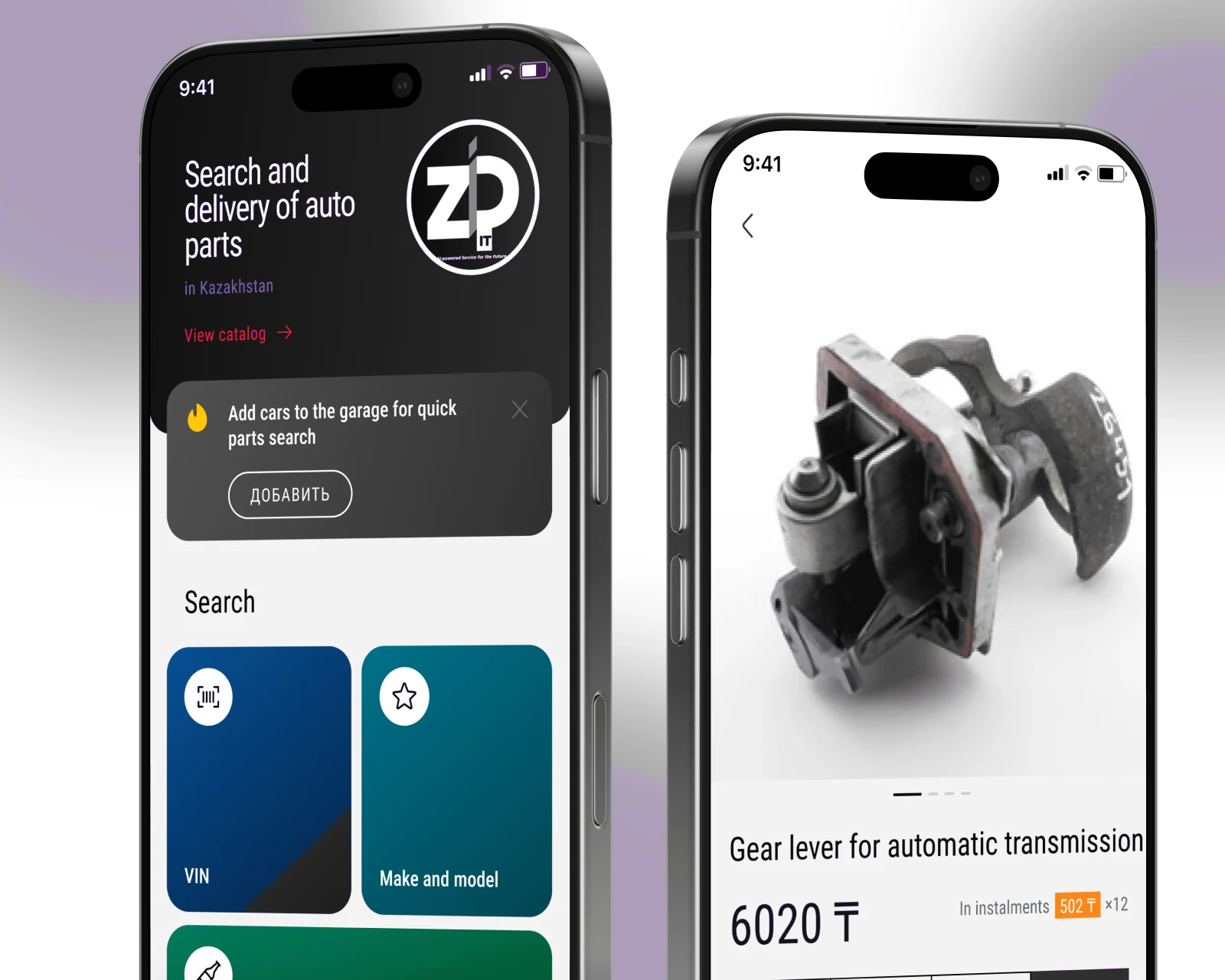
Auto-parts catalog, supplier CRM, and order-to-logistics flow connecting buyers and suppliers across US & EU.
View case →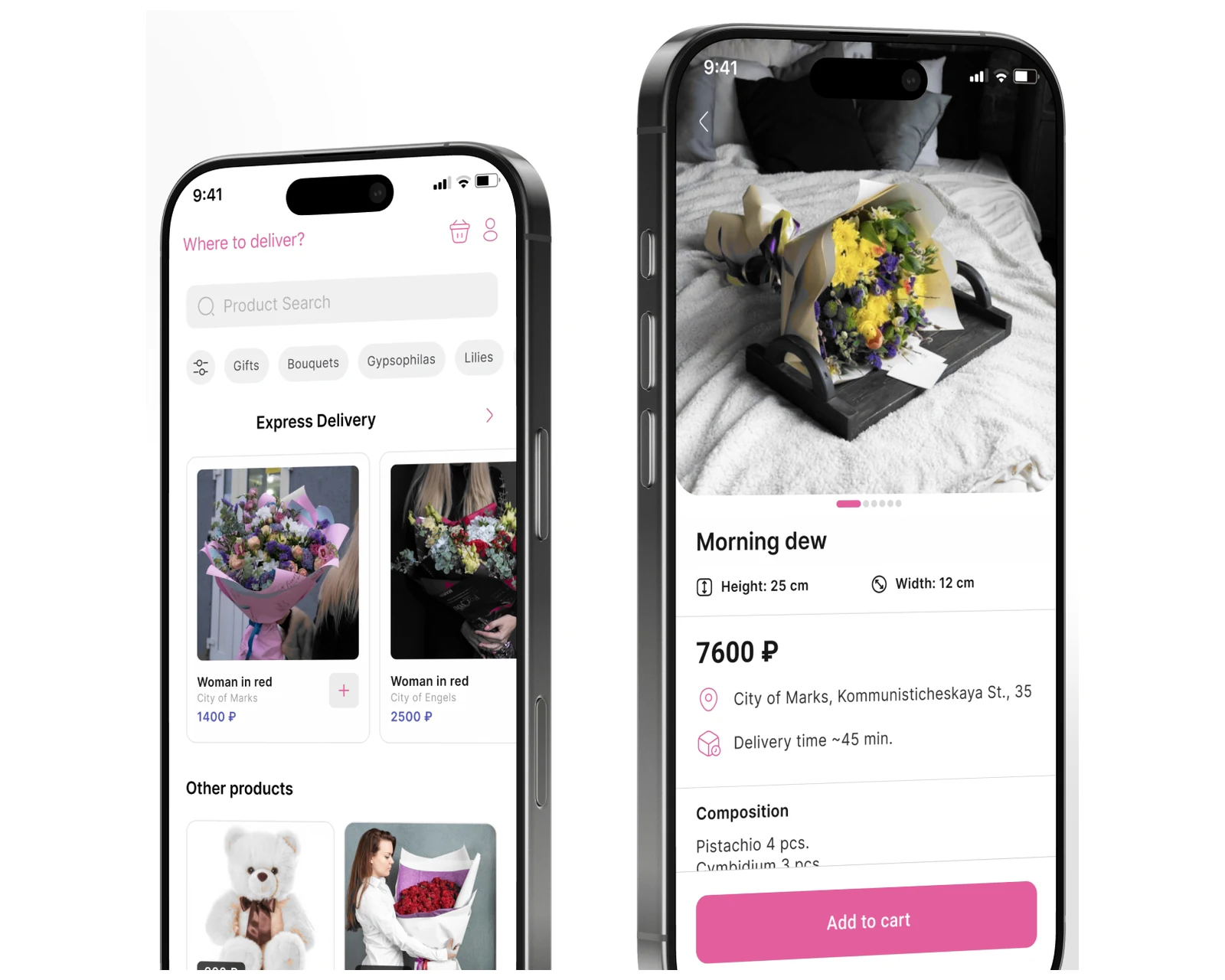
Routing engine, native courier app, and ops dashboard for real-time last-mile delivery across US & EU.
View case →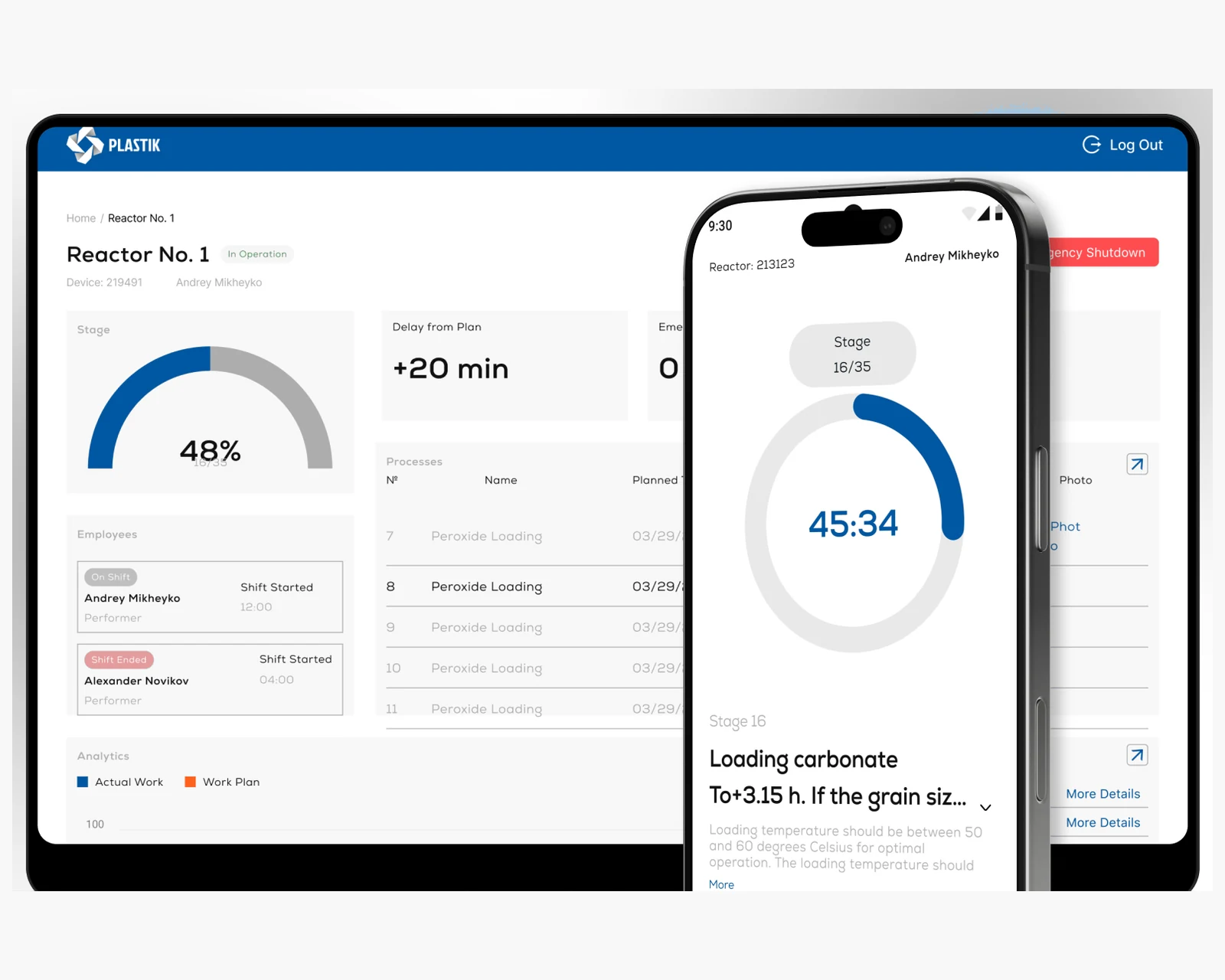
Field-audit tablet app, ops dashboard, and compliance reporting for distributed operations teams across US & EU.
View case →
Custom platforms engineered to your business model, scaling cleanly from MVP to millions of users.
Explore custom software development →
Native iOS, Android, and cross-platform apps with store-ready release pipelines.
Explore mobile app development →
Containerized infrastructure, CI/CD pipelines, and Terraform-managed deployments across US & EU regions.
Explore cloud & DevOps →Share a few details and a senior consultant will reply within one business day.