Fragmented LMS, SIS & tool sprawl
Districts and campuses run a patchwork of LMS, SIS, rostering and point tools that don't talk to each other. We unify them behind LTI 1.3 Advantage, OneRoster 1.2 and Ed-Fi instead of brittle one-off exports.
YuSMP Group is an EdTech software development company building learning platforms, adaptive engines, proctoring suites and student-data systems for K-12 districts, universities and corporate training providers in the US and EU. Senior engineers ship FERPA-, COPPA- and GDPR Article 8-aware products with WCAG 2.2 AA accessibility, LTI 1.3 Advantage integrations and SIS connectivity from PowerSchool to Ellucian. Adaptive content pipelines, xAPI analytics and SCORM packaging are first-class deliverables, not afterthoughts.
Our EdTech practice serves four buyer profiles: K-12 districts and edtech vendors selling into them, who live under FERPA, COPPA, state student-privacy laws and IDEA accessibility duties; higher-education institutions integrating LMS, SIS and library systems with strict accreditation reporting; corporate training and workforce-skilling providers needing SCORM, xAPI and LXP capabilities; and assessment, proctoring and credentialing vendors with high-stakes integrity requirements. We deliver under WCAG 2.2 AA, Section 508 and EN 301 549 from day one, integrate via LTI 1.3, QTI 3, OneRoster 1.2 and Caliper, and treat student data minimization as a default — not a feature flag. Explore how we deliver this through our Custom Software Development service.
Districts and campuses run a patchwork of LMS, SIS, rostering and point tools that don't talk to each other. We unify them behind LTI 1.3 Advantage, OneRoster 1.2 and Ed-Fi instead of brittle one-off exports.
FERPA, COPPA, GDPR Article 8 and a moving target of US state student-privacy laws all apply at once. We bake data minimization, consent flows and DPAs into the schema, and defer the deep how-to to our GDPR compliance consulting.
WCAG 2.2 AA, Section 508 and EN 301 549 aren't nice-to-haves — failing them blocks public-sector procurement and invites complaints. We ship VPAT 2.4 evidence and automated plus manual screen-reader gates.
High-stakes testing needs proctoring, item security and audit-grade evidence without excluding disabled candidates. We build QTI 3 item banks, secure-browser lockdown and defensible retention.
Adaptive engines and AI tutors touch minors, so transparency, no-PII prompting and teacher-visible logs are mandatory. We align builds to our EU AI Act compliance guidance from design onward.
Rosters change every term and identities live across Clever, ClassLink and district IdPs. We wire SAML 2.0, OIDC and LTI Names and Role Provisioning so access follows enrollment automatically — including on mobile learning apps.
Modern LMS and LXP platforms with SCORM 2004, AICC, xAPI, video streaming, discussions and gradebooks. LTI 1.3 tools and platforms both directions.
Adaptive engines that branch on QTI-aware item response, knowledge-tracing models and AI tutors with teacher-visible decision logs.
Secure browser, AI invigilation, identity verification and item-banking with QTI 3 import/export, multi-attempt control and audit-grade evidence retention.
Caliper and xAPI ingestion, learning-record stores, early-warning dashboards and Ed-Fi reporting with district- and school-level access controls.
Offline-first iOS and Android apps for K-12, higher-ed and corporate learners, with accessibility audits and parental-control flows where applicable.
OneRoster, Ed-Fi, Clever, ClassLink and direct integrations with PowerSchool, Infinite Campus, Skyward, Banner, Workday Student and SAP SLcM.
The products above are what we build. These are the education software development services through which schools, universities, training companies and edtech vendors usually hire us — most clients combine two or three of them over the life of a platform.
We interview academic, IT, accessibility and legal stakeholders, map student-data flows and the LMS, SIS and identity landscape, and separate what you should configure on an existing platform from the modules where custom code earns its keep. The output is a scoped delivery plan, an architecture and privacy outline and a fixed quote for the first release.
A tutoring app, a course marketplace or an assessment tool shipped as a focused first release with accessibility and privacy controls in from day one, through our MVP development practice — enough to prove adoption with real teachers and learners before the roadmap grows.
Full-cycle builds of learning platforms, adaptive engines, proctoring suites and school-management tools, web and mobile in parallel, with LTI 1.3, OneRoster and xAPI designed into the data model rather than bolted on before procurement.
Corporate training portals, LXPs, course-authoring tools and certification platforms with SCORM 2004, xAPI and cmi5 tracking, SSO into the workforce identity provider and HRIS sync — the stack that L&D teams and training companies need to prove completion and compliance.
Moving off an end-of-life or heavily customized LMS without losing course history, grades or certificates: content mapping to Common Cartridge and SCORM, data migration in waves and parallel runs before cut-over, through our software modernization service, so a term never starts on a half-migrated platform.
Knowledge-tracing models, retrieval-augmented tutors, automated feedback and learning-analytics pipelines built with our AI, ML & data engineering team — with no-PII prompting, moderation and teacher-visible decision logs as non-negotiable defaults.
Automated and manual accessibility passes, LTI conformance runs and load tests sized for enrollment week and exam windows, then SLA-backed support, monitoring and quarterly privacy and accessibility reviews after launch.
Custom LMS development makes sense when the learning platform is part of your product or your operating model — a commercial academy, a district-wide learning hub, a certification body, a corporate university with its own compliance rules — and off-the-shelf licences force workarounds on roles, pricing, data ownership or integrations. We build the LMS around your learners and your data model, and keep every module standards-compliant so content and records stay portable.
| LMS module | What it covers | Standards & integrations |
|---|---|---|
| Course & content management | Course builder, modules, versioning, multimedia and video, content libraries, prerequisites and learning paths | SCORM 2004, AICC, cmi5, Common Cartridge |
| Learner tracking & records | Progress, completions, time-on-task and activity streams stored in a learning-record store | xAPI, Caliper |
| Assessment & grading | Quizzes, item banks, rubrics, gradebook and grade passback to the SIS or host LMS | QTI 3, LTI Assignment and Grade Services |
| Certificates & compliance training | Certificate engine, expiry and recertification rules, audit-ready completion reports | xAPI statements, exportable audit logs |
| Engagement & social learning | Gamification (points, badges, streaks), discussions, cohorts, live classes and webinars | LTI 1.3 for video and conferencing tools |
| Payments & subscriptions | Course sales, subscriptions, bundles, coupons and creator or instructor payouts for commercial academies | PCI-scoped payment provider integration |
| Users, roles & tenants | Learner, instructor, admin and parent roles; multi-tenant set-ups for districts, clients or departments | SAML 2.0, OIDC, OneRoster 1.2, LTI NRPS |
| Reporting & analytics | Instructor and admin dashboards, early-warning signals, exports to BI and data warehouses | Ed-Fi, xAPI / Caliper pipelines |
Already on Moodle, Canvas or Open edX? We often extend them with LTI 1.3 tools and plugins instead of replacing the core — see custom build vs configure below. For a deeper walkthrough of architecture and feature priorities, read our custom LMS software development guide and the eLearning software development cost and stack overview. Commercial academies with subscriptions and multi-tenant accounts can also draw on our SaaS development practice.
GDPR-aligned · ISO 27001 ready · SOC 2 Type II in progress · WCAG 2.2 AA · Section 508 · VPAT 2.4 on request
FERPACOPPA (US K-12)GDPR Art. 8 (EU children)WCAG 2.2 AASection 508EN 301 549LTI 1.3QTI 3xAPISCORM 2004CaliperOneRoster 1.2Common CartridgeEd-FiSPPA (state student-privacy laws)IDEA Section 504CCPA / CPRA
Standards-native connectors and certified test suites — not hand-rolled approximations.
Canvas, Moodle, Blackboard Learn, Brightspace (D2L), Schoology and Open edX — as LTI 1.3 Advantage tools and platforms, with Common Cartridge import/export both directions.
PowerSchool, Infinite Campus, Skyward, Ellucian Banner, Workday Student and SAP SLcM — via OneRoster 1.2 REST, Ed-Fi and direct SOAP/REST integrations for roster and grade sync.
Clever, ClassLink, Google Workspace for Education and Microsoft Entra ID — SAML 2.0, OIDC and LTI Names and Role Provisioning so access follows enrollment each term.
SCORM 2004, AICC, xAPI, cmi5, QTI 3 and IMS Caliper — packaged and validated against certified conformance suites, not best-effort guesses.
Item banks, secure-browser lockdown, live and AI invigilation, identity verification and QTI 3 import/export with multi-attempt control and audit-grade evidence.
Learning-record stores, Caliper and xAPI pipelines, Ed-Fi ODS and early-warning dashboards — deployed on scalable, observable infrastructure via Cloud & DevOps.
Stakeholder interviews with academic leadership, IT, accessibility and legal. We map data flows, integration points and privacy obligations per jurisdiction.
FERPA/COPPA/GDPR data model, LTI/OneRoster/SIS contracts, accessibility design tokens, and a security threat model reviewed before sprint one.
Two-week sprints with automated axe-core, NVDA/VoiceOver checks, LTI compliance test suite runs and pilot-school feedback loops every release.
District rollout playbook, teacher training assets, VPAT 2.4 documentation, on-call SLAs and quarterly privacy and accessibility reviews.
Framework choices are driven by accessibility, scale and interoperability requirements — not fashion.
React, Next.js and TypeScript for accessible web clients; React Native and Flutter for offline-first mobile learning. Design tokens encode WCAG 2.2 AA contrast and focus states so accessibility survives every redesign.
Node.js, Python, Laravel/PHP and .NET behind REST and GraphQL. Event-driven services handle roster syncs, grade passback and xAPI statement volumes without blocking the learner experience.
PostgreSQL, learning-record stores, Ed-Fi ODS and warehouse pipelines (Kafka, dbt). Caliper and xAPI events flow into early-warning dashboards with school- and district-level row security.
Knowledge-tracing models, retrieval-augmented LLM tutors and vector search over curriculum — wrapped in no-PII prompting, content moderation and teacher-visible decision logs.
IMS-certified LTI 1.3 Advantage, QTI 3 item handling, SCORM 2004 and xAPI packaging, OneRoster 1.2 and Common Cartridge — validated against conformance suites, not hand-rolled approximations.
AWS, Azure and GCP with infrastructure-as-code, encryption in transit and at rest, least-privilege IAM and SOC 2-aligned controls. CI gates run axe-core, LTI compliance suites and dependency scanning on every release.
Not every edtech roadmap needs a platform written from scratch. We help you draw the line honestly, then deliver on whichever side of it fits — custom engineering, extension of an open platform, or systems integration around a commercial LMS.
When Canvas, Moodle or Open edX already cover most of the need, we build LTI 1.3 tools, plugins and integrations around them instead of rebuilding the core — the fastest path to a pilot and the lowest maintenance surface.
When the product is the differentiator — a novel adaptive engine, a proctoring suite, a district data platform — off-the-shelf tools constrain you. Custom gives you the data model, UX and compliance posture you actually need.
Siloed SIS, disconnected point tools and manual CSV exports are the real cost. Wiring OneRoster, Ed-Fi and SSO across the estate so data follows enrollment is often the highest-ROI first project.
Cost depends on scope, the number of integrations and the compliance surface — a K-12 product under FERPA, COPPA and state student-privacy laws carries more design and audit work than an internal training portal. These are the reference points we already publish:
What moves a project between tiers: the number of LMS, SIS and identity integrations; the standards you must certify against (LTI 1.3, QTI 3, OneRoster, xAPI); accessibility evidence for public-sector procurement (WCAG 2.2 AA, Section 508, VPAT); whether minors are involved (COPPA, GDPR Article 8); AI features that need moderation and oversight; offline mobile requirements; and peak load at enrollment or exam time. Every engagement is scoped and quoted against your requirements — see how our pricing works.
On timelines: a scoped MVP or one-institution pilot typically takes 8–12 weeks, then work continues in two-week sprints with a demo at the end of each, so teachers, instructional designers and administrators see working software early — which is exactly where learning platforms succeed or fail.
Education products live on the academic calendar, so the way you contract a team should follow it too. Schools, universities and training companies usually start narrow and widen the engagement once a pilot proves adoption; commercial terms for each option are on our pricing and engagement models page.
Suited to a pilot for one school or faculty, a single LTI 1.3 tool or a first mobile learning app. Discovery pins down deliverables, accessibility targets and integrations, and that release is priced as a fixed amount — useful when the budget comes from a grant or a single fiscal year.
A stable product manager, designer, engineers and QA lead who learn your curriculum model, user roles and data flows and ship your LMS, assessment or district data roadmap release after release. This is our dedicated development team model, and it is where most education platforms settle after launch.
When your product team already owns the roadmap but lacks LTI, SCORM/xAPI, SIS-integration or accessibility specialists ahead of the next term, we embed senior engineers into your rituals and tooling via IT staff augmentation.
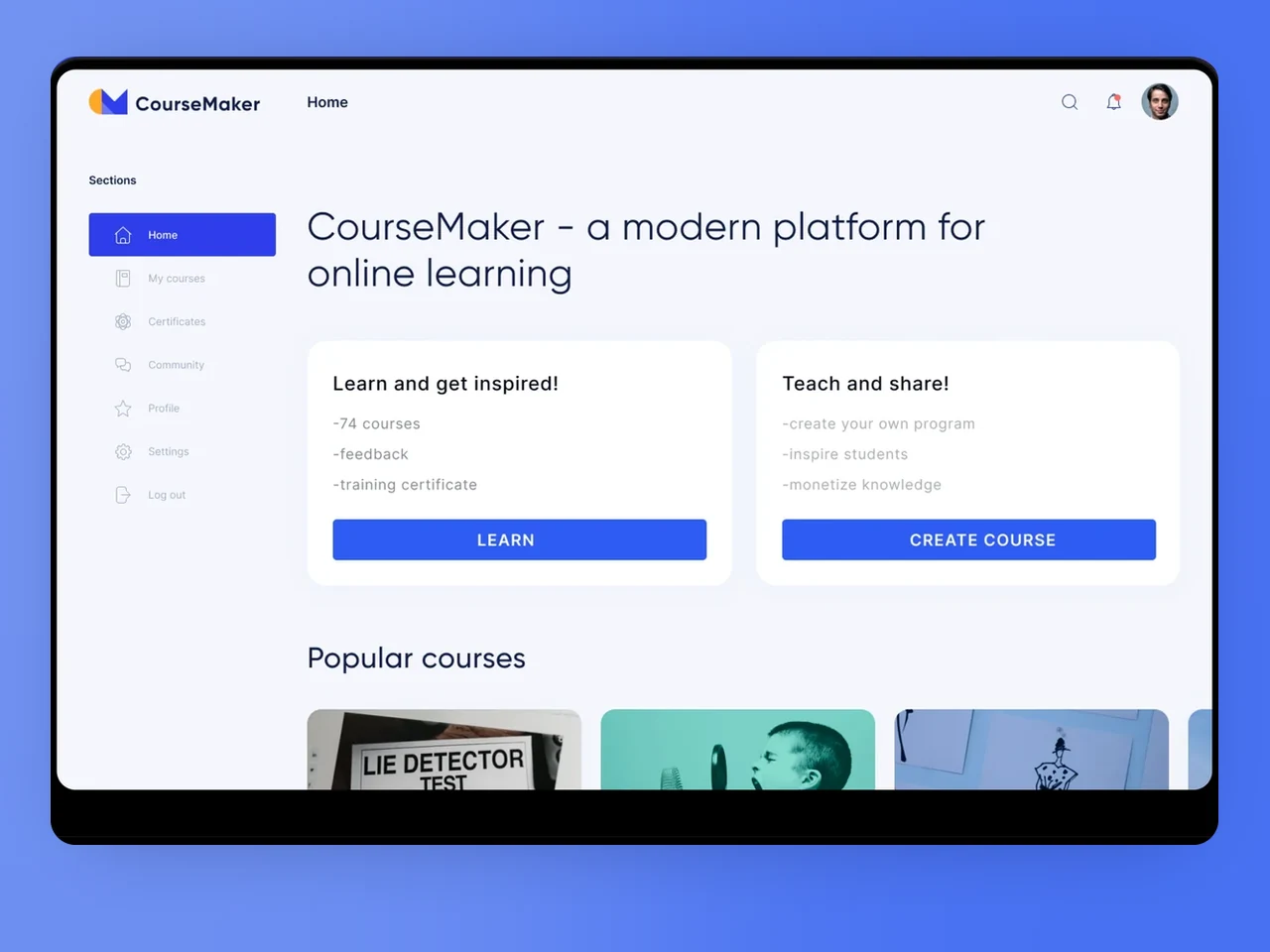
Laravel + React EdTech platform — three role-isolated workspaces, certificates engine, InfoProtector content gating, creator payouts.
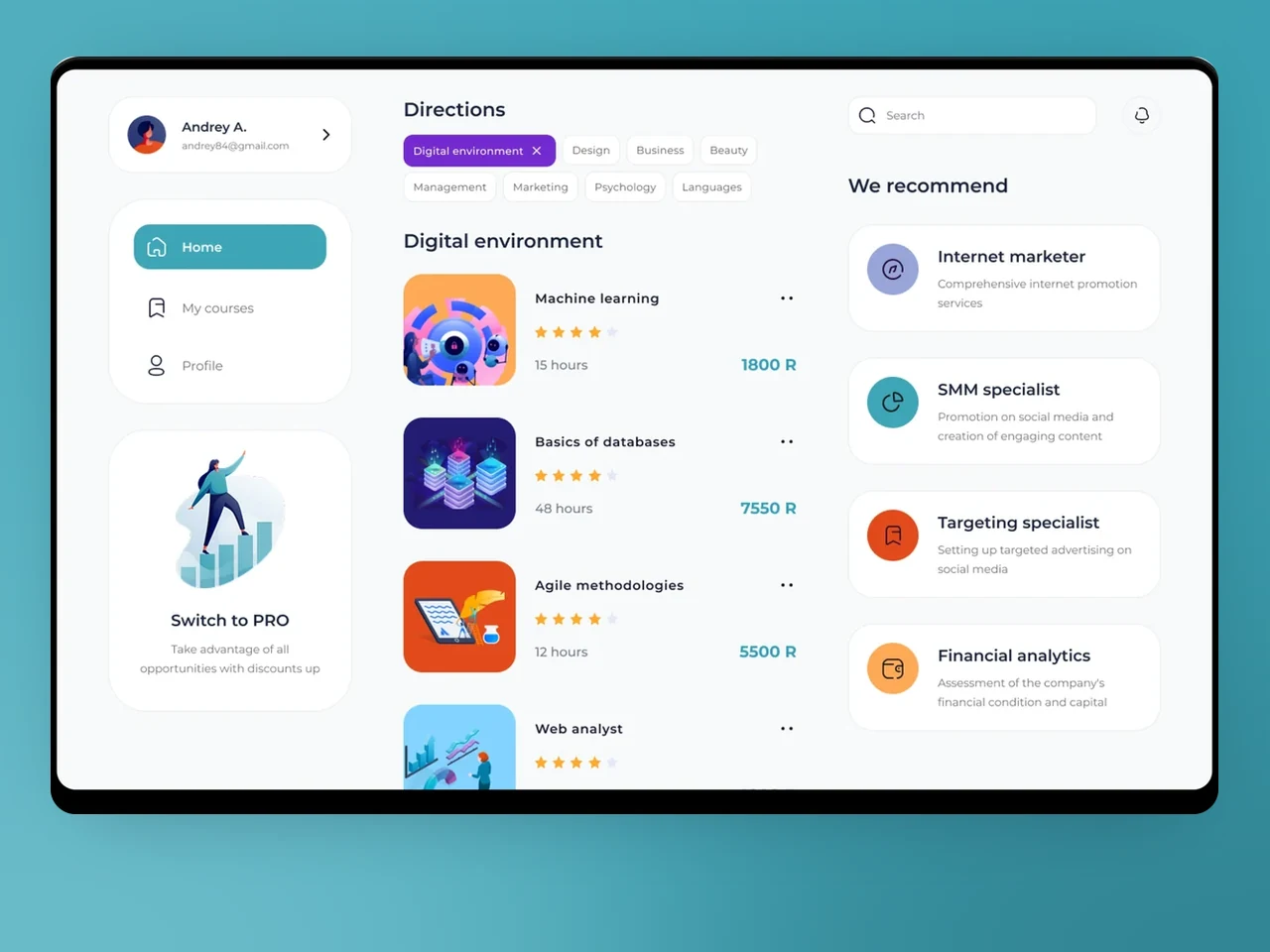
A two-sided coaching marketplace — coach rooms, live webinars, mentor-set pricing and payouts — for online educators across the US & EU.
Senior engineers who understand FERPA school-official exceptions, COPPA verifiable parental consent and GDPR Article 8 — and design schemas accordingly.
WCAG 2.2 AA, Section 508 and EN 301 549 in the definition of done. VPAT 2.4 documents delivered on request.
LTI 1.3 Advantage, QTI 3, OneRoster 1.2, Caliper, xAPI and SCORM 2004 — certified test suites, not hand-rolled approximations.
Compliance posture: GDPR-aligned · FERPA-ready · COPPA-aware · WCAG 2.2 AA · Section 508 · SOC 2 Type II in progress · ISO 27001 ready.
Classroom tools, parent and student apps and district data platforms that pass FERPA, COPPA and state student-privacy reviews and roster through Clever, ClassLink and OneRoster. Background reading: our FERPA and COPPA compliance guide for edtech.
LTI 1.3 tools for Canvas, Brightspace and Blackboard, SIS integrations with Banner, Workday Student and SAP SLcM, and analytics that support accreditation reporting.
eLearning portals, LXPs and certification platforms with SCORM/xAPI tracking, SSO into the workforce identity provider and audit-ready compliance-training reports.
From a fundable MVP to a platform that survives district procurement: accessibility evidence, interoperability certifications and privacy agreements that buyers ask for.
Course marketplaces, coaching and tutoring platforms with payments, certificates, live sessions and payouts — the model behind our CourseMaker and coaching platform cases.
Item banking, secure delivery, proctoring and digital credentials with QTI 3 portability and evidence retention that stands up to appeals.
Lists of the “top education software development companies” rank vendors by size and marketing. A district, university or training company choosing an edtech software development partner needs different evidence. These are the questions we would ask in your place — of us and of anyone else on your shortlist.
YuSMP brings 9+ years of delivery, 120+ projects and a CET workday with a 4-hour US East-Coast overlap to that checklist; our edtech case studies and client reviews are the place to verify it.
Building an e-learning platform on Laravel and React sounds straightforward until you need progress tracking, certificates, and payment flows that actually convert. YuSMP made it look easy. Course completion rates on our platform consistently beat industry averages.
Running live webinars, private coach rooms, and mentor payouts on one platform is complex infrastructure. YuSMP delivered a stable streaming layer and a payout engine that handles multi-currency disbursements without manual reconciliation. Our coaches now focus on content, not admin.
1 / 2
FAQ
We implement FERPA directory-information controls, parental-consent flows for COPPA under-13 users, and district-level audit logging. Data sharing with third parties runs through DPAs that mirror the school official exception.
Yes. We deliver LTI 1.3 Advantage tools (Deep Linking, Names and Role Provisioning, Assignment and Grade Services) for Canvas, Moodle, Blackboard, Brightspace and Schoology, plus LTI 1.1 fallback where required.
Accessibility lives in our definition of done: semantic HTML, keyboard paths, ARIA only where needed, color-contrast tokens, and automated axe-core gates plus manual NVDA/JAWS/VoiceOver passes. We deliver VPAT 2.4 documents on request.
We treat under-16 users under GDPR Article 8 with verifiable parental consent, age-gating logic, and Member-State age-of-consent variations (13-16). DPIAs cover profiling and adaptive learning flows.
Yes. We use OneRoster 1.2 REST and CSV for roster sync, Ed-Fi for analytics, and direct SOAP/REST integrations for PowerSchool, Infinite Campus, Skyward, Ellucian Banner, Workday Student and SAP SLcM.
We build adaptive engines with IMS Caliper analytics, transparent rule + ML scoring, and content-moderation guardrails. AI tutors run with model-risk controls, no PII in prompts, and teacher-visible decision logs.
Both. Where an open platform covers most of the requirement we build LTI 1.3 tools, plugins and integrations around it; where the product itself is the differentiator we build custom. We help you decide honestly before a line of code is written.
Yes. A typical first phase is a scoped MVP or one-institution pilot in 8–12 weeks, with accessibility and privacy controls in from day one, then a district- or campus-wide rollout once the pilot data holds up.
Automated axe-core gates catch regressions, but we also run manual NVDA, JAWS and VoiceOver passes, keyboard-only journeys and color-contrast token audits, and deliver VPAT 2.4 documentation to support Section 508, IDEA and Section 504 obligations.
Yes. Education-facing AI that affects minors carries transparency and risk-management duties. We align adaptive engines and AI tutors to those obligations — documented logic, human oversight, no-PII prompting and teacher-visible decision logs — through our EU AI Act compliance guidance.
We deploy to region-pinned infrastructure so EU learner data stays in the EU and US data stays in-country, with separate encryption keys, access policies and DPAs per jurisdiction. Cross-border flows run under documented transfer mechanisms only where lawful.
Fixed-scope MVPs and discovery engagements, dedicated cross-functional teams for ongoing product work, and staff augmentation to extend an in-house team. Most edtech clients start with a fixed-scope pilot and move to a dedicated team once the roadmap is proven.
It designs, builds, integrates and supports software for learning: LMS and eLearning platforms, adaptive learning and AI tutors, assessment and proctoring tools, school-management and SIS integrations, and mobile learning apps. A specialist partner also brings the domain layer — student-data privacy (FERPA, COPPA, GDPR Article 8), accessibility (WCAG 2.2 AA, Section 508) and interoperability standards (LTI 1.3, OneRoster, QTI, SCORM, xAPI).
A first version can start as a fixed-scope MVP — from $6,900 for a classic single-platform MVP or from $13,800 for web plus mobile. A production LMS with SIS and identity integrations, multi-tenancy, payments or certification typically falls in the custom-build range of 50k USD/EUR up to 500k+ for platform-scale programs. Integrations, standards certification, accessibility evidence and AI features are the main cost drivers; every project is scoped and quoted after discovery.
Corporate eLearning is measured by completion and compliance rather than grades, so the platform needs SCORM 2004, xAPI or cmi5 tracking, certificate and recertification rules, SSO into the workforce identity provider, HRIS sync and audit-ready reports. Training companies that sell courses to several clients also need multi-tenant accounts, branding per client and subscription or seat-based billing.
Yes. We inventory courses, users, grades and certificates, map content to Common Cartridge and SCORM, migrate data in waves and run old and new platforms in parallel before cut-over, timed around the academic or training calendar so learners never lose history or progress.
We load-test against the real calendar peaks — enrollment week, the first day of term, exam windows and course launches — and design for them with autoscaling cloud infrastructure, caching, queued roster syncs and xAPI ingestion, and monitoring with on-call SLAs during high-stakes periods.
Yes. Code, content and learner data belong to you; IP transfers to your entity under the MSA, and the repositories, cloud accounts and documentation are handed over so you can continue in-house or with another team.
Look past rankings and ask for shipped education cases, proof of LTI, OneRoster, QTI, SCORM and xAPI conformance, a privacy-by-design approach to FERPA, COPPA and GDPR, accessibility evidence such as a VPAT, a responsible-AI policy for features that touch minors, a load-testing plan for peak periods, a discovery phase with a fixed first-release quote and clear code and data ownership.
Tell us where you want to be in twelve months. We’ll come back with a plan to get you there.
Response within 1 business day. NDA on request.
In-depth guides on building compliant edtech — student-data privacy, FERPA, COPPA and AI rules.
Share a few details and a senior consultant will reply within one business day.
Email: sales@yusmpgroup.com
Phone: +374 44 871 811
Offices: KAMAR Business Center, Vazgen Sargsyan St. 2, Yerevan, Armenia · Remote — East-Coast US overlap (9 AM–1 PM ET)