Django + DRF / Ninja APIs
Django 5.x with DRF or Django Ninja, OpenAPI 3.1 generation, typed Pydantic schemas, multi-tenant patterns (schema-per-tenant or row-level), and the Django Admin built into the operations workflow, not bolted on.

Services
Senior Django and Python engineering for funded teams: Django 5.x with DRF or Django Ninja, FastAPI services where async wins, Celery / RQ / Dramatiq workers, PostgreSQL with proper indexing and partitioning, and PEP 621 / uv-managed monorepos on AWS, GCP and Azure. We ship the Django you wish your last team had shipped — typed, observable, and ready for SOC 2. Fixed-scope, all-in USD: a web app MVP from $4,100, a CRM or B2B portal from $8,100, a full SaaS platform from $13,800.

GDPR-aligned · ISO 27001 ready · SOC 2 Type II in progress · HIPAA-capable · CCPA-acknowledged · CET workday with 9 AM–1 PM ET overlap
Django remains the right call for any product with a non-trivial data model, a non-trivial admin surface, and a roadmap that goes past five years. We pair it with DRF or Django Ninja for type-safe REST APIs, FastAPI for high-concurrency async endpoints, Celery on Redis or RabbitMQ for background jobs, and Postgres 16 with proper partitioning, RLS and partial indexes for multi-tenant SaaS. Our Python engineers ship with mypy strict, ruff, pytest at 80%+ coverage on critical paths, and OpenTelemetry tracing wired into Sentry and Datadog from day one. We are GDPR-aligned · ISO 27001 ready · SOC 2 Type II in progress.
Django 5.x with DRF or Django Ninja, OpenAPI 3.1 generation, typed Pydantic schemas, multi-tenant patterns (schema-per-tenant or row-level), and the Django Admin built into the operations workflow, not bolted on.
FastAPI for high-concurrency async endpoints — webhook ingestion, fan-out HTTP, LLM streaming. Uvicorn behind Gunicorn or Hypercorn on Kubernetes, with httpx for upstream calls.
Celery on Redis or RabbitMQ, Dramatiq or RQ when Celery is overkill, Temporal for long-running workflows. Scheduled jobs via Celery Beat or APScheduler, observable with Flower or Sentry Cron.
django-allauth, dj-rest-auth, Auth0 or Keycloak SSO, JWT or session auth, SCIM provisioning for enterprise. Row-level multi-tenancy with django-tenants when isolation matters.
Python data engineering with Pandas, Polars, DuckDB and PyArrow. Airflow or Prefect orchestration, dbt for SQL transformations, output to Snowflake, BigQuery, ClickHouse or Postgres.
Migrating Django 2.x/3.x to Django 5.x, function-based to class-based views or Ninja, Python 3.8 to 3.12, requirements.txt to uv / Poetry, monolith to modular monolith with django-stubs strict mypy.
1–2 weeks: read settings.py, models, and migrations history; benchmark slow ORM queries; produce a written ADR comparing DRF vs Ninja vs FastAPI for your domain; sign NDA + DPA.
Sprint 1–2: uv-managed dependencies, pre-commit with ruff and mypy strict, GitHub Actions CI, Docker multi-stage build, OpenTelemetry, Sentry, structured logging with structlog, blue/green deploys on EKS or Cloud Run.
Two-week sprints, trunk-based, feature flags via Waffle or Unleash, pytest + factory_boy + hypothesis for property-based tests, contract tests against downstream services, load tests with Locust before each release.
On-call handover (PagerDuty / Opsgenie), SLO dashboards in Grafana or Datadog, Postgres slow-query review monthly, dependency upgrades via Renovate, quarterly cost review of cloud spend.
Default for most teams. Scope and budget locked at the end of discovery, delivered in fixed-price tiers from a web app MVP through to a full SaaS platform. You sign off on the line-item budget before any code is written. From $4,100.
Keep the same squad on a rolling backlog after launch — new features, integrations and scale work shipped sprint by sprint. Best for a product that has found traction and needs to keep moving. No recontracting.
One or two senior Python / Django engineers slotted into your existing squad, your stand-up, your process. Best for filling a known capability gap without disturbing team structure. See staff augmentation.
All-in USD pricing, no recruitment markup, no tool surcharges. NDA, DPA, and IP assignment signed before kickoff.
Most agencies keep the number for a sales call. Below are reference tiers by the shape of the build — we name the exact quote after a free scope assessment. Every build is fixed-scope and all-in, quoted in USD, with no recruitment markup, no tool surcharges and no hidden fees. You see the line-item budget before any code is written and sign off on it.
Web app MVP / dashboard
from $4,100
4–8 weeks · one app
A first working Django or FastAPI web app or internal client dashboard. Auth and accounts, core CRUD screens, the Django Admin, event analytics, deploy and source handover.
CRM / B2B portal
from $8,100
8–12 weeks · multi-role
A multi-role CRM or B2B portal. Roles and permissions, third-party integrations, a customised admin, a DRF or Django Ninja API and reporting built for operators, not demos.
SaaS platform
from $13,800
12+ weeks · multi-tenant
A production multi-tenant SaaS. Tenant isolation with RLS or schema-per-tenant, billing, SSO, Celery workers, observability and SOC 2-ready controls from day one.
Marketplace / highload
from $28,700
scoped · high-throughput
A marketplace or high-throughput platform. Partitioned Postgres, queue sharding and an outbox pattern, search, payments and horizontal scaling on EKS or Cloud Run.
What moves the number: the data-model and admin surface (a CRUD API vs a multi-tenant SaaS with schema-per-tenant isolation, RLS and a heavily customised Django Admin); the scope shape (a greenfield Django build vs a strangler-fig migration off a Django 2.x / Python 3.7 monolith behind feature flags); the throughput profile (a plain request/response app vs a Celery pipeline running millions of tasks a day that needs queue sharding and an outbox pattern); and the compliance scope (EU data-residency with region-pinned infrastructure, application-layer PII encryption, GDPR DPAs, HIPAA controls for US healthtech). GPU, third-party tooling and cloud spend run on your own accounts, so you keep the cost lever. Anything outside the signed scope goes on the post-launch roadmap with sized estimates rather than a silent budget extension. Prices are indicative and are fixed in a written quote for your specific scope. Python and Django are one strand of our wider web application development and AI, ML & data practice.
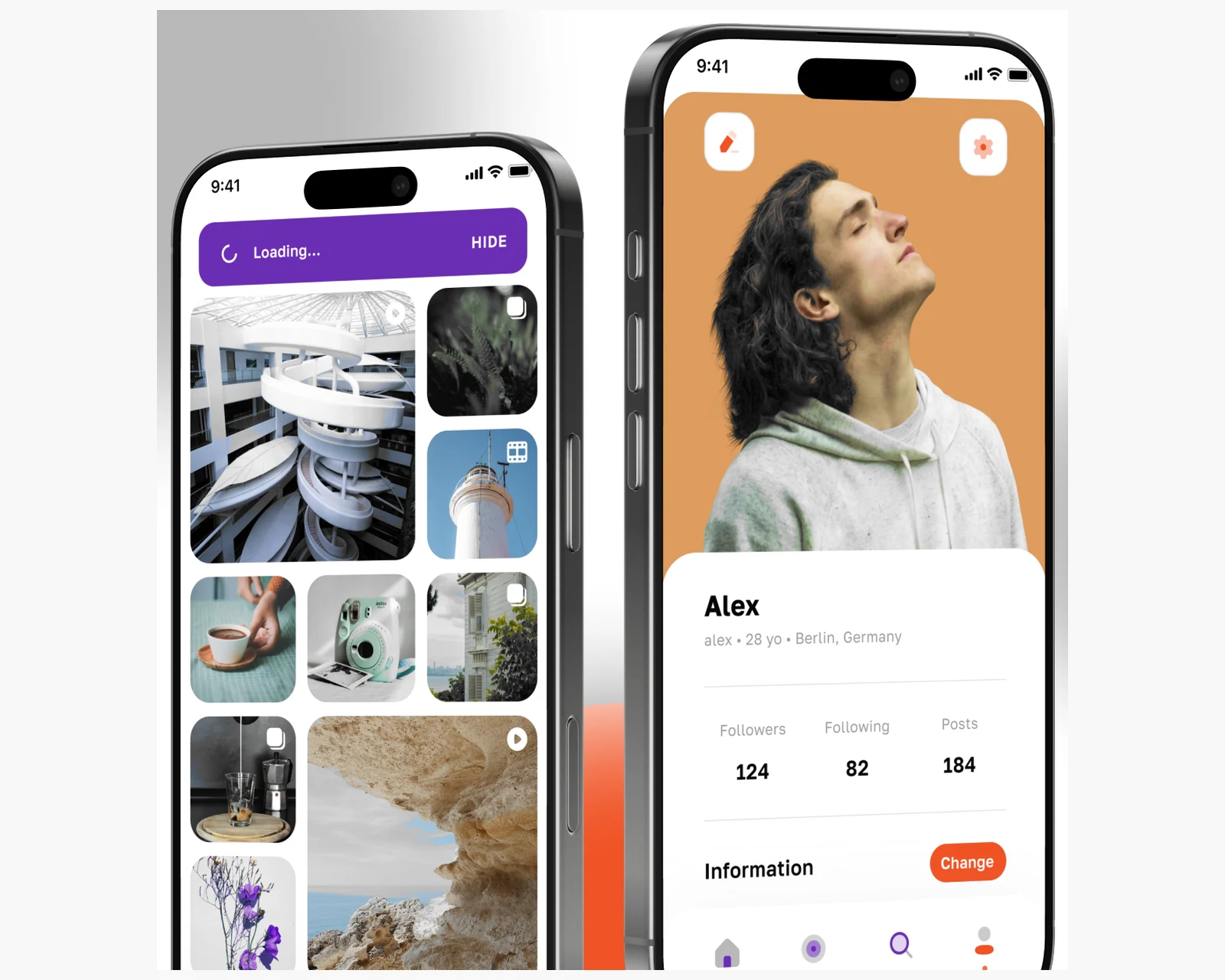
Production social platform — App Store + Google Play, live across the US and EU — with geo Radar, encrypted messaging and a virtual economy.
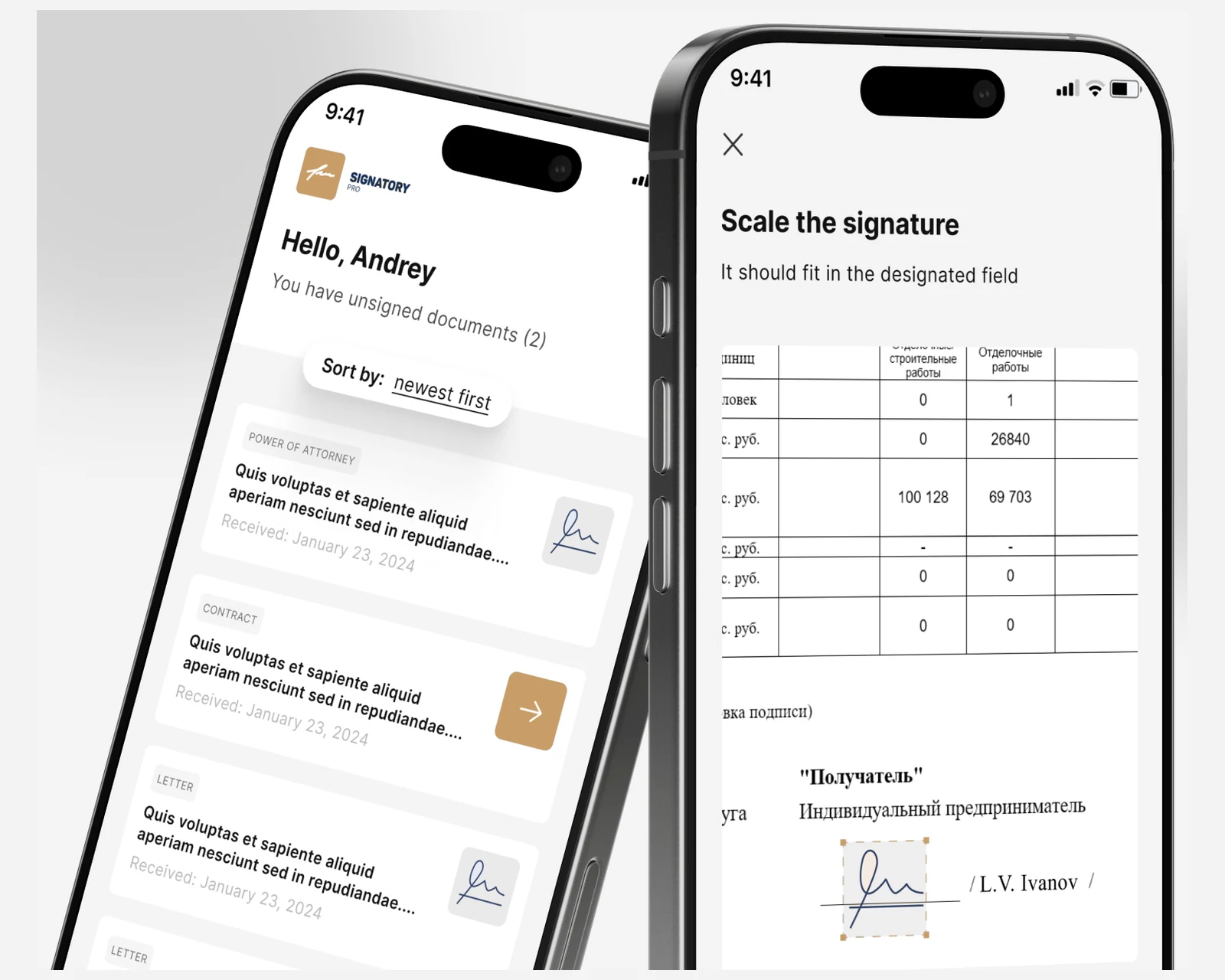
Native iOS and Android e-signature clients with a Symfony + React CRM for a cross-border law firm — KYC onboarding and a defensible evidence trail for US & EU matters.
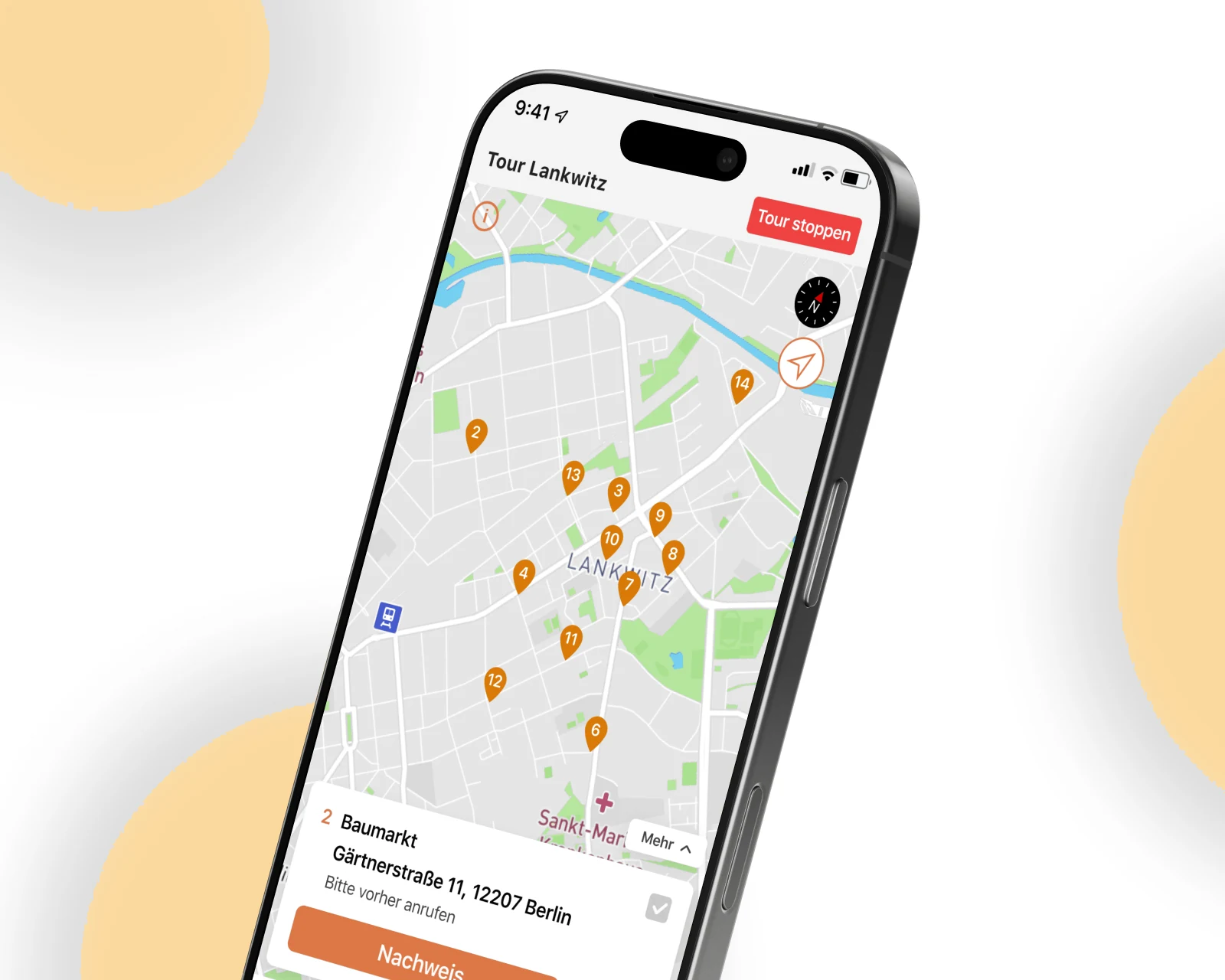
Android + iOS refactor and rebuild for a German last-mile logistics operator — multi-point route planning, real-time driver tracking and in-app invoicing live in the EU.
GDPR-aligned · ISO 27001 ready · SOC 2 Type II in progress · HIPAA-capable · CCPA-acknowledged
Every engineer on your account has 6+ years of production Django experience. No bait-and-switch from the senior who sold the deal to a junior who actually ships.
CET-aligned squads with a guaranteed 9 AM–1 PM ET overlap for US clients — four hours of synchronous work per day, async docs for the rest. No 3 AM standups for anyone.
GDPR DPAs, SOC 2 Type I/II readiness, HIPAA controls for US healthtech, CCPA notices, EU AI Act for AI features. The compliance work is built into the sprint, not bolted on at audit time.
For regulated workloads we work directly with your auditor or fund's technical advisor and prepare evidence to the standard the reviewer expects — not the standard a generalist consultant assumes.
Trading portals, lending platforms, personal finance dashboards and payment orchestration layers. We integrate Django with banking core systems, credit bureau APIs, KYC/AML providers and PSD2-compliant open banking endpoints. GDPR Article 28 DPAs and SOC 2-ready audit controls are included from day one, not retrofitted before the auditor visits.
Patient portals, scheduling and referral systems, clinical note intake, and EHR integration via HL7 FHIR or HL7 v2. HIPAA-capable: field-level encryption via django-cryptography, audit logs with tamper-evident hashing, access controls and BAA available. Deployed on HIPAA-eligible AWS or Azure infrastructure in US or EU regions.
Multi-tenant course delivery platforms, grading pipelines, xAPI / Tin Can-compliant learning records, and subscription billing with Stripe. Django's ORM handles the hierarchical course → module → lesson data model cleanly; the Django Admin gives curriculum managers a no-code interface for day-to-day catalogue operations without engineering involvement.
Django-powered storefronts with Celery-backed order pipelines, multi-vendor marketplace platforms with Stripe Connect split payments, and full-text search on Elasticsearch or MeiliSearch. Partitioned Postgres handles large catalogues at scale; the transactional outbox pattern keeps inventory events consistent across services under high write load.
Dispatch portals, driver-facing mobile backends, real-time tracking via WebSocket or MQTT, route-optimisation API wrappers and proof-of-delivery capture. We connect Django to ERP and WMS systems via REST or EDI. Background Celery workers handle geofencing checks, SLA breach alerting and carrier-rate polling without blocking the request path.
Matter management systems, compliance tracking dashboards, e-signature workflows and document assembly pipelines. Django's RBAC maps naturally to attorney/paralegal/client permission hierarchies. EU AI Act compliance documentation tooling, SOC 2 evidence collection pipelines and GDPR Article 30 record generation are recurring deliverables in this vertical.
A loan decision engine that takes ten times less time to approve does not happen by accident. YuSMP built the scoring pipeline, integration with credit bureaus, and a back-office that our underwriters actually enjoy using. Approval turnaround went from two days to under four hours.
We publish dozens of sports articles a day. YuSMP built an editorial pipeline using a Telegram bot as the CMS — editors post once, content lands on web, iOS, and Android instantly. The architecture requires zero daily maintenance.
Django wins on three axes: a mature ORM that handles complex schemas without leaking to raw SQL too often, the Django Admin which is operationally indispensable for B2B SaaS and internal-ops products, and an ecosystem (django-allauth, django-tenants, django-filter, DRF, Wagtail) that covers 80% of common SaaS needs without you reinventing them. Pick FastAPI for pure-async high-concurrency services. Pick Go for CPU-bound binaries. Pick Rails only if you already have Ruby expertise on the team — the gap to Django is small but the talent pool in EU and US in 2026 strongly favours Python.
Django 5.1 LTS is the default for new builds (LTS through April 2028), with Django 4.2 LTS for legacy migration targets. Python 3.12 default, 3.13 once ecosystem catches up (Q3 2026 for our shop). DRF 3.15+ with Spectacular for OpenAPI 3.1. mypy 1.11+ in strict mode with django-stubs. We use uv for dependency management and ruff for linting and formatting — both have replaced pip-tools, black and flake8 in our toolchain since 2025.
Yes. Default deployment is AWS eu-central-1 / eu-west-1, GCP europe-west3 / europe-west1, Azure germany-westcentral on request. PII at rest is encrypted with django-cryptography or pgcrypto, with KMS keys held in the customer account. We sign GDPR Article 28 DPAs, run DPIAs for high-risk processing, and maintain Article 30 records. For SOC 2 Type I/II we ship the controls evidence pack: access reviews, change management via PRs, encrypted backups, audit logs, vendor management. For US clients we mirror in us-east-1 / us-west-2 with CCPA and (where relevant) HIPAA controls.
Past ~500 tasks/sec on a single Redis broker, we shard Celery queues by workload type, move heavy fan-out to Dramatiq or Temporal, and adopt Redis Cluster or RabbitMQ with proper prefetch tuning. We monitor with Flower plus Sentry Cron and Datadog APM. For exactly-once semantics we use the outbox pattern on Postgres rather than relying on broker delivery guarantees. The largest pipeline we operate currently runs 8M Celery tasks per day on a 12-worker EKS deployment with p95 latency under 1.2 seconds.
Yes, this is one of our most common engagements. We run incremental upgrades: 2.2 LTS → 3.2 LTS → 4.2 LTS → 5.1 LTS, with the test suite green at every step. Python upgrades 3.7 → 3.8 → 3.10 → 3.12 in parallel. We add django-stubs and mypy strict per app, not globally. The strangler-fig pattern peels off bounded contexts into FastAPI or Django Ninja services where async or independent scaling earns it. Typical 100k-LOC monolith takes 5 to 8 months with no customer-visible downtime.
Pricing is fixed-scope and all-in, quoted in USD, with no recruitment markup and no tool surcharges. A web app MVP or client dashboard runs from $4,100 (4–8 weeks); a CRM or B2B portal from $8,100 (8–12 weeks); a production multi-tenant SaaS platform from $13,800 (12+ weeks); a marketplace or highload build from $28,700. The exact number depends on the data-model and admin surface, the integration count, the throughput profile and the compliance scope. You see the line-item budget before any code is written and sign off on it. All engagements include CET workday with 9 AM–1 PM ET overlap for US clients, and NDA + DPA + IP assignment signed before kickoff.
Yes, though the pattern matters. For low-frequency inference (<100 req/min) we call a scikit-learn, XGBoost or ONNX model directly from a Django view — simple and no extra infrastructure. For higher throughput we run a dedicated FastAPI inference service (with Uvicorn + model loaded once at startup) behind an internal load balancer, and the Django app calls it via httpx async. For GPU-heavy workloads (LLM inference, image generation) we deploy separate Triton Inference Server or vLLM instances on GPU nodes and call them from Celery tasks to keep the web request path fast. Feature pipelines that feed models go through Airflow or Prefect with dbt transformations and output to ClickHouse or Postgres for serving. We have production experience with OpenAI, Anthropic, Mistral and self-hosted Llama integrations from Django via the standard SDKs.
Pytest with factory_boy for fixtures — we avoid Django's TestCase where pytest-django's transactional fixtures serve better. Coverage target is 80%+ on business logic and API views; we do not chase 100% on trivial CRUD. Property-based tests with Hypothesis for validation logic and serialisers where the input space is large. Contract tests with Pact or a lightweight OpenAPI snapshot against downstream services so we catch breaking changes without running the full dependency. Load tests with Locust before each major release — especially Celery queue throughput and Postgres query plans under realistic concurrency. mypy strict catches a class of runtime bugs at CI time rather than in production. Every PR runs the full suite on GitHub Actions (typically under 4 minutes on a mid-tier runner with test parallelism via pytest-xdist).
We treat migrations as production-critical code. Every migration is reviewed for lock acquisition: adding a column with a default or adding a NOT NULL column without a default takes a full table lock on Postgres, which blocks reads on large tables. We use django-pg-zero-downtime-migrations or write manual multi-step migrations (add nullable, backfill in batches via RunPython, set NOT NULL with a check constraint to avoid a full scan). Index creation always runs CONCURRENTLY. Squashing happens on a schedule to keep the migration history manageable. On the deploy side: migrations run in a dedicated pre-deploy step before traffic shifts (blue/green or rolling), and we keep a tested rollback plan (usually a reverse migration or a data snapshot) for every migration that touches existing data. For the strangler-fig monolith-to-services split, we coordinate dual-write periods and use feature flags to gate reads from the new service while the old table is still the source of truth.
Three models, chosen at the start rather than after an incident. A warranty period (typically 90 days, included in the fixed-scope price) covers defects attributable to our implementation at no additional charge. A retainer model gives you a defined SLA on response time (P1 <1 h, P2 <4 h, P3 next business day), monthly dependency upgrades via Renovate, Postgres slow-query reviews, cloud cost checks and a fixed number of hours per sprint for small features and integrations. Staff augmentation keeps one or two senior engineers slotted into your squad permanently — your stand-up, your backlog, your process. All models include on-call handover documentation (runbooks, Grafana SLO dashboards, PagerDuty routing) and a knowledge-transfer session before we reduce team size.
Practical guides on Python development, web app architecture, and cost estimation.



Share a few details and a senior consultant will reply within one business day.