Blog News Contact Get a proposal

Google Cloud Platform Engineering for Scalable US and EU Workloads

Google Cloud Platform combines containerised compute on GKE, event-driven serverless on Cloud Run, petabyte-scale analytics on BigQuery and globally distributed databases in Spanner — all governed by a single IAM and org-policy hierarchy. We design, build and operate GCP environments for US and EU product teams, with Terraform-managed infrastructure, VPC Service Controls for data perimeter enforcement, Assured Workloads for EU data residency and CMEK for HIPAA and GDPR-regulated workloads.

  • GKE (Autopilot + Standard)
  • Cloud Run
  • Cloud Functions
  • BigQuery

Google Cloud Platform combines containerised compute on GKE, event-driven serverless on Cloud Run, petabyte-scale analytics on BigQuery and globally distributed databases in Spanner — all governed by a single IAM and org-policy hierarchy. We design, build and operate GCP environments for US and EU product teams, with Terraform-managed infrastructure, VPC Service Controls for data perimeter enforcement, Assured Workloads for EU data residency and CMEK for HIPAA and GDPR-regulated workloads.

Industry challenges we solve

IAM complexity at scale

GCP IAM spans org, folder, project and resource levels — overly permissive bindings granted at org level propagate silently to every child resource. We audit IAM bindings with Policy Analyzer, enforce least-privilege via org-policy constraints and use Workload Identity for pod-level auth instead of service-account key files.
Project and folder hierarchy design

A flat project structure makes cost allocation, security boundary enforcement and org-policy scoping unmanageable as the organisation grows. We design a folder hierarchy (environments × business units) before provisioning the first resource, with separate projects per environment and Terraform workspaces per folder.

GKE Autopilot vs Standard trade-offs

Autopilot removes node management overhead but restricts DaemonSets, host-path volumes and custom node pools — workloads relying on these features break silently at deployment time.

Read more

We evaluate cluster requirements upfront, choose the appropriate mode and document the ADR so the decision is revisited as requirements evolve.

BigQuery cost and slot management

On-demand BigQuery pricing scales with bytes scanned — unoptimised queries or wide table scans generate surprise bills within hours. We enforce partition pruning via partitioned tables and required partition filters, use materialised views for repeated aggregations and right-size slot commitments versus on-demand for predictable workloads.

VPC Service Controls perimeter gaps

Misconfigured VPC-SC perimeters block legitimate API calls (access levels missing, identity mismatches) or leave gaps that allow data exfiltration via shared services.

Read more

We use dry-run mode to audit denials before enforcement, maintain an access-level inventory in Terraform and test perimeter rules in a staging org before production rollout.

Multi-region EU data residency

Ensuring EU personal data never crosses to US regions requires coordinated org-policy constraints, correct Assured Workloads folder configuration and per-service residency verification — one misconfigured service can breach the entire residency guarantee.

Read more

We verify residency at the Terraform plan stage and run automated compliance checks via Security Command Center.

Solutions we build

GKE platform engineering

Production-grade GKE clusters — Autopilot or Standard — with Workload Identity, Binary Authorization, node auto-provisioning, Istio/Cloud Service Mesh, Argo CD GitOps and cluster autoscaler. Namespace-level resource quotas and network policies enforced from day one.

Cloud Run serverless platform

Event-driven and request-driven services on Cloud Run with VPC connector for private database access, Secret Manager integration, Cloud Build CI/CD pipeline, minimum-instance warm pools for latency-sensitive paths and Cloud Armor edge protection.

BigQuery data platform

Partitioned and clustered dataset design, dbt transformation layer, Dataflow streaming ingestion from Pub/Sub, materialised views, column-level security and Data Catalog tagging for GDPR data classification — all cost-governed with slot commitments and billing alerts.

Cloud SQL and Spanner persistence

Cloud SQL PostgreSQL with read replicas, automated backups, point-in-time recovery, private IP and CMEK for HIPAA workloads. Cloud Spanner for globally distributed, strongly consistent relational data — schema design, query tuning and interleaved table structures included.

IAM and org-policy governance

Org-policy constraint library covering resource location, public IP prevention, required labels and service enablement. IAM bindings managed in Terraform with least-privilege service accounts, Workload Identity for GKE pods and Secret Manager for credential distribution — no long-lived key files in code.

Observability and cost engineering

Cloud Monitoring dashboards and alerting policies, Cloud Logging sinks to BigQuery for long-term retention, Cloud Trace for distributed latency analysis, Error Reporting integration and FinOps dashboards with per-label cost allocation, budget alerts and committed-use discount recommendations.

Technology stack

  • GKE (Autopilot + Standard)
  • Cloud Run
  • Cloud Functions
  • BigQuery
  • Cloud SQL (PostgreSQL/MySQL)
  • Cloud Spanner
  • Firestore
  • Pub/Sub
  • Cloud Storage
  • Cloud Load Balancing
  • Cloud CDN
  • Terraform
  • Config Connector
  • Cloud Build
  • Artifact Registry
  • IAM
  • Secret Manager
  • VPC Service Controls
  • Cloud Monitoring
  • Cloud Logging
  • Cloud Trace
  • Assured Workloads

Compliance & regulations

GDPR EU residency · HIPAA BAA available · SOC 2 Type II · VPC-SC data perimeter

EU

  • GDPR — EU multi-region deployments (europe-west1/europe-west3/europe-north1) with Assured Workloads EU Regions and Support, VPC Service Controls to prevent data exfiltration, CMEK with Cloud KMS keys in EU key rings, and data residency org policies blocking resource creation outside approved regions.
  • EU AI Act — Vertex AI model cards, data lineage via Dataplex, structured Cloud Audit Logs for AI pipeline inputs and outputs, and explainability metadata stored in BigQuery for regulatory review.
  • NIS2 — Security Command Center Premium for continuous vulnerability assessment, org-policy constraints preventing public IP exposure, Binary Authorization for GKE supply-chain security and Secret Manager with automatic rotation.
  • eIDAS — Cloud Identity integration with external OIDC/SAML identity providers, IAM Workload Identity Federation for service-to-service auth and Certificate Authority Service for internal PKI.

US

  • HIPAA — Google Cloud HIPAA BAA covers GKE, Cloud SQL, Cloud Storage, Pub/Sub and BigQuery; CMEK encrypts PHI at rest; VPC Service Controls create a data perimeter; Cloud Audit Logs provide the immutable audit trail required for HIPAA audit controls.
  • SOC 2 Type II — GCP holds SOC 2 Type II reports for covered services; we layer org-policy guardrails, least-privilege IAM, Cloud Asset Inventory snapshots and automated SCC findings routing into your compliance evidence package.
  • PCI DSS — Dedicated VPC with private GKE nodes, Cloud Armor WAF, Shielded VMs, Cloud NAT for egress control and PCI-scoped projects isolated by folder-level org policies.
  • FedRAMP / CCPA — GCP FedRAMP Moderate authorisation for eligible services; CCPA data-subject request workflows backed by BigQuery data deletion jobs and Pub/Sub event pipelines for consent propagation.

What clients say

“
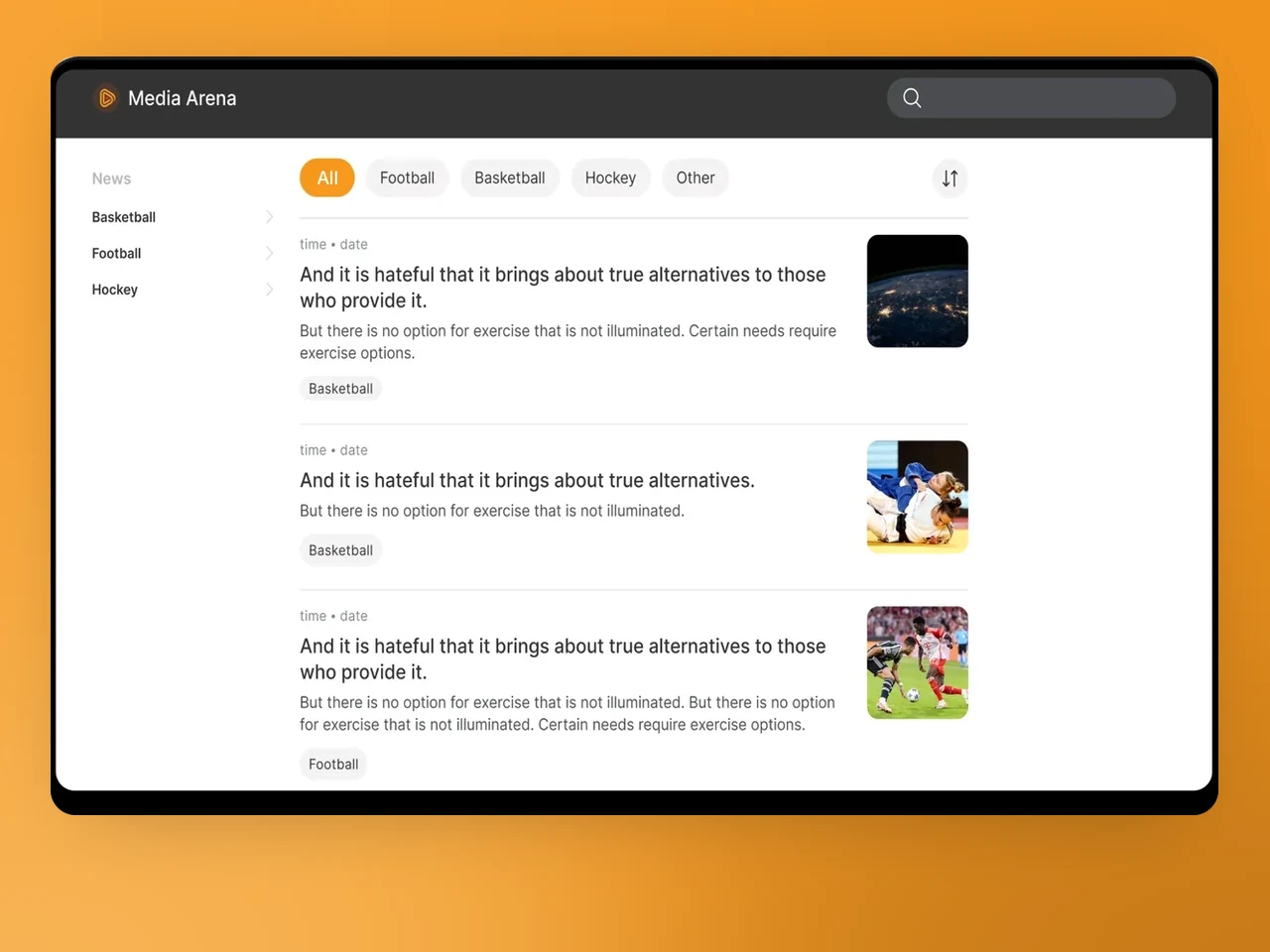
We publish dozens of sports articles a day. YuSMP built an editorial pipeline using a Telegram bot as the CMS — editors post once, content lands on web, iOS, and Android instantly. The architecture requires zero daily maintenance.
Ryan O'ConnorCEO, Media Arena
View case →
“
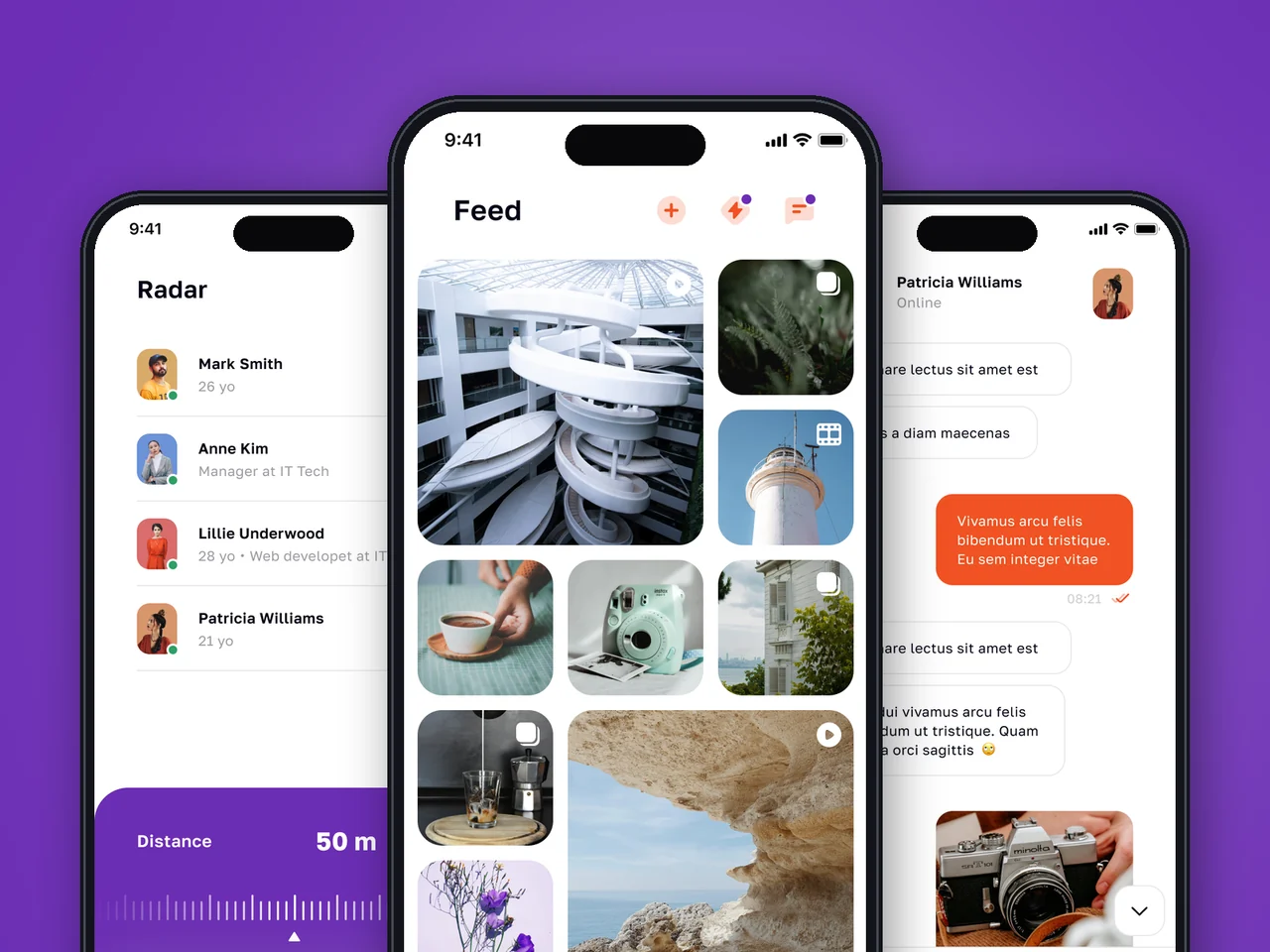
Building a social platform from scratch is high-stakes work. YuSMP delivered the interest feed, geo Radar, Stories, and virtual coins economy on schedule, with a codebase our in-house team picked up on day one of handoff.
Michael HartleyCEO, JoyJet
View case →
“
A loan decision engine that takes ten times less time to approve does not happen by accident. YuSMP built the scoring pipeline, integration with credit bureaus, and a back-office that our underwriters actually enjoy using. Approval turnaround went from two days to under four hours.
Gregory LawsonCTO, LoanFlow
View case →
“
Telecom self-service is only useful if customers actually prefer it to calling support. YuSMP built iOS and Android apps with balance management, plan switching, and usage analytics that cut our call centre volume by 30% in the first quarter post-launch.
Charles DuboisDirector of Digital Products, TelecomSelf
View case →

1 / 4

Why engineering teams choose YuSMP for Google Cloud Platform engineering

GCP-native from infrastructure to data

We do not bolt GCP on top of a generic cloud playbook. GKE cluster design, BigQuery schema, Pub/Sub topic topology and IAM hierarchy are designed together — so each layer reinforces the others rather than working around them.

Compliance built into Terraform, not retrofitted

Assured Workloads, VPC Service Controls, CMEK key rings and org-policy constraints are provisioned in the same Terraform modules as application infrastructure — not added after an audit finding. Evidence artefacts for SOC 2 and GDPR audits are generated automatically.

Operational handoff with documentation

We deliver runbooks, Architecture Decision Records, cost dashboards and on-call playbooks alongside the infrastructure. Your engineering team can operate what we build from day one — not after a lengthy knowledge-transfer engagement.

FAQ

Google Cloud (GCP) FAQ

GCP vs AWS vs Azure — how do you choose?

GCP is strongest for data-intensive workloads (BigQuery, Dataflow, Vertex AI), Kubernetes-native teams (GKE is the reference Kubernetes implementation) and organisations that already use Google Workspace. AWS leads on breadth of managed services and US government compliance. Azure is the default for Microsoft-stack organisations (Active Directory, .NET, Office 365). We document the choice as an ADR and base it on your existing tooling, compliance requirements and workload profile.

GKE Autopilot vs Standard — which should we use?

Autopilot removes node pool management, auto-provisions resources per pod request and is billed per pod rather than per node — lower operational overhead and often lower cost for variable workloads. Standard gives full control over node configuration, DaemonSets, host-path volumes and GPUs — necessary for specialised workloads. We evaluate your workload requirements before cluster provisioning and document the decision so it can be revisited as needs change.

How do you control BigQuery costs?

We enforce partitioned tables with required partition filters (preventing full-table scans), cluster tables on high-cardinality filter columns, use materialised views for repeated aggregations and monitor bytes-billed per query via INFORMATION_SCHEMA. For predictable workloads we right-size slot commitments (Standard or Enterprise editions) over on-demand pricing. Budget alerts and billing anomaly detection fire before a runaway query becomes a surprise invoice.

Can you run HIPAA workloads on GCP?

Yes. Google Cloud signs a HIPAA Business Associate Agreement covering GKE, Cloud SQL, Cloud Storage, Pub/Sub, BigQuery and other services. We scope HIPAA workloads to dedicated GCP projects with CMEK encryption for PHI at rest, VPC Service Controls data perimeters, private networking (no public IPs on database instances), immutable Cloud Audit Logs and automated SCC security findings routed to your compliance team.

How do you guarantee EU data residency on GCP?

We combine three layers: Assured Workloads EU Regions and Support folder configuration (restricts personnel and data to EU), org-policy resource location constraints blocking resource creation outside approved EU regions, and VPC Service Controls perimeters preventing API calls that would move data to US services. Residency is verified at Terraform plan time and monitored continuously via Security Command Center. CMEK key rings are provisioned in EU regions so encryption keys never leave the EU.

Cloud Run vs GKE — when do you recommend each?

Cloud Run for stateless HTTP and event-driven workloads with variable traffic — faster time-to-production, zero node management, per-request billing and built-in HTTPS. GKE for stateful workloads, long-running background jobs, DaemonSet-based agents, GPU inference or teams that need full Kubernetes ecosystem tooling (Helm, Argo CD, Istio). Many architectures use both: GKE for the core platform, Cloud Run for lightweight auxiliary services and scheduled jobs.

How do you migrate an existing workload to GCP?

We start with a discovery phase — inventory of services, data volumes, compliance requirements and dependency mapping. Stateless services are containerised and deployed to Cloud Run or GKE. Databases are migrated using Database Migration Service (PostgreSQL, MySQL) or Datastream for ongoing replication with minimal downtime. Data warehouses move to BigQuery via Dataflow or Transfer Service. Typical timeline: discovery two weeks, proof-of-concept four weeks, production cutover eight to sixteen weeks depending on complexity and data volume.

Build a production-grade GCP environment with senior cloud engineers

Tell us where you want to be in twelve months. We’ll come back with a plan to get you there.

Get a proposal

Response within 1 business day. NDA on request.

Get a proposal

Share a few details and a senior consultant will reply within one business day.

Free project estimate — we’ll come back with a plan within 1–2 business days.
  • Requirements review and tech-stack recommendations
  • Estimate of timeline, budget and team composition
  • No commitment — just a clear plan

Email: sales@yusmpgroup.com

Phone: +374 44 871 811

Offices: KAMAR Business Center, Vazgen Sargsyan St. 2, Yerevan, Armenia · Remote — East-Coast US overlap (9 AM–1 PM ET)

— required fields