Single ecosystem hub
A one-page landing site as the central entry point to all of the project’s tokens.
Blockchain · Web hub
EverCoin Bank is a single web hub for a growing ecosystem of cryptocurrency tokens. The one-page platform brings together the project’s tokens (Dragon Token, Cyber Token), shows current rates on real-time charts and takes users to each token’s own website. Stack: PHP Laravel, React, crypto exchange API integrations.
In short: what the product is and who we built it for.
EverCoin Bank is the central landing hub of a cryptocurrency ecosystem that brings several of the project’s tokens together in one entry point. Users see the available tokens, Dragon Token and Cyber Token, their current rates on live charts and key metrics (market cap, volume, number of purchases), and then go to the website of the token they need.
The client is a blockchain startup developing its own ecosystem of cryptocurrency tokens. As the number of tokens grew, the project had no single place where an investor could see the whole ecosystem, compare tokens and get reliable rate data. The goal was to build such a hub and, along the way, bring order to the process of listing new tokens on exchanges.
The token ecosystem was growing but remained fragmented: each token had its own website, and there was no single entry point showing the project as a whole. Investors could not quickly see which tokens existed, what they were worth and where to go next; rate visibility and structured information were missing.
Exchange listing was a separate pain point: application forms ran to 50–70 items, every mistake cost time and money, and the process was not formalized at all. In parallel, the team had to develop a new ecosystem token (Cyber Token) and pull real market data from exchanges instead of static figures.
How we built the product, from architecture to process.
We brought the ecosystem together in one hub: the PHP Laravel back end aggregates token data and pulls current rates from crypto exchange APIs, while the React front end renders them as live charts and metrics. On a single page, users see all of the project’s tokens, switch between them in tabs and go to the website of the selected token.
The main focus was on reliable, easy-to-read data: market cap, volume and number of purchases are updated from real sources, and rate charts give quick visual context. The listing process for new tokens was formalized through structured spreadsheets so that 50–70-item forms are filled in without errors, and the architecture was designed to scale as the number of tokens grows.
Tools chosen to fit the product’s goals.
 PHP LaravelBack end, data aggregation and API
 ReactFront end of the landing hub
With several tokens in an ecosystem, users cannot find current data on all projects in one place: scattered websites hurt navigation and visibility. A single landing hub solves the aggregation problem: one URL, one source of rate data and unified navigation to the projects.
Key capabilities that solved the business problem.
A one-page landing site as the central entry point to all of the project’s tokens.
Live token price charts built on data received from crypto exchange APIs.
Users find the ecosystem token they need and go to its data.
Market cap, trading volume and number of purchases are shown for each token.
Tabs for Dragon Token and Cyber Token with separate cards and charts.
From the hub, users go to the separate website of the selected token.
Key product screens, step by step.
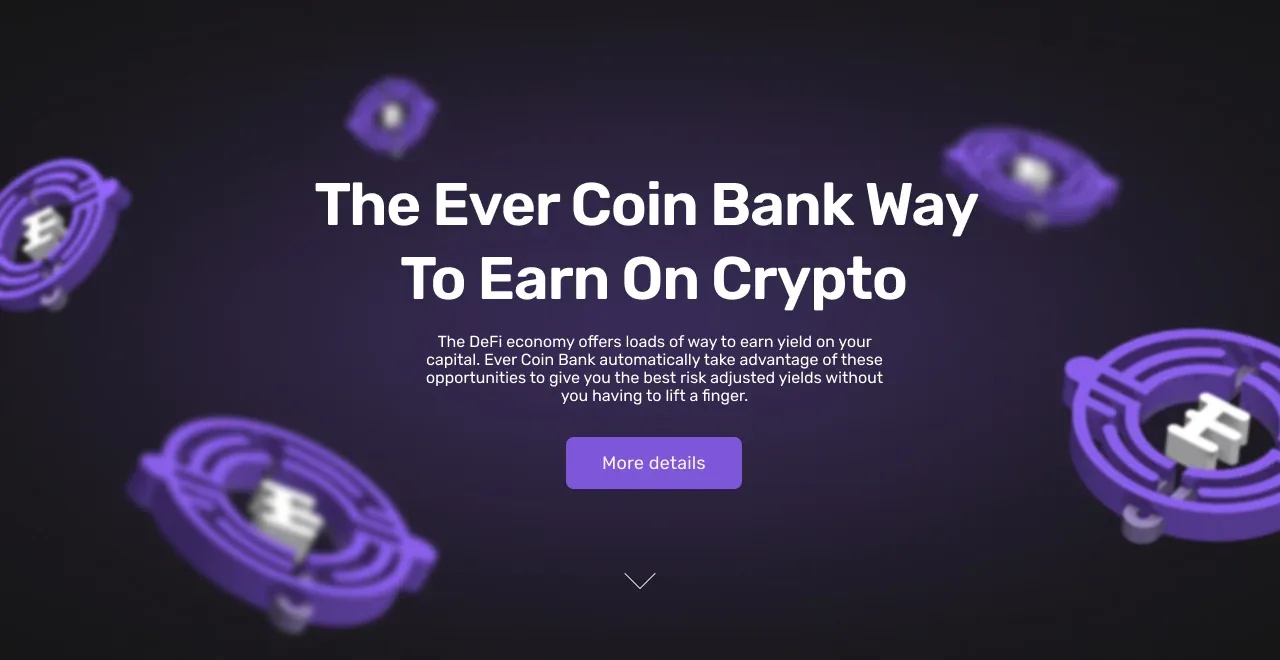
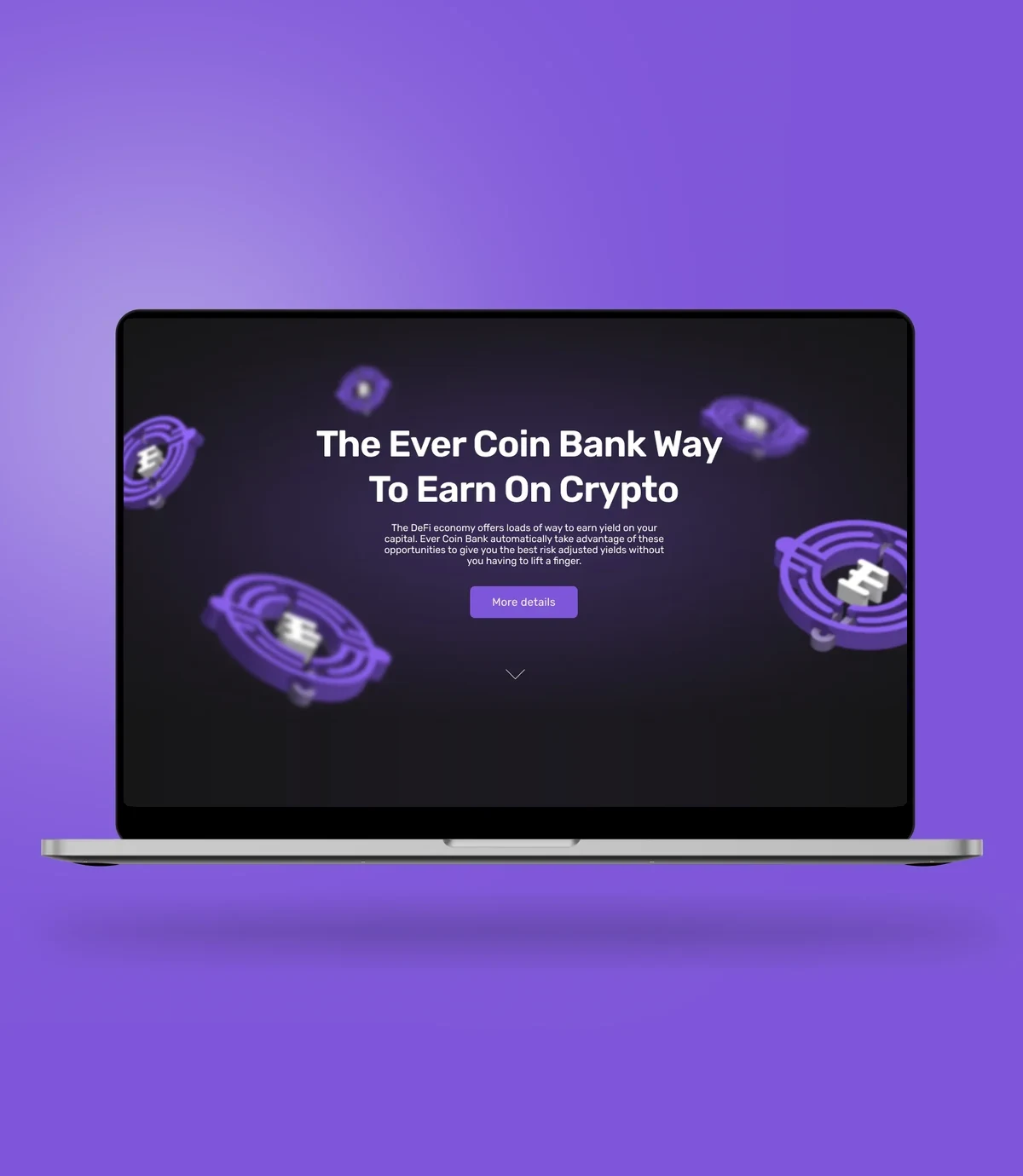
The landing page opens with a large headline, “The Ever Coin Bank Way To Earn On Crypto”, on a dark background with purple 3D graphics of token coins. A short subheading explains the idea of the DeFi economy: the platform automatically uses market opportunities to give users returns without extra effort.
In the centre is a “More details” button, and an arrow at the bottom invites users to scroll further. The first screen sets the tone for the whole ecosystem and leads users deeper into the hub.
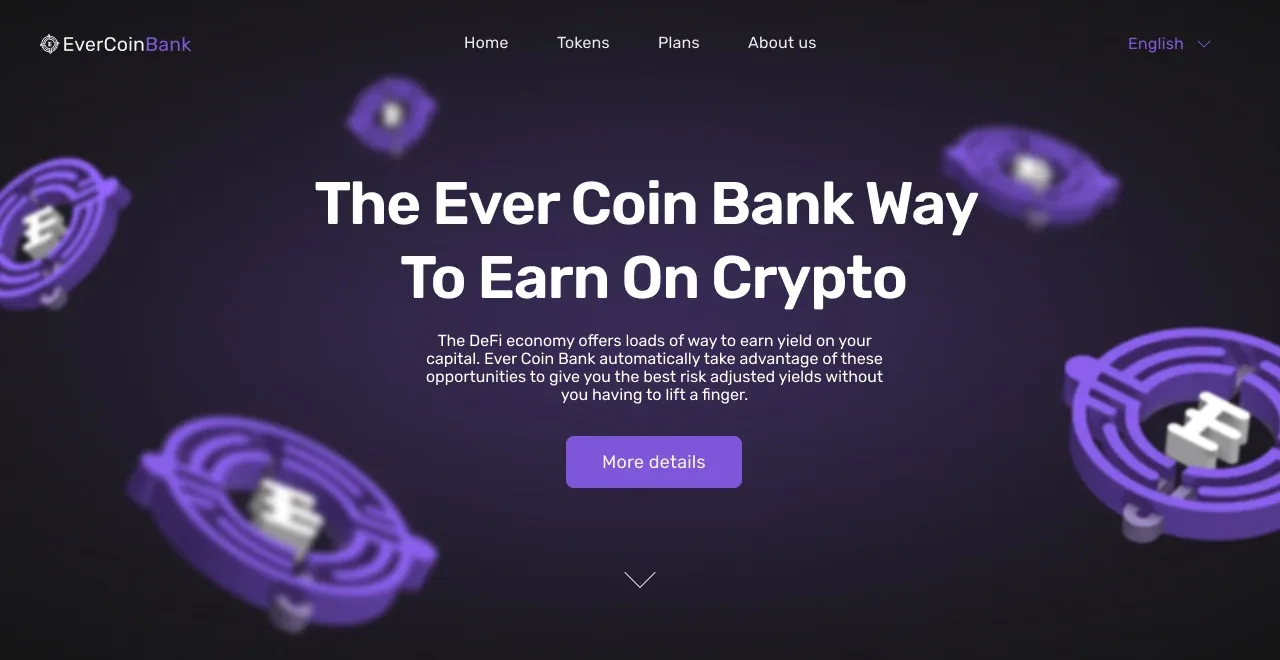
A fixed header at the top holds the EverCoinBank logo and the main menu, Home, Tokens, Plans and About us, plus a language switcher in the right corner.
The navigation links the sections of the one-page hub and stays available while scrolling, so users can jump to the tokens, plans or project description at any moment.
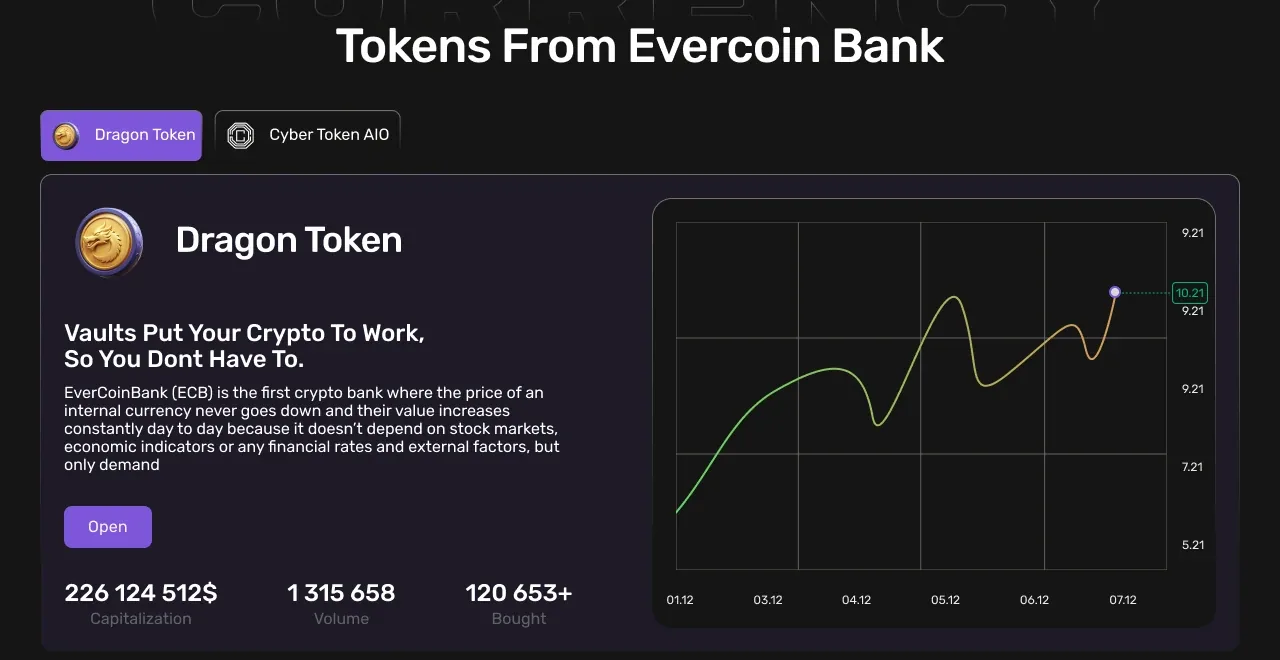
The “Tokens From Evercoin Bank” section shows the project’s tokens in tabs: Dragon Token and Cyber Token AIO. For the active token, a card displays its icon, name, description and an “Open” button.
On the right is an interactive rate chart marking the current price, and below are three key metrics: market cap ($226,124,512), volume (1,315,658) and number of purchases (120,653+).
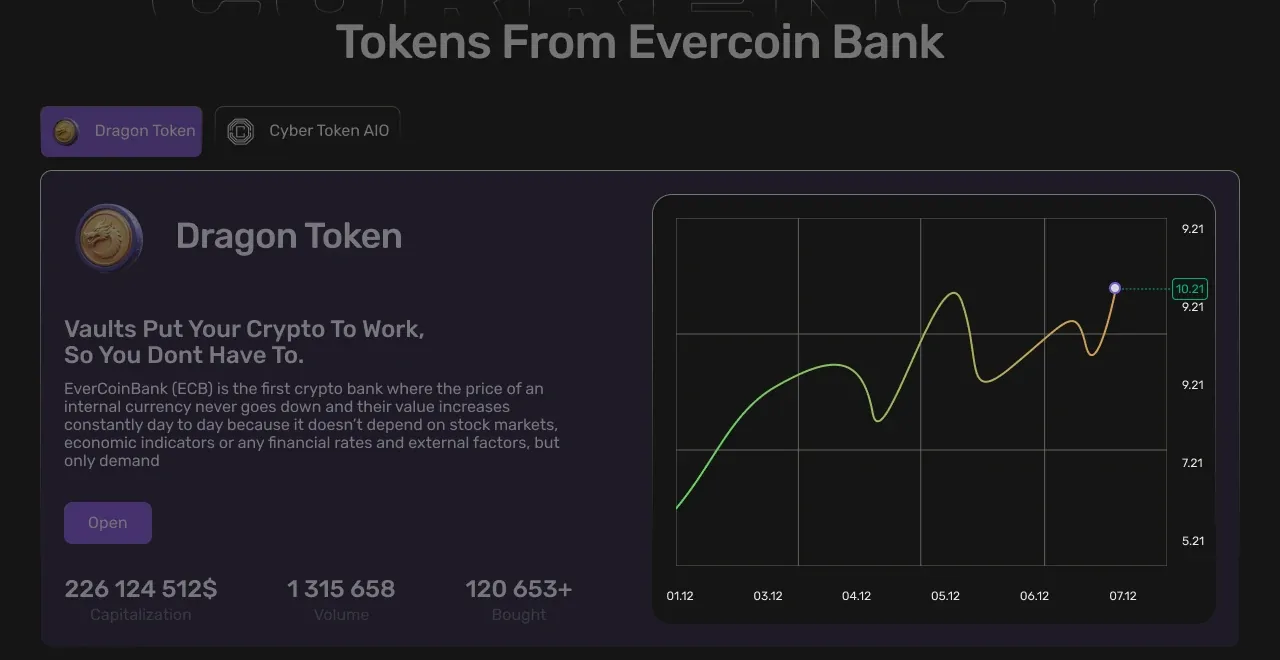
The token rate is drawn as a smooth chart with dates on the horizontal axis and price on the vertical axis; the last point is highlighted and shows the current value (10.21).
Chart data comes from crypto exchange APIs, so the price and metrics reflect the real market situation rather than static figures on a mock-up.
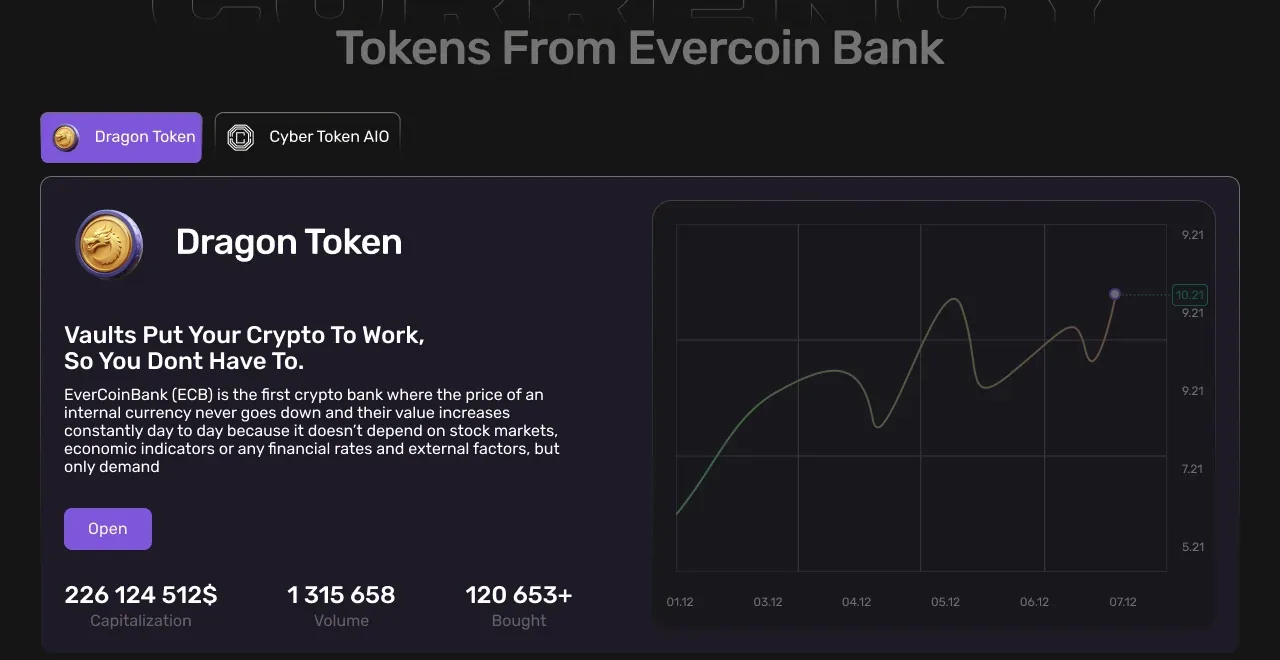
Users switch between ecosystem tokens using tabs: the active Dragon Token and the second one, Cyber Token AIO, the new token developed as part of the project.
When a tab is selected, the token card, description, chart and metrics change, and the “Open” button leads to the separate website of the selected token. This is how the hub ties the whole ecosystem into a single route.
The EverCoin Bank landing hub is built with PHP Laravel and React. Token rates are displayed through integration with cryptocurrency exchange APIs: data arrives in real time without storing trading positions. The hub is a showcase, not an exchange or a custody service: users’ wallets and keys are not stored on the platform’s servers.
Rates and metrics are taken from external crypto exchange APIs; access to integrations and operations is role-restricted, and data exchange is protected across the hub’s entire perimeter.
The platform works with user data and market information, so personal data is processed under the requirements of the client’s jurisdiction and stored on locally hosted servers. Details on the ERC-20 smart contract standard: ethereum.org.
One EverCoin Bank landing hub as a single entry point instead of scattered ecosystem token websites.
Search for ecosystem tokens (Dragon Token, Cyber Token) from a single interface.
Real-time rate charts based on crypto exchange data.
Navigation to separate token websites through a single entry point.
A structured process for preparing listing data in Google Docs, reducing errors when filling in exchange application forms.
A scalable foundation: the architecture allows new tokens to be added without reworking the hub.
A landing hub is a single web page that brings all of an ecosystem’s tokens together in one interface. Users go to one address and get token search, rate charts based on exchange data and navigation to the websites of individual projects. EverCoin Bank performs exactly this function for the Dragon Token and Cyber Token ecosystem.
With several tokens, scattered websites make navigation harder: users don’t know where to find up-to-date information. A single hub solves the ecosystem visibility problem: one URL, current data and one-click access to the right project. It is a technical and navigation solution, not a financial service.
Rate charts are built from cryptocurrency exchange data through a real-time API integration. The hub displays quotes as an information aggregator; it does not hold funds, does not perform exchange operations and is not an exchange or exchange service.
The hub processes only the data needed for it to function technically: contact details from the feedback form. Processing follows the requirements of the client’s jurisdiction, and the data is stored on locally hosted servers. Wallets, keys and trading positions are not stored by the platform.
Timelines depend on the number of tokens in the ecosystem, the need for exchange API integrations and the scope of design work. A typical range for a landing hub with API integration is 8–14 weeks (industry benchmark). Actual timelines are agreed at the briefing for a specific project.
Companies from retail, medtech, logistics and e-commerce that we helped build digital products.





The full spectrum of development — from native mobile apps to web platforms, AI and cloud. Pick a direction or order a turnkey project.
Native iOS & Android plus cross-platform Flutter and React Native — from MVPs to apps with millions of installs.
Learn moreNative Swift / SwiftUI iOS apps — with Apple Pay, Sign in with Apple, App Store Connect deployment pipelines.
Learn moreNative Kotlin / Jetpack Compose Android apps — Material 3, Google Play release pipelines, Firebase integration.
Learn moreSingle Dart codebase across iOS, Android, web and desktop — with native modules where needed.
Learn moreProduction web apps on React, Next.js, Vue and Node — SaaS dashboards, B2B portals, marketing-conversion stacks.
Learn moreREST, GraphQL and gRPC APIs — designed for partners, mobile clients and internal microservices.
Learn moreBespoke platforms for mid-market and enterprise teams — internal tools, vertical SaaS, mission-critical backends. Discovery to launch in 12–36 weeks.
Learn moreFocused MVPs in 12–20 weeks — one or two integrations, real users on day one, telemetry built-in.
Learn moreEnd-to-end ownership of a digital product — design, build, ship and continuous evolution.
Learn moreTool-using agents that plan, retrieve, act and self-evaluate — in customer service, ops automation, internal copilots.
Learn moreAWS, Azure and GCP architecture, Kubernetes, Terraform/Pulumi, CI/CD and observability — SRE-grade operations for product teams.
Learn moreTechnical SEO, Core Web Vitals, structured data, internal-link architecture — built into your engineering process.
Learn moreRelated cases
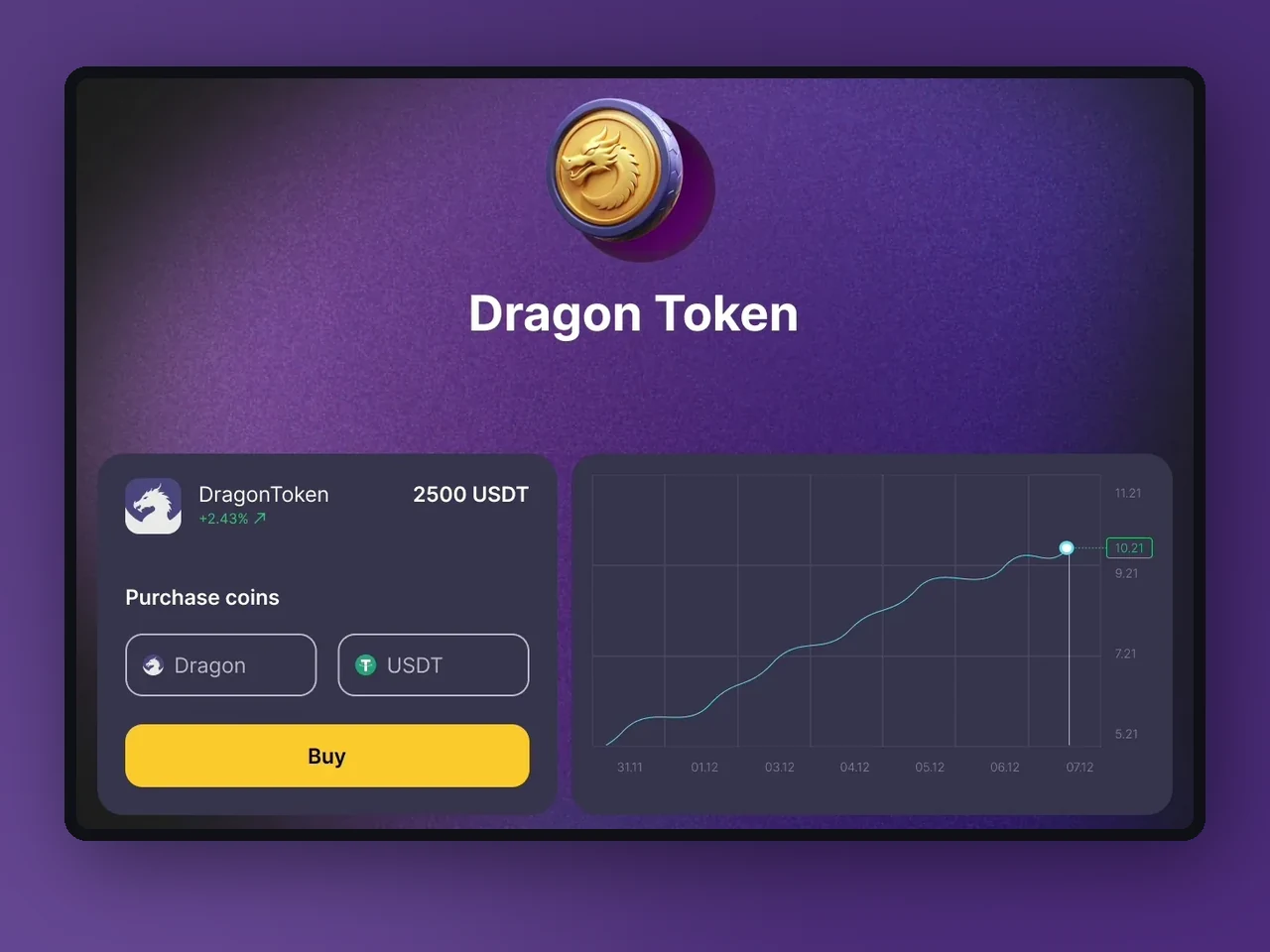
Laravel + React crypto trading platform — USDT-denominated buy/sell, admin-managed dynamic pricing, 9-day live chart, US & EU launch.
View case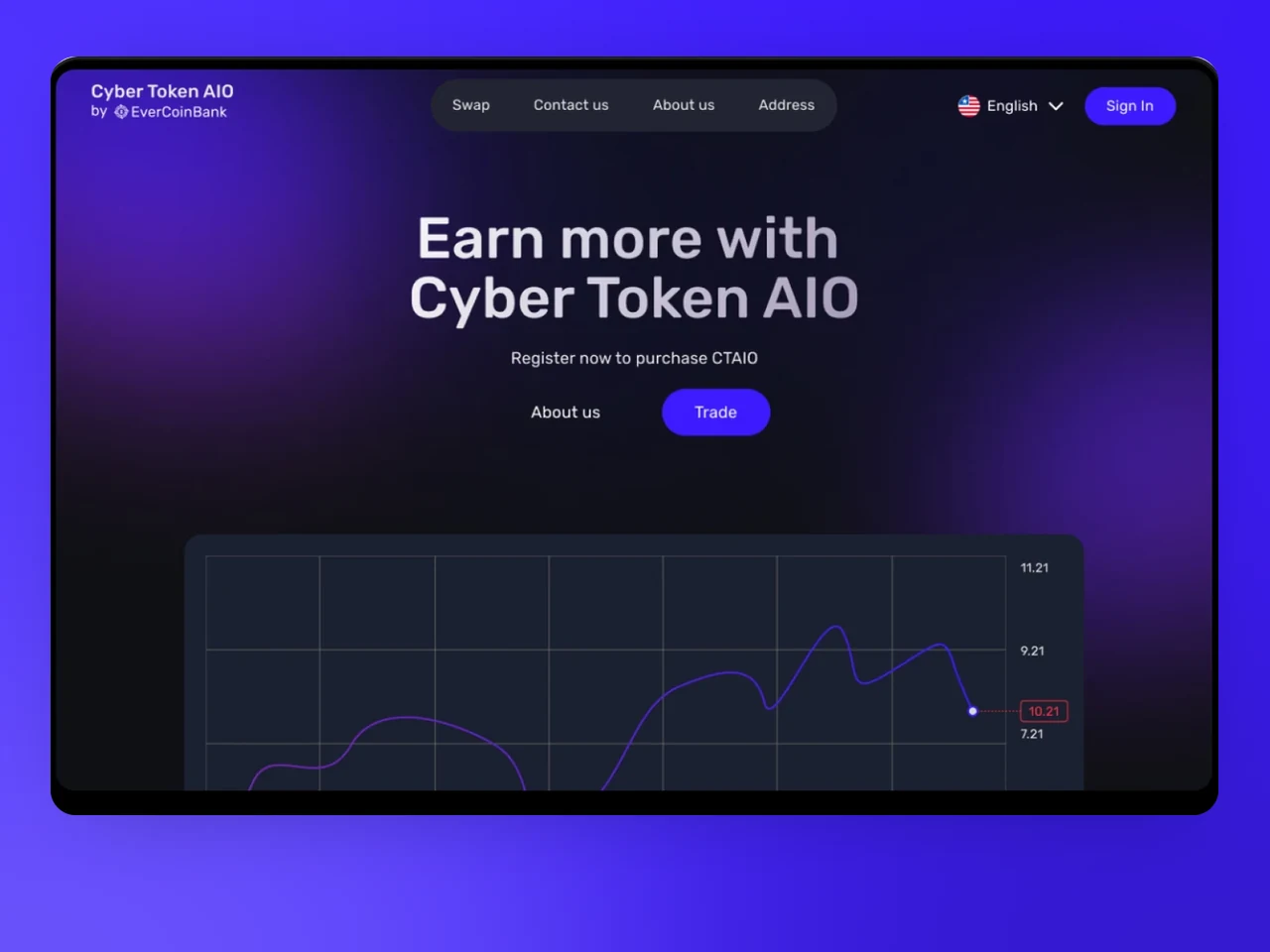
End-to-end ERC-20 token launch — Solidity contract, security audit, exchange listings, MetaMask checkout on the project site.
View case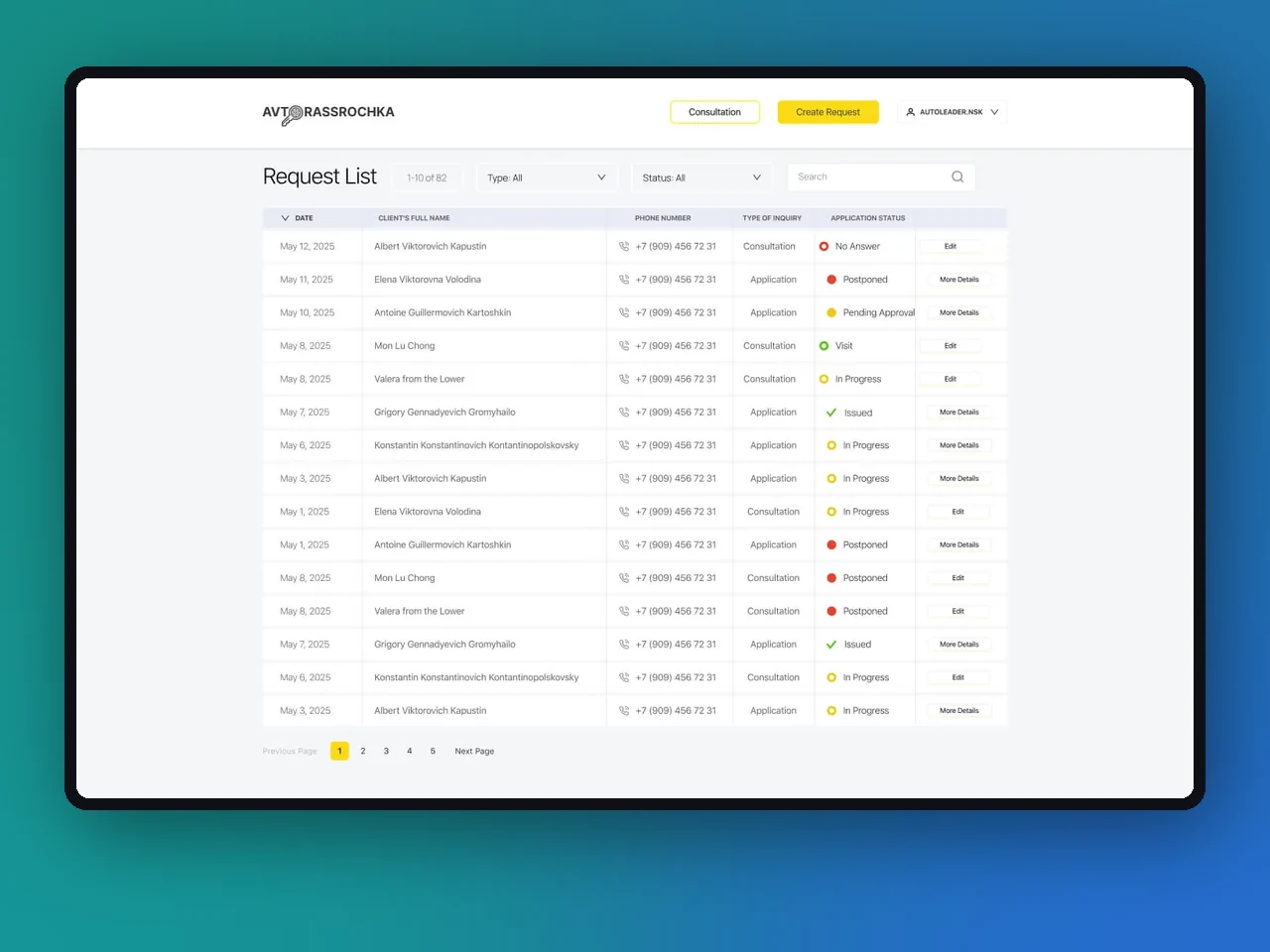
Dealer-facing web platform funneling every auto-financing enquiry into a single tracked queue with Bitrix24 CRM sync.
View case20 articles across 5 categories — engineering-led guides on AI, SaaS, MVP, compliance and mobile for US and EU product teams.

Performance-tested comparison of RN (New Architecture) and Flutter (Impeller) across hiring, time-to-market and EU/US compliance.
Read article
Real cost ranges by region (US onshore, Western EU, EU nearshore), team and feature scope. With a worked fintech example.
Read article
Data-driven framework for choosing iOS-first or Android-first in 2026 — US & EU market share, ARPU, review timelines, EU DMA.
Read articleTell us about your tokens and the data your investors need to see, and we will help you design a single entry point with live market data. Let’s discuss how a similar solution could work for your project.
Share a few details and a senior consultant will reply within one business day.
Email: sales@yusmpgroup.com
Phone: +374 44 871 811
Offices: KAMAR Business Center, Vazgen Sargsyan St. 2, Yerevan, Armenia · Remote — East-Coast US overlap (9 AM–1 PM ET)