


Employee profile
Points, certificates and the employee’s rank on one screen
Retail · iOS + Android
A professional social network for employees of a large home appliance retail chain that combines training and motivation: staff learn the product range, take training tests and earn points they can spend in the chain’s stores. Stack: Laravel, React, Kotlin, Swift.
In short: what the product is and who we built it for.
The client is a large home appliance retail chain where staff expertise and motivation have a direct impact on sales. It needed a large-scale project that would solve two problems at once: training employees on the product range and keeping them engaged in their work.
Standard LMS platforms did not support knowledge sharing between colleagues, while corporate messengers offered no structured knowledge storage or training progress tracking. So instead of an off-the-shelf LMS, we built a dedicated professional social network with gamification mechanics.
The chain’s employees need to know hundreds of home appliance models well, but typical training platforms did not motivate them to learn and offered no live exchange of experience between colleagues. Corporate messengers, on the other hand, let people talk but did not store knowledge in a structured way or track training progress.
The goal was to combine learning, communication and motivation in one mobile tool, so an employee could study the products, take tests, earn points for it and spend them on real purchases while staying connected with colleagues.
How we built the product, from architecture to process.
The project was run iteratively: every two weeks the client saw a demo of finished functionality, which kept progress transparent and requirements aligned on time. Instead of an off-the-shelf LMS, we built a custom professional social network with gamification mechanics, a product catalog and training modules.
The iOS and Android clients are built natively (Swift and Kotlin), the business logic and API run on Laravel, and the web interfaces and admin panel are built with React. We gave special attention to the points mechanics: employees earn points for training and spend them on purchases in the chain’s stores.
Tools chosen to fit the product’s goals.
Standard LMS platforms (iSpring, Moodle, TalentLMS) are optimized for formal training but do not support a live exchange of experience between the chain’s sales staff: best sales practices, insights on working with specific brands, objection handling. A professional social network format with gamification increases employee engagement in learning and peer-to-peer knowledge sharing.
Corporate messengers (Bitrix24, Teams) were also considered, but they did not provide structured knowledge storage or training progress tracking broken down by store and category.
Key capabilities that solved the business problem.
Points, certificates and the employee’s rank on one screen
Gamified training modules: points, leaderboards, achievements
Structured product range with advanced filters and search
Corporate news and announcements inside the app
Direct messages and comments for knowledge sharing
Content management and training analytics
Key product screens, step by step.
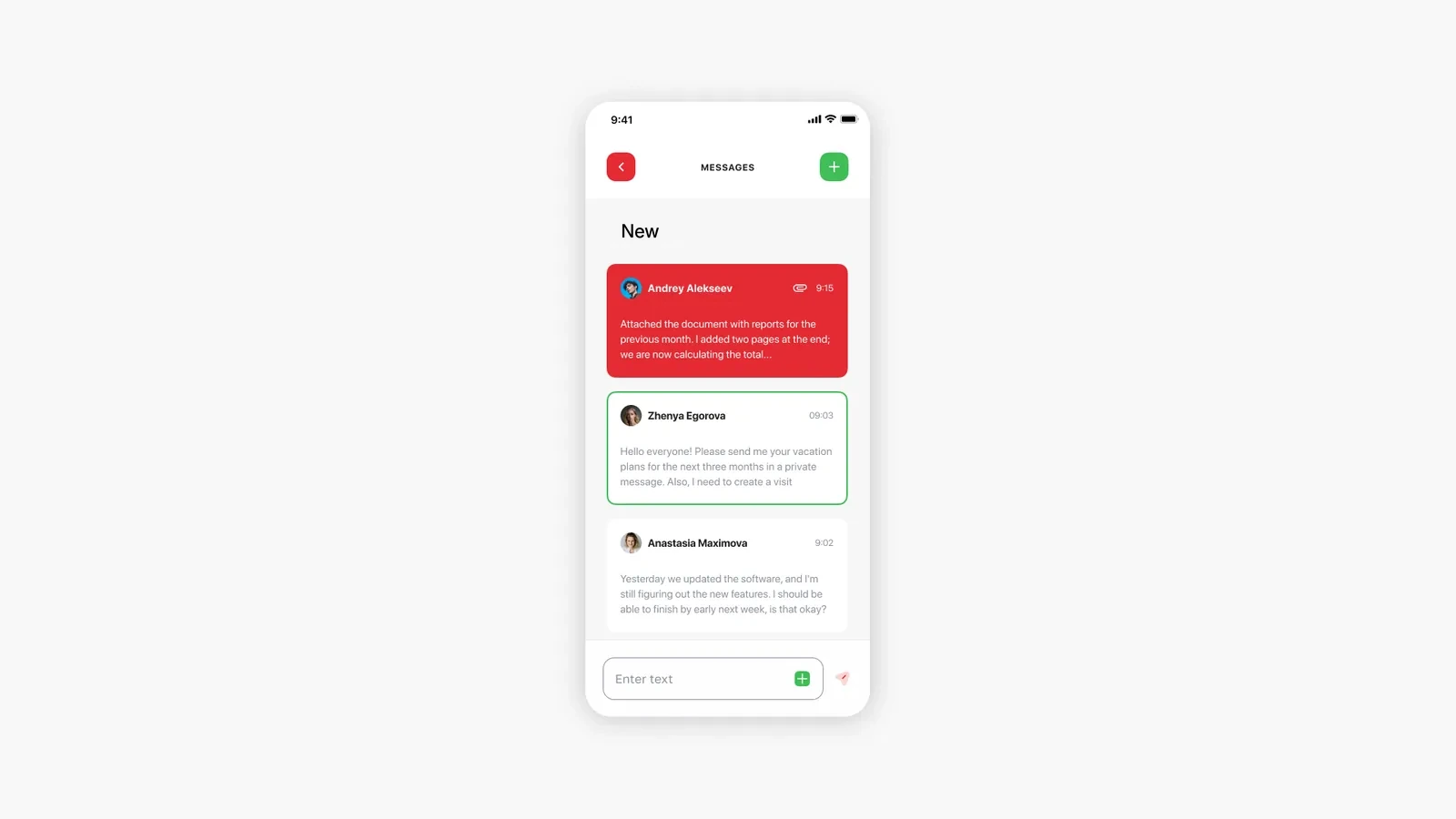
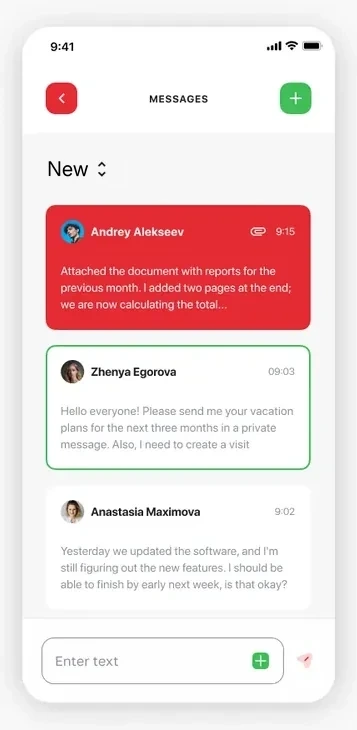
The “Messages” section opens with a “New” feed: conversation cards with an avatar, sender name, text preview and time. The active conversation is highlighted in a red block, the others appear as light cards with a green border.
At the top there is a search bar for conversations, and on the right a green “plus” button to start a new message. This lets employees share knowledge and work questions right inside the app.
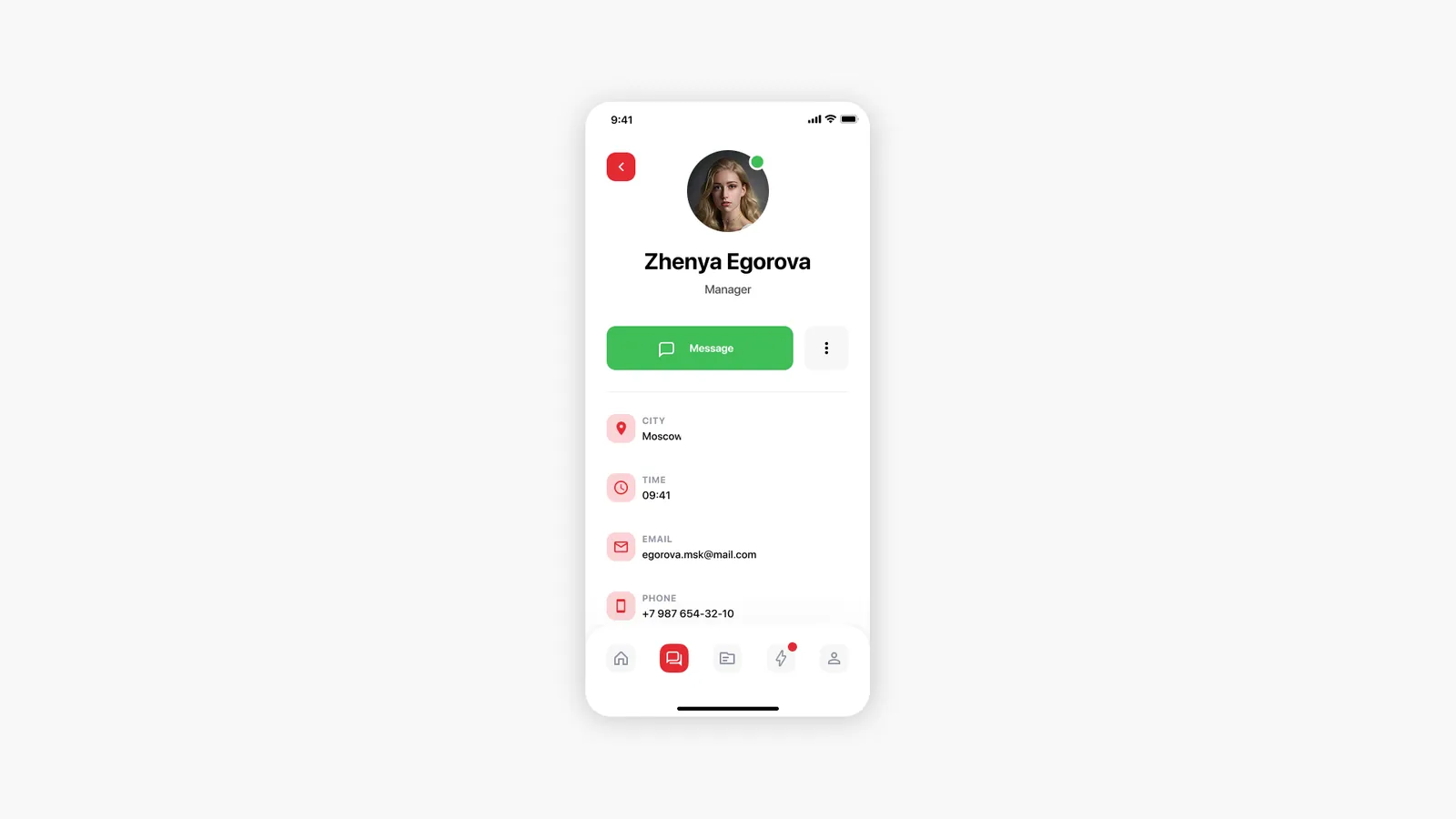
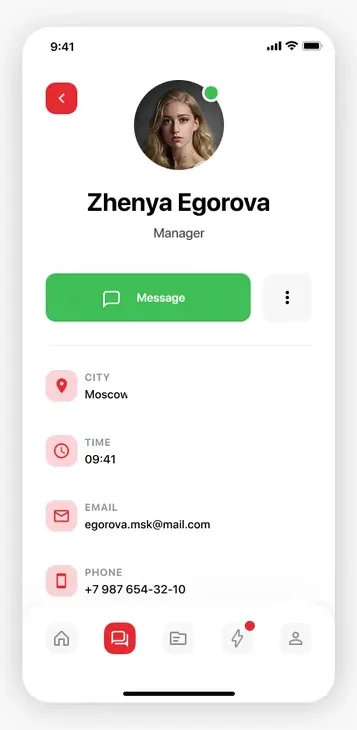
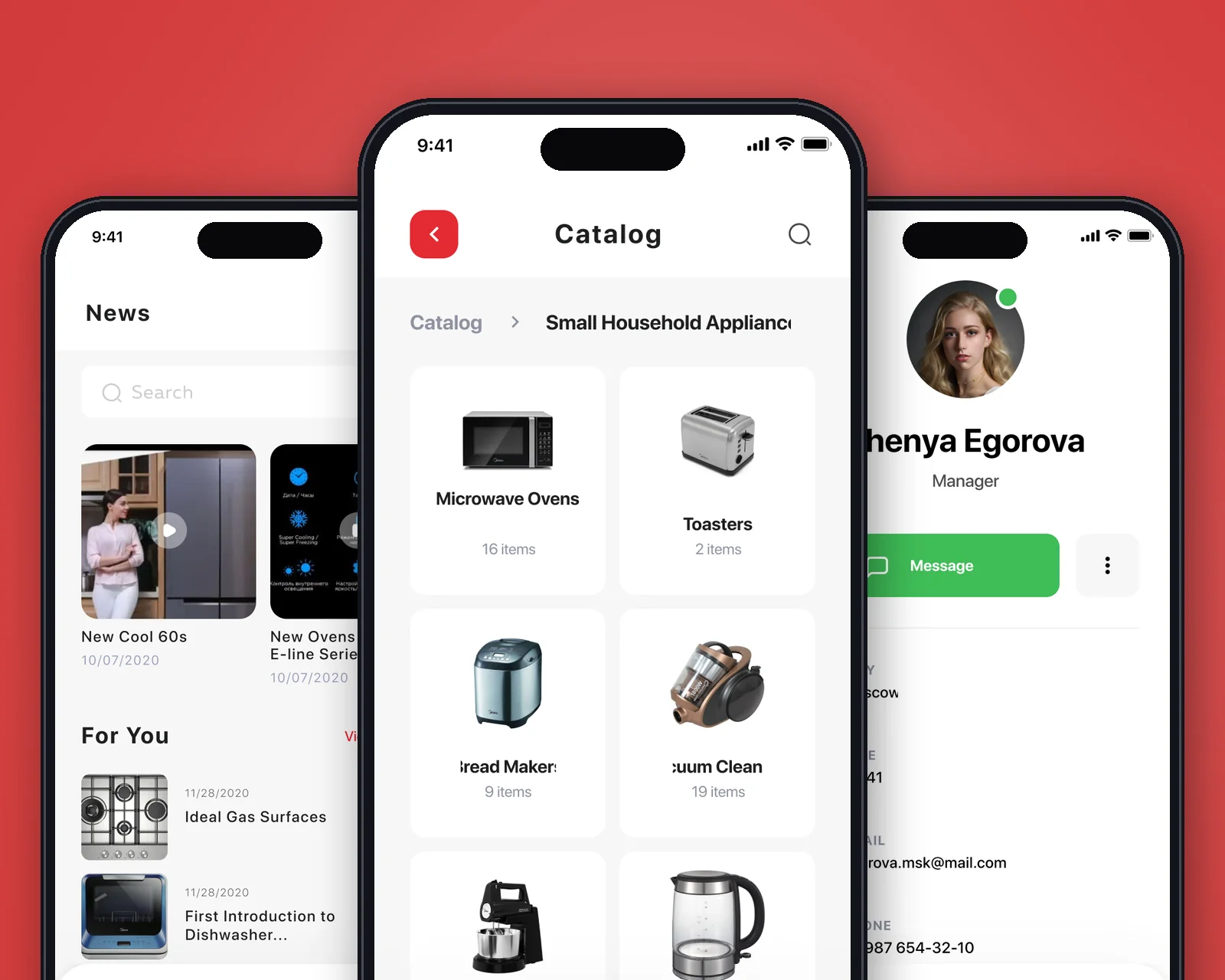
The employee card shows a large avatar with an online indicator, the name (Zhenya Egorova) and the job title “Manager”. A large green “Message” button opens a conversation, next to a menu of additional actions.
Below are profile fields with icons: city (Moscow), local time and other details, so you can quickly see who you are dealing with and how to reach them.
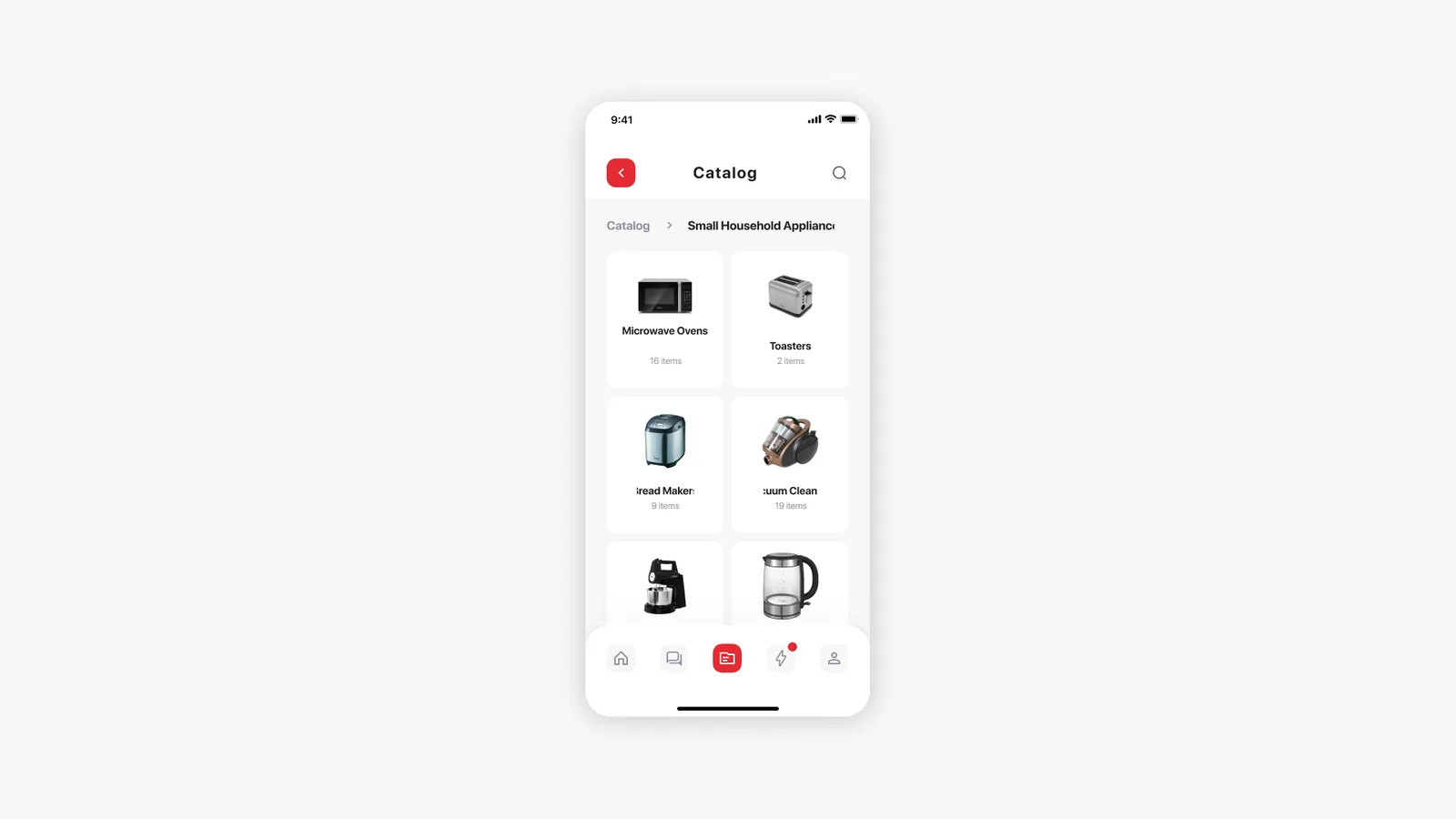
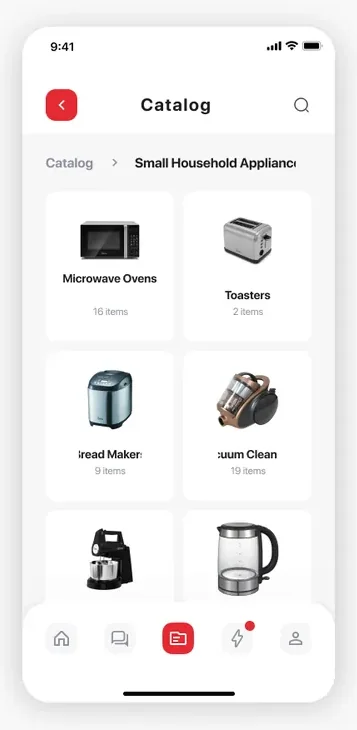
The “Product catalog” screen shows the “Small appliances” section as a grid of cards: toasters, bread makers, vacuum cleaners and other categories, each with a product thumbnail and item count.
At the top is a “Catalog ›” breadcrumb, and at the bottom a tab bar with the catalog section highlighted. This helps a manager quickly find the right appliance category.
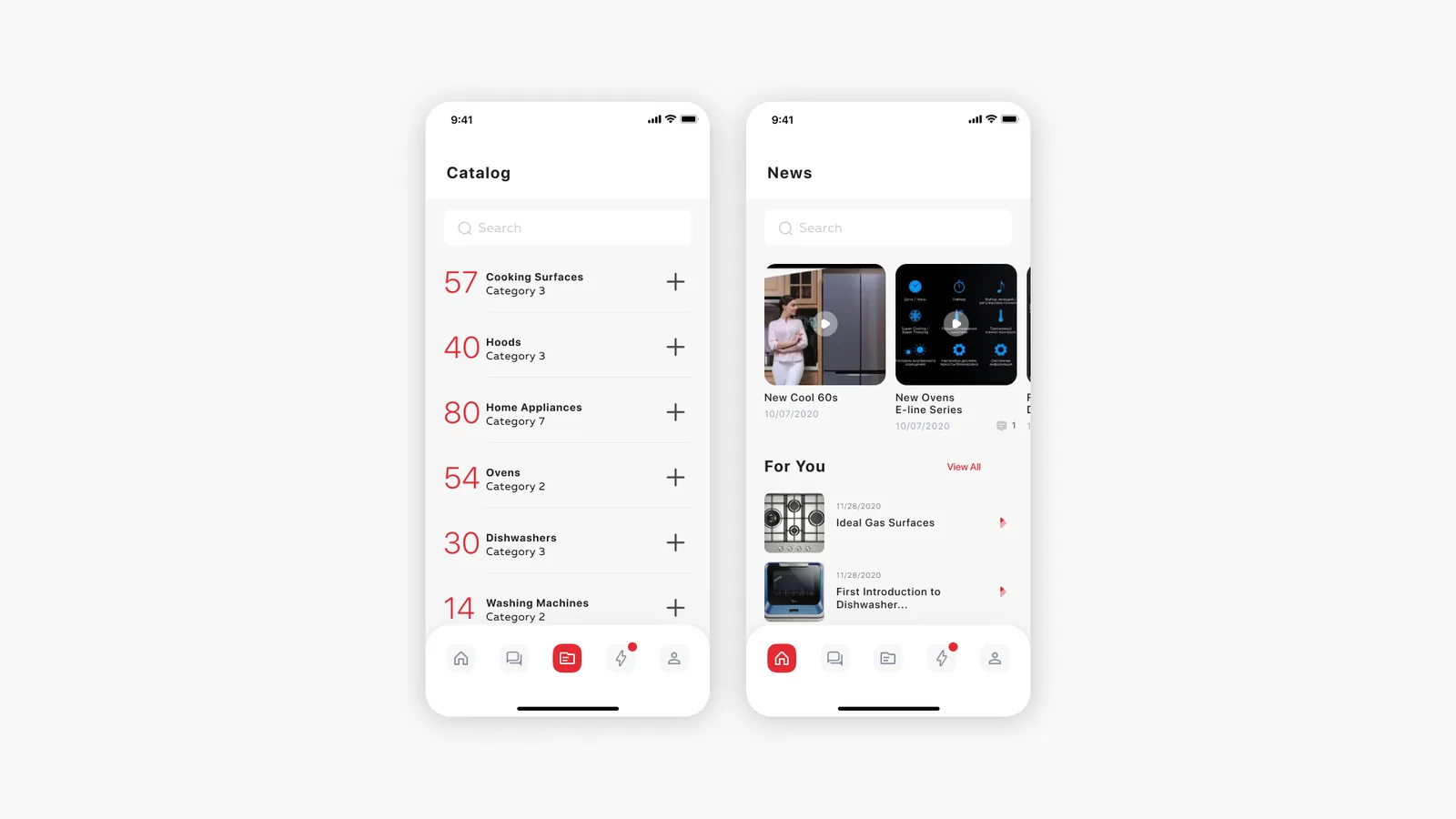
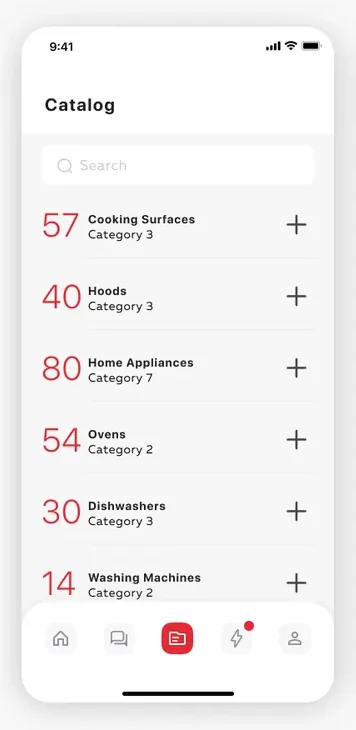
The root “Catalog” is an expandable list of categories with item counts (hobs, range hoods, home appliances, ovens) and subcategories such as induction, hi-light and gas, plus a search bar at the top.
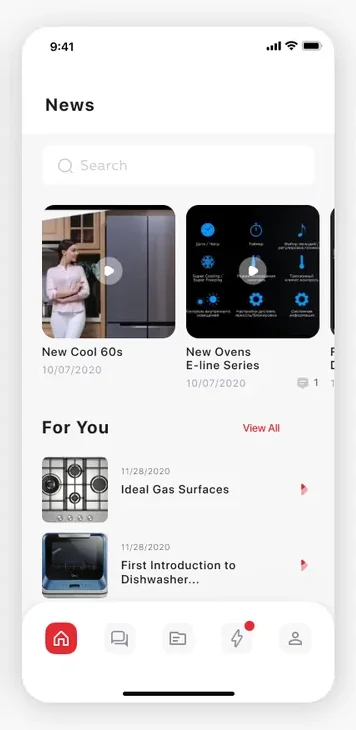
The “News” screen next to it gathers the corporate feed: large announcement cards with video, the publication date and a “For you” block with training materials about appliances.
The app handles the personal data of tens of thousands of employees, so security received special attention. Data is stored on the client’s own infrastructure (on-premise).
The app processes employee personal data: profiles, activity and training results. Data is stored on the client’s servers and is not shared with third parties.
Personal data is processed under the requirements of the client’s jurisdiction, stored on locally hosted servers, with role-restricted access.
After launch we continue to support the infrastructure and develop new functionality, so the system stays stable under the daily load from the entire retail chain.
A mobile app for iOS and Android: a corporate professional social network, news feed and experience sharing between the chain’s employees.
Gamified training modules: points, leaderboards and achievements for completing courses and product range tests.
A knowledge base by product category: specifications, comparisons and sales arguments available at the point of sale.
An admin panel: content management, training progress monitoring and consolidated analytics by store.
The project took about 9 months from brief to launch into operation.
The cost depends on the size of the chain, the number of roles, the depth of gamification and integrations with HR systems. We give an exact estimate after analyzing the requirements and the size of the audience.
Employees earn points for completing courses, publishing useful materials and helping colleagues. Leaderboards are built at store and chain level. The reward mechanics are configured to match the client’s motivation policy.
Yes. The role model lets you configure access to training materials, the knowledge base and analytics by job title, department and location.
Manufacturers and distributors get a dedicated account for publishing content on their product categories. Content goes through moderation before publication.
For a corporate app with a social network, training and gamification, the typical timeline is 8–12 months, depending on the number of features and integrations.
Companies from retail, medtech, logistics and e-commerce that we helped build digital products.


The full spectrum of development — from native mobile apps to web platforms, AI and cloud. Pick a direction or order a turnkey project.
Native iOS & Android plus cross-platform Flutter and React Native — from MVPs to apps with millions of installs.
Learn moreNative Swift / SwiftUI iOS apps — with Apple Pay, Sign in with Apple, App Store Connect deployment pipelines.
Learn moreNative Kotlin / Jetpack Compose Android apps — Material 3, Google Play release pipelines, Firebase integration.
Learn moreSingle Dart codebase across iOS, Android, web and desktop — with native modules where needed.
Learn moreProduction web apps on React, Next.js, Vue and Node — SaaS dashboards, B2B portals, marketing-conversion stacks.
Learn moreREST, GraphQL and gRPC APIs — designed for partners, mobile clients and internal microservices.
Learn moreBespoke platforms for mid-market and enterprise teams — internal tools, vertical SaaS, mission-critical backends. Discovery to launch in 12–36 weeks.
Learn moreFocused MVPs in 12–20 weeks — one or two integrations, real users on day one, telemetry built-in.
Learn moreEnd-to-end ownership of a digital product — design, build, ship and continuous evolution.
Learn moreTool-using agents that plan, retrieve, act and self-evaluate — in customer service, ops automation, internal copilots.
Learn moreAWS, Azure and GCP architecture, Kubernetes, Terraform/Pulumi, CI/CD and observability — SRE-grade operations for product teams.
Learn moreTechnical SEO, Core Web Vitals, structured data, internal-link architecture — built into your engineering process.
Learn moreRelated cases
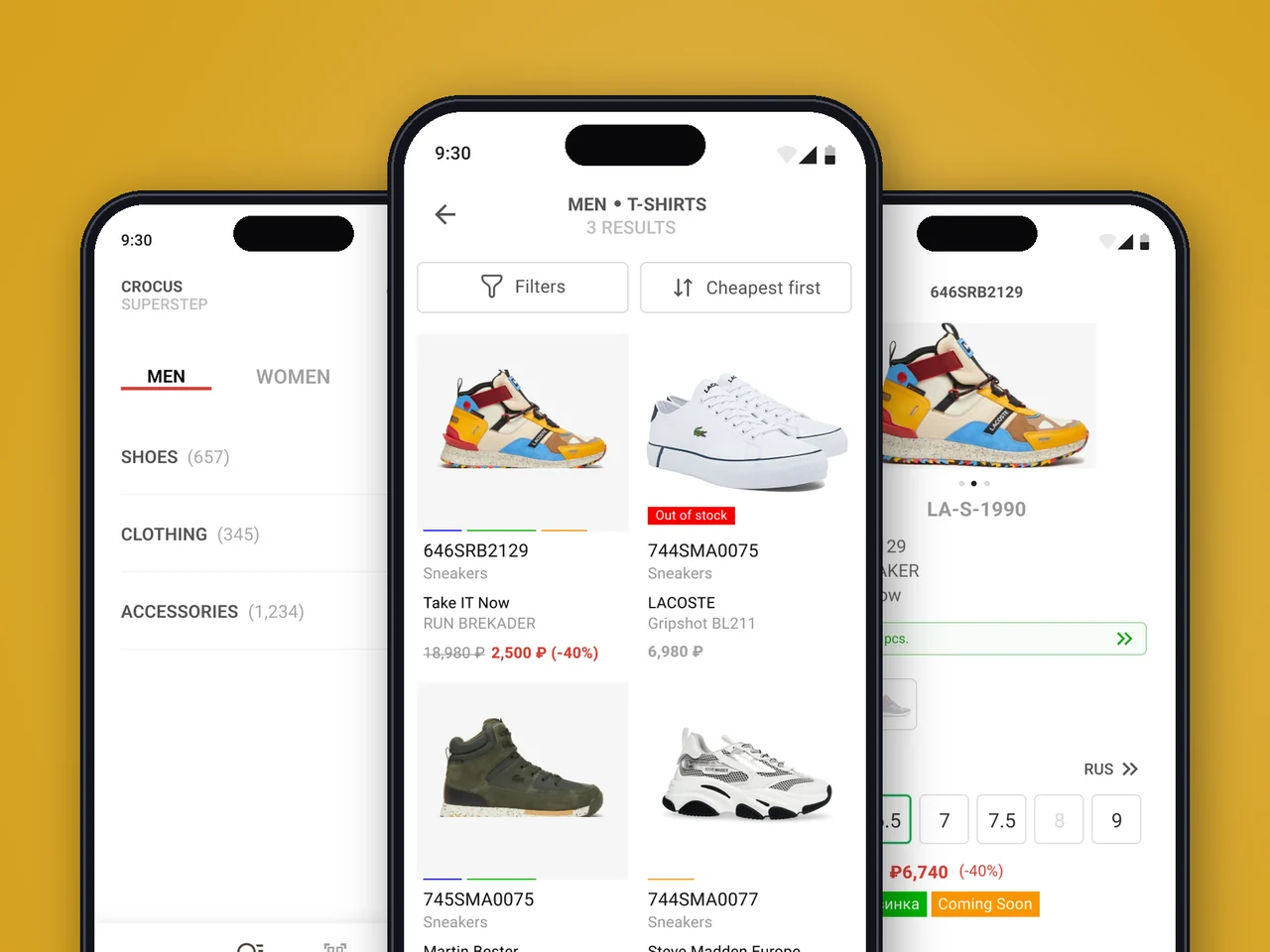
Retail POS companion app for a multi-brand boutique chain — ElasticSearch cross-store inventory search, 1C-system integration.
View case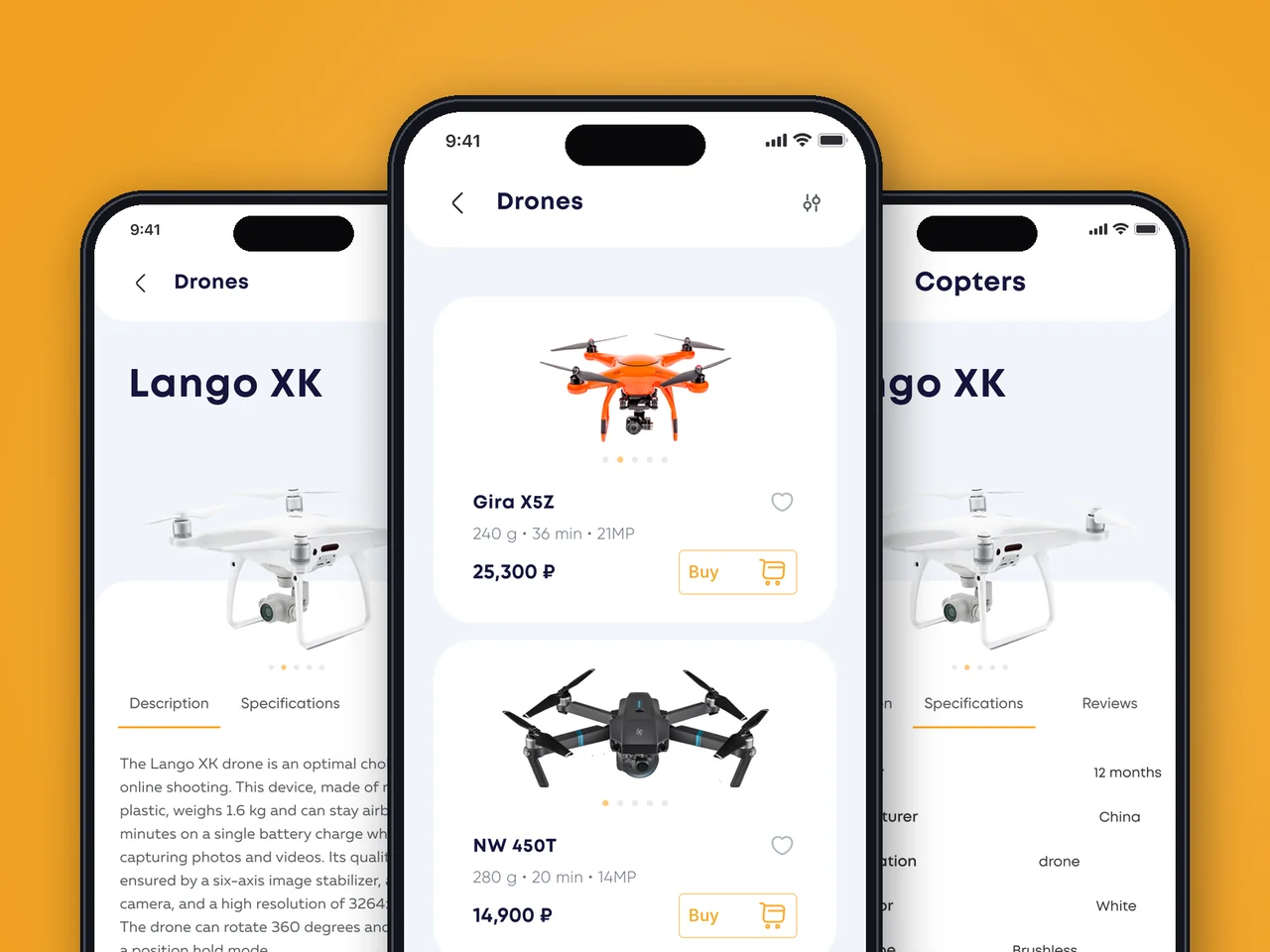
A training and product-knowledge app for retail staff that links sellers, retailers and vendors: catalog, courses and tests, requests, offline mode and an admin panel.
View case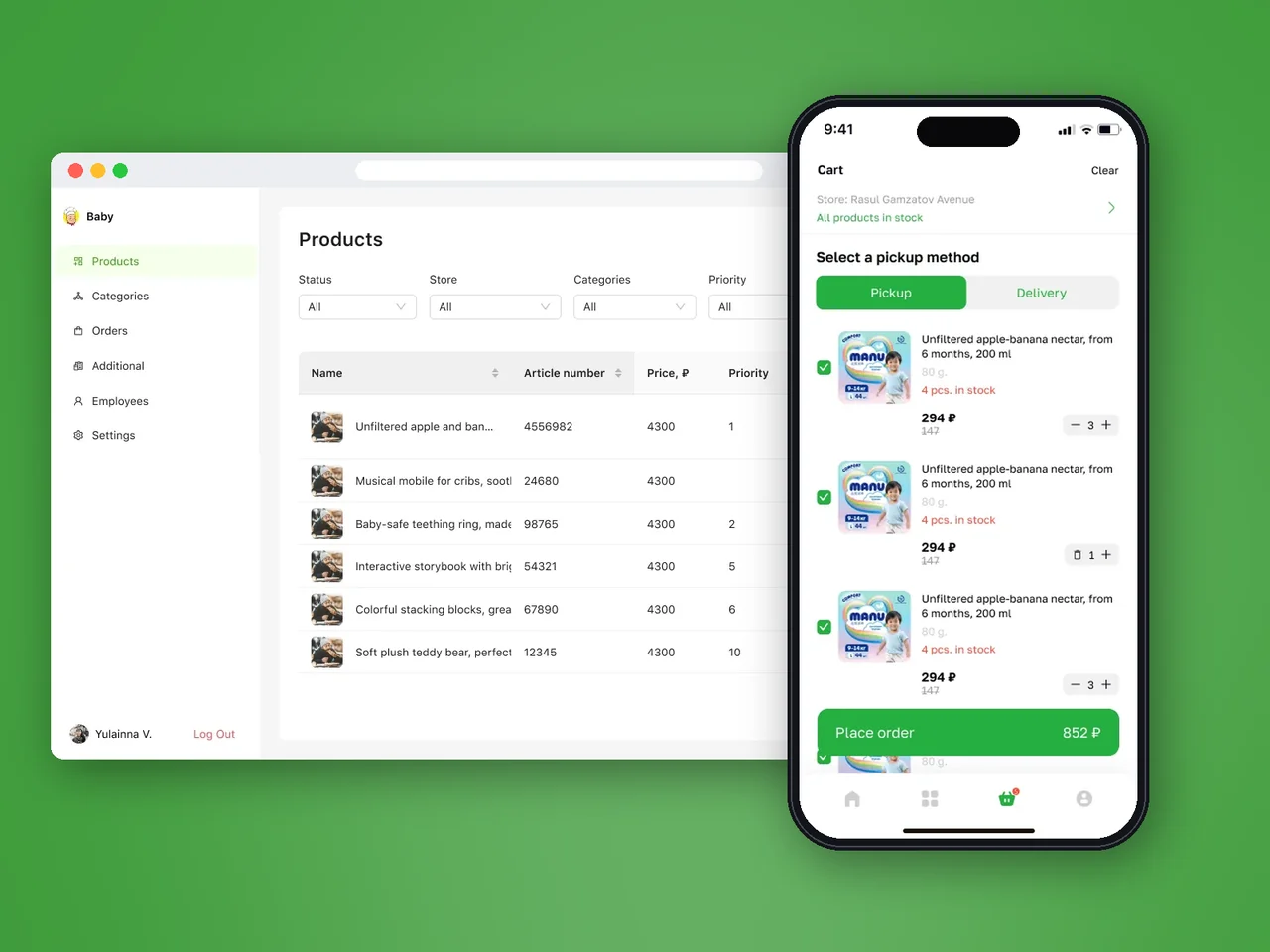
Local marketplace mobile app for an offline children's-goods chain — flexible catalog, two-tap checkout, online/offline stock sync.
View case20 articles across 5 categories — engineering-led guides on AI, SaaS, MVP, compliance and mobile for US and EU product teams.

Performance-tested comparison of RN (New Architecture) and Flutter (Impeller) across hiring, time-to-market and EU/US compliance.
Read article
Real cost ranges by region (US onshore, Western EU, EU nearshore), team and feature scope. With a worked fintech example.
Read article
Data-driven framework for choosing iOS-first or Android-first in 2026 — US & EU market share, ARPU, review timelines, EU DMA.
Read articleTell us about your staff, your product range and how you train people today, and we will help you design an app that makes learning engaging and measurable. Let’s discuss how a similar solution could work for your business.
Share a few details and a senior consultant will reply within one business day.
Email: sales@yusmpgroup.com
Phone: +374 44 871 811
Offices: KAMAR Business Center, Vazgen Sargsyan St. 2, Yerevan, Armenia · Remote — East-Coast US overlap (9 AM–1 PM ET)