Smartwatch sync
Health readings are read from the smartwatch over BLE.
MedTech · iOS + Android + Web
A smartwatch captures health readings; the app reads them, keeps the history and shows trends. A doctor or family member monitors people remotely and gets alerts on custom thresholds, while users get AI recommendations. Stack: Kotlin, Swift, web client, REST/HTTPS + JWT, BLE via the vendor SDK.
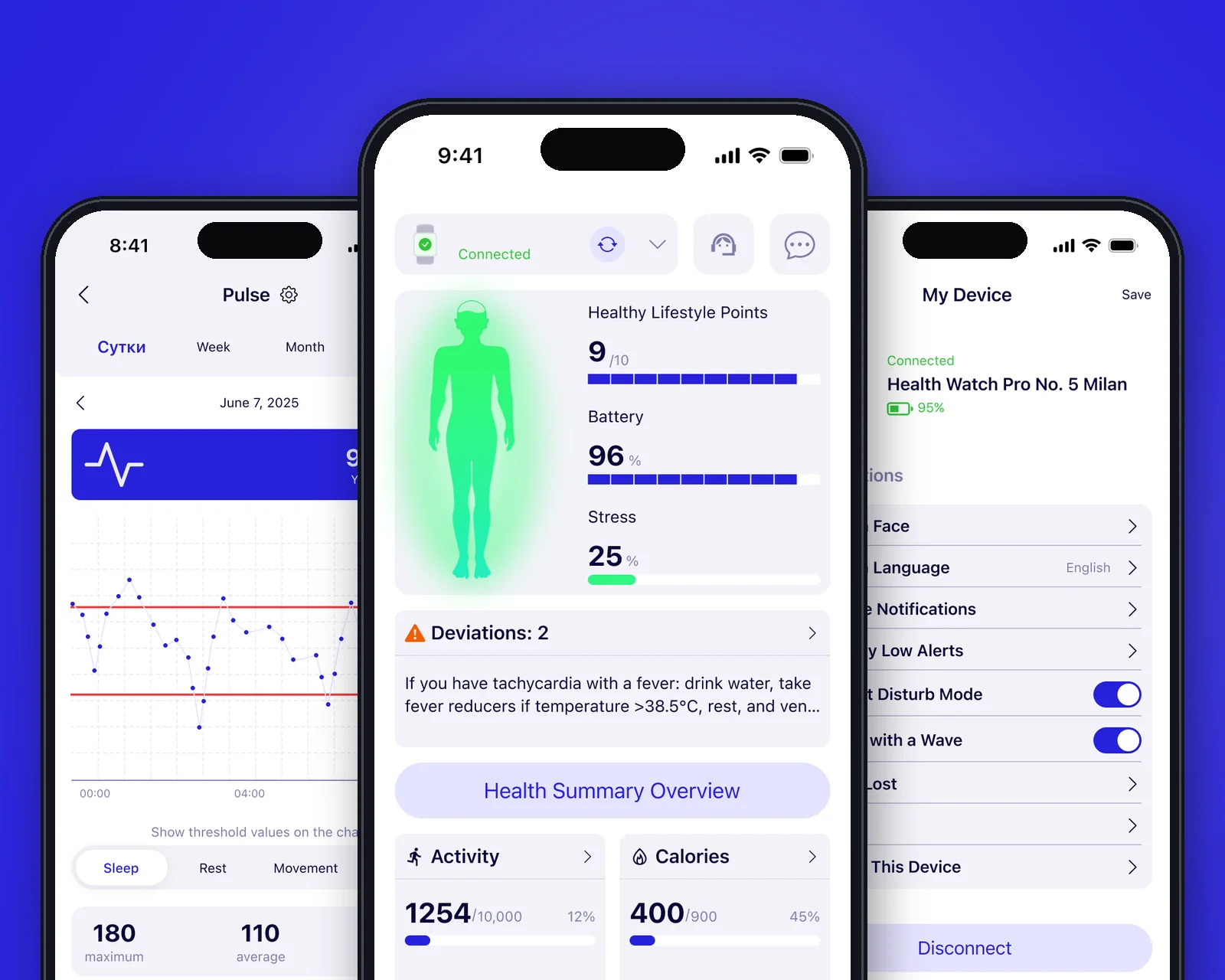
In short: what the product is and who we built it for.
The client is Ivan Sukhorukov, a sole proprietor who manufactures smartwatches. The device was already on the market, but a complete product needed a companion mobile app that turns a “watch with sensors” into a remote health monitoring system.
Healthband connects to the client’s smartwatch and makes the sensor stream clear and manageable: it reads the readings, keeps the history, shows trends and lets one person, a doctor or a family member, keep an eye on another person’s condition remotely. The app is the same on iOS, Android and the web, and registering a monitored user is kept simple.
People whose health needs constant attention, such as elderly relatives or patients under observation, are not always close to their doctor or family. Watch readings alone solve nothing: they have to be collected, stored, interpreted and flagged in time when something deviates.
The goal of the project is to make work easier for doctors who monitor patients and to let families keep an eye on their loved ones’ health from a distance. To do that, the sensor stream had to become a convenient system with history, individual normal ranges and automatic alerts.
How we built the product, from architecture to process.
We are building an app that covers all platforms, connects to the client’s smartwatch and turns the sensor stream into a clear, manageable monitoring system. The mobile clients are native, Kotlin for Android and Swift for iOS, which gives direct access to Bluetooth, background operation and system notifications and a stable connection to the watch. A separate web client provides access from a computer.
The watch connection runs over BLE using the manufacturer’s SDK, embedded directly in the mobile app; the back end never talks to the watch directly, only through the app. Client and back end exchange data over a secure REST interface on HTTPS with token authorization (JWT). The back end is the single source of truth and permanent store for the full history of readings, while the watch keeps only the latest data and is cleared automatically. We work in Agile: discovery and analysis are complete and development is under way.
Tools chosen to fit the product’s goals.
 KotlinNative Android app
 SwiftNative iOS app
A stable connection to a wearable depends on direct access to Bluetooth, background operation and system notifications. That is why the mobile clients are native, built in Kotlin and Swift: this is more reliable than a cross-platform wrapper when it comes to continuous sensor reading and timely alerts. The watch is accessed over BLE through the manufacturer’s own SDK, which already accounts for the specific device’s protocol.
Architecturally, the back end does not communicate with the watch directly, only through the app, and it serves as the single source of truth: it stores the full history of readings, while the watch holds only the latest data and is cleared automatically. This separation simplifies syncing several clients (phone and web) and keeps data available to the watcher even when the monitored user is offline. Instant transfer of readings is planned via WebSocket, and delivery of events to offline users via push notifications.
Key capabilities that solved the business problem.
Health readings are read from the smartwatch over BLE.
Measurement history and a chart for every reading.
Add users and check their condition remotely.
Normal ranges set per user and per reading.
Notifications when readings go outside the set limits.
AI tips for the user when readings deviate.
The same data on iOS, Android and in the web client.
Key product screens, step by step.
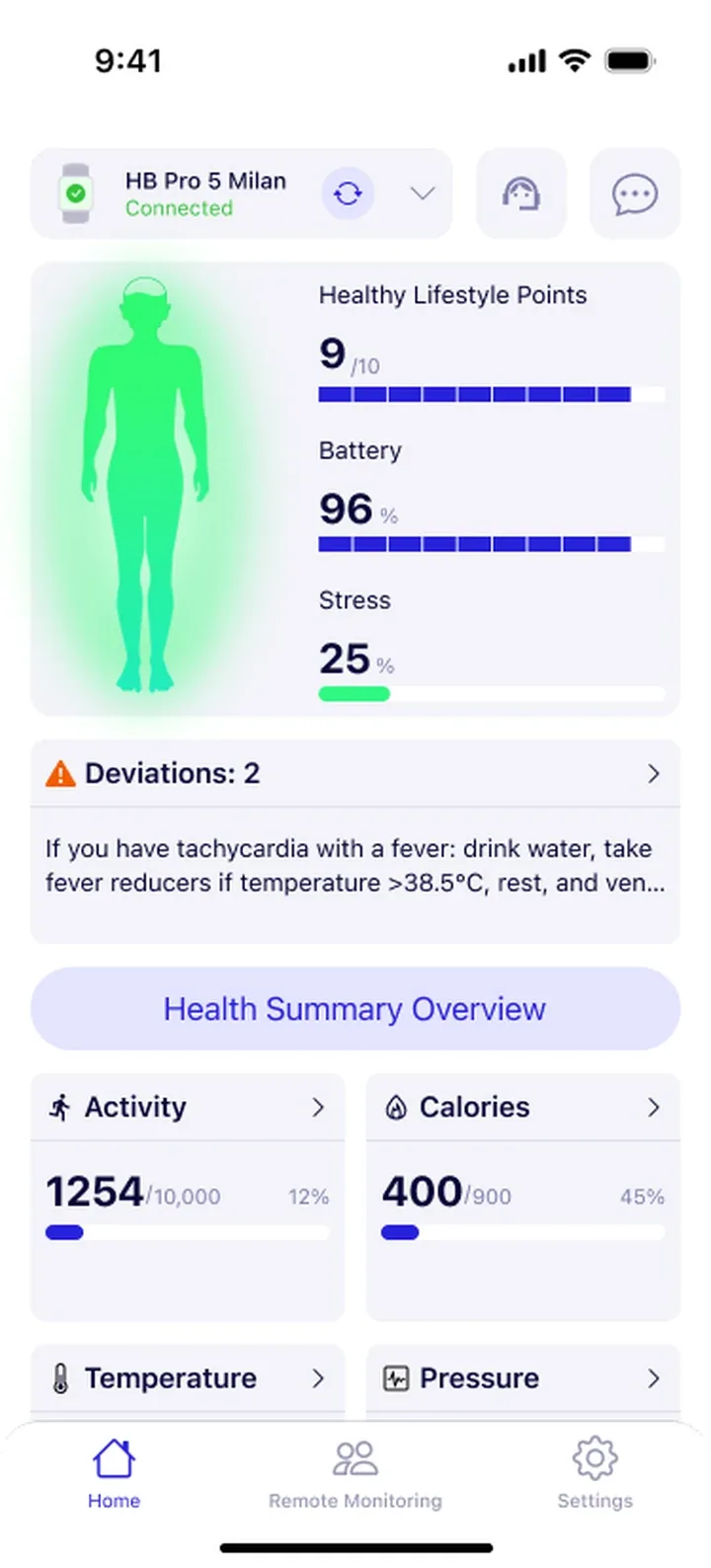
The home screen shows the latest readings taken from the smartwatch: heart rate with a mini chart, SpO₂, steps and blood pressure. Each reading carries a “normal” status label, so the user’s condition can be read at a glance.
Below is the entry point to history and trends: the app stores measurements and plots them over a period, so users see not only the current value but also the trend for each reading.
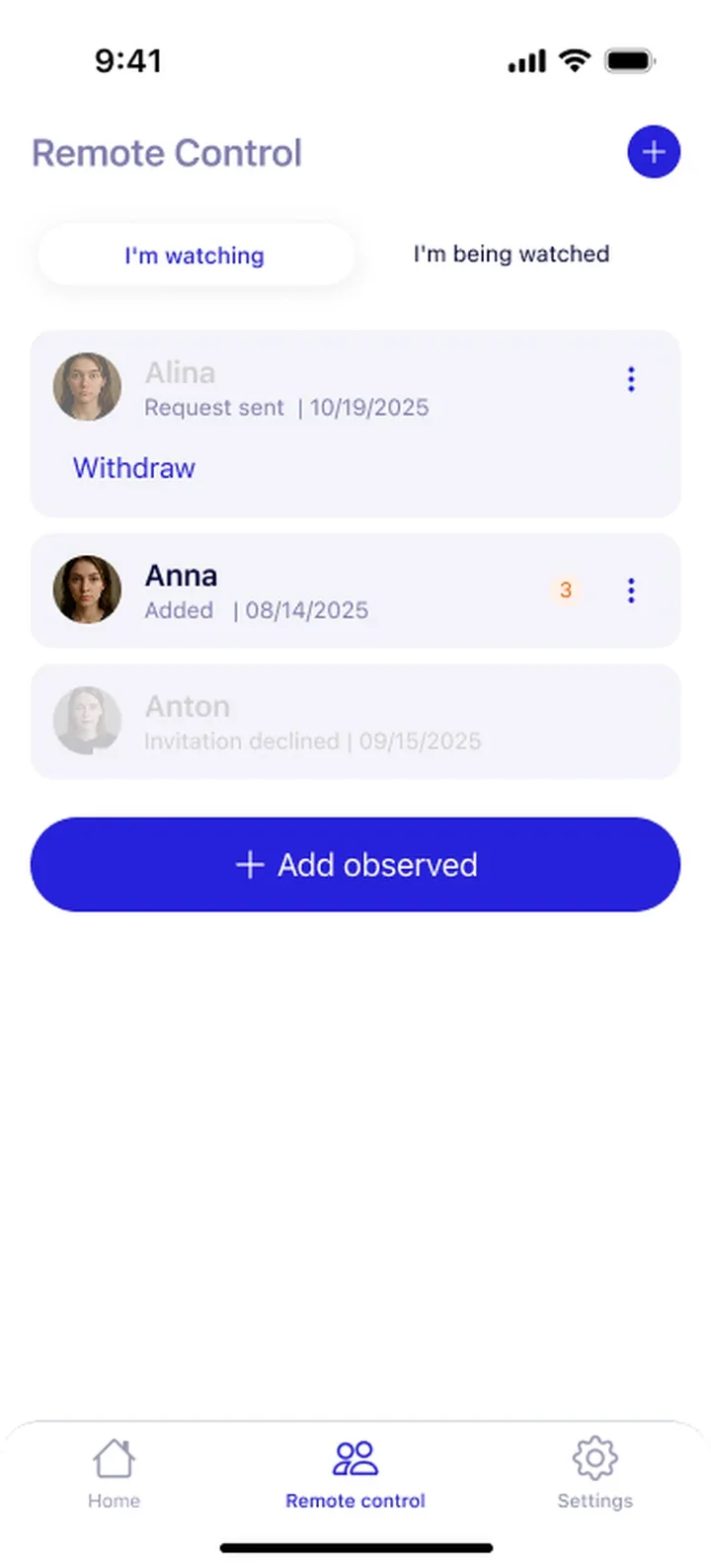
The “Monitored” screen implements the watcher → monitored user model: a doctor or family member adds a user and sees their readings remotely. Each person has a short summary and a status: “normal” or “attention”.
When someone’s readings go beyond their individual normal range, the card is highlighted and the watcher receives an alert, so there is no need to keep opening the app and searching manually.
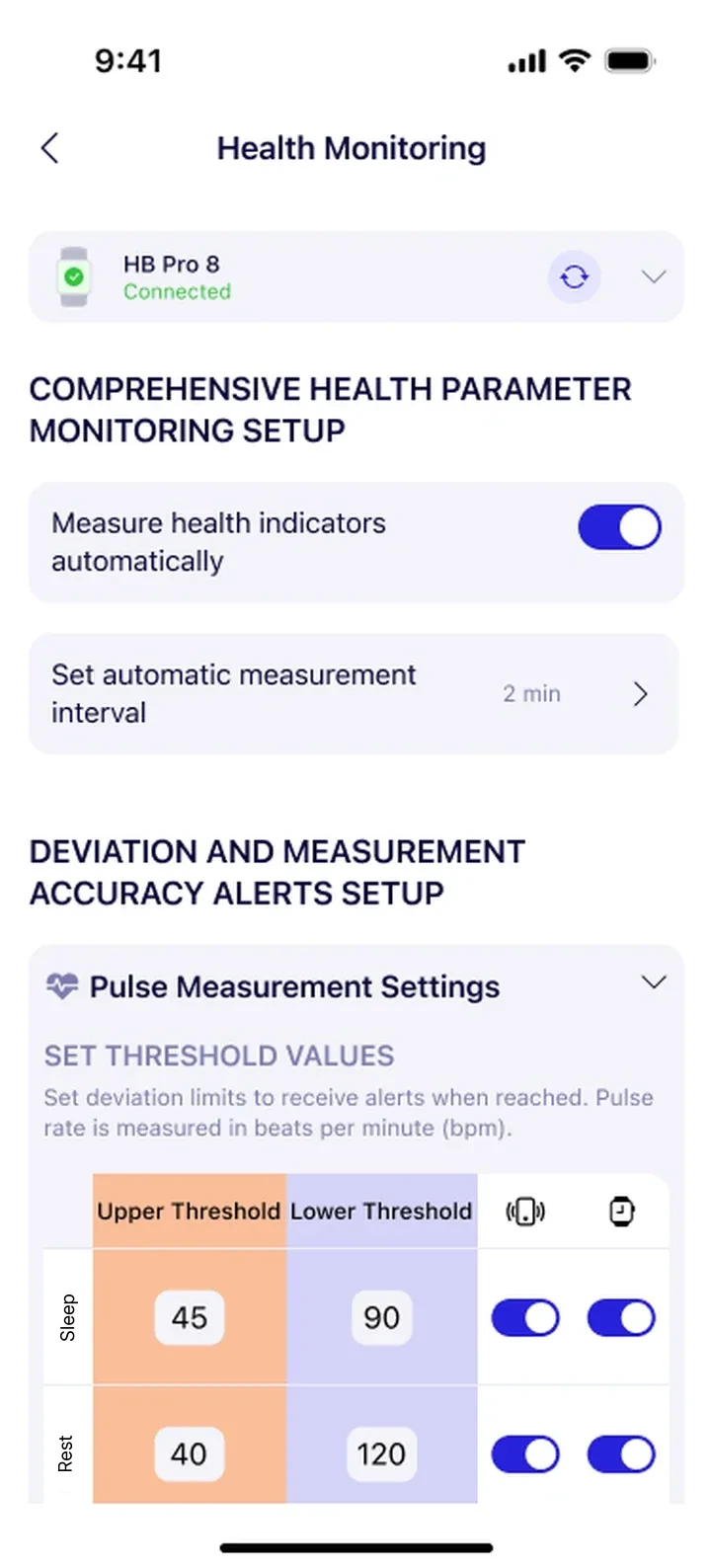
Each user and each reading has its own normal range, for example a heart rate range and a lower SpO₂ threshold. This is the key convenience of the system: the norm is set individually rather than from an averaged template.
Alerts are turned on with a toggle. When a value goes beyond the limit, the app generates an alert and sends it to both the watcher and the user, recording the time of the event.
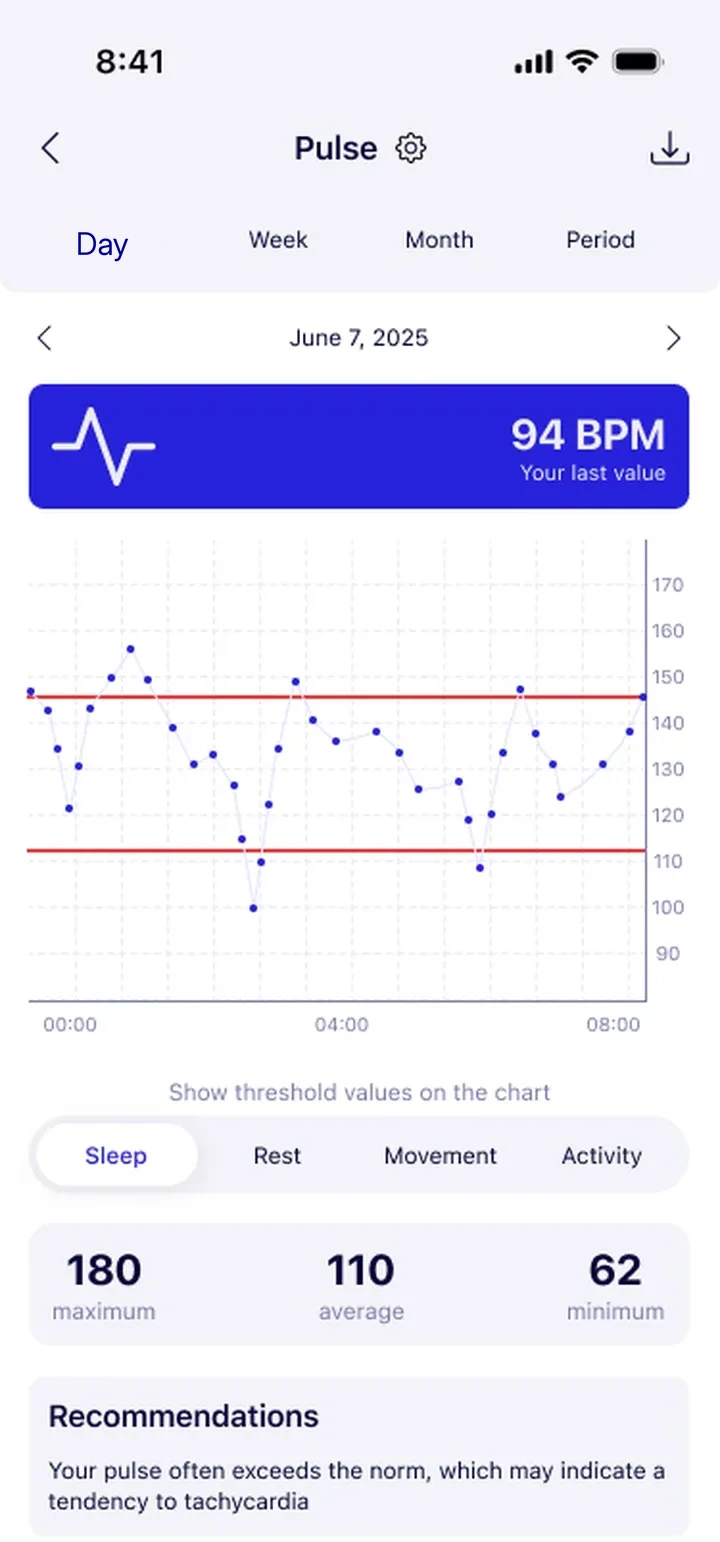
When a reading deviates from the user’s individual norm, the app shows an AI recommendation: what to do right now (take a break, reduce the load, repeat the measurement) and when it is worth seeing a doctor.
The recommendations are for information only and do not replace professional medical advice, as an explicit disclaimer under the card states.
The app works with health readings, so protection is built into the architecture: client and back end exchange data over HTTPS with token authorization (JWT), and the back end acts as the single, permanent store of history. The watch keeps only the latest data and is cleared automatically. The watcher → monitored user access model defines who can see whose readings, and alerts arrive reliably, including when the watcher is far away from the monitored person.
The product processes users’ health data (account, readings, history, thresholds), so security requirements are part of the architecture: an encrypted channel (HTTPS), JWT authorization before any request, role-restricted access based on the watcher → monitored user model and minimal storage on the device. Personal data is processed under the requirements of the client’s jurisdiction, and the specific protection and consent framework is agreed with the client at the design stage.
One app on iOS, Android and the web, with access to data from a phone and a computer.
Readings taken from the smartwatch over BLE via the manufacturer’s SDK.
History and trends for every health reading.
The watcher → monitored user model: remote monitoring for doctors and families.
Individual normal ranges for every user and every reading.
Alerts when readings go outside the limits, and AI recommendations on deviations.
The back end is the single source of truth and history store (REST/HTTPS, JWT); the watch is cleared automatically.
Planned: real-time updates via WebSocket and push notifications for offline users.
For doctors who monitor patients remotely and for families who want to keep an eye on their loved ones’ health, such as elderly relatives. One person (the watcher) can track another person’s (the monitored user’s) readings with individual thresholds and alerts on deviations.
It is not just a log of your own activity but a remote monitoring system: the app takes data from the smartwatch, stores the history on the back end, supports several monitored users and sends alerts when readings go beyond an individually set norm.
No. Alerts arrive automatically when readings go outside the normal range, to both the watcher and the user. Individual thresholds are set for each user and each reading.
On iOS and Android (native apps in Swift and Kotlin) and on the web (a separate web client for access from a computer). The data is shared: the back end stores the full history and the clients sync with it.
Over Bluetooth Low Energy, using the watch manufacturer’s SDK embedded directly in the mobile app. The back end never talks to the watch directly, only through the app. The watch keeps only the latest data and is cleared automatically, while the permanent history store is on the back end.
Companies from retail, medtech, logistics and e-commerce that we helped build digital products.











The full spectrum of development — from native mobile apps to web platforms, AI and cloud. Pick a direction or order a turnkey project.
Native iOS & Android plus cross-platform Flutter and React Native — from MVPs to apps with millions of installs.
Learn moreNative Swift / SwiftUI iOS apps — with Apple Pay, Sign in with Apple, App Store Connect deployment pipelines.
Learn moreNative Kotlin / Jetpack Compose Android apps — Material 3, Google Play release pipelines, Firebase integration.
Learn moreSingle Dart codebase across iOS, Android, web and desktop — with native modules where needed.
Learn moreProduction web apps on React, Next.js, Vue and Node — SaaS dashboards, B2B portals, marketing-conversion stacks.
Learn moreREST, GraphQL and gRPC APIs — designed for partners, mobile clients and internal microservices.
Learn moreBespoke platforms for mid-market and enterprise teams — internal tools, vertical SaaS, mission-critical backends. Discovery to launch in 12–36 weeks.
Learn moreFocused MVPs in 12–20 weeks — one or two integrations, real users on day one, telemetry built-in.
Learn moreEnd-to-end ownership of a digital product — design, build, ship and continuous evolution.
Learn moreTool-using agents that plan, retrieve, act and self-evaluate — in customer service, ops automation, internal copilots.
Learn moreAWS, Azure and GCP architecture, Kubernetes, Terraform/Pulumi, CI/CD and observability — SRE-grade operations for product teams.
Learn moreTechnical SEO, Core Web Vitals, structured data, internal-link architecture — built into your engineering process.
Learn moreRelated cases
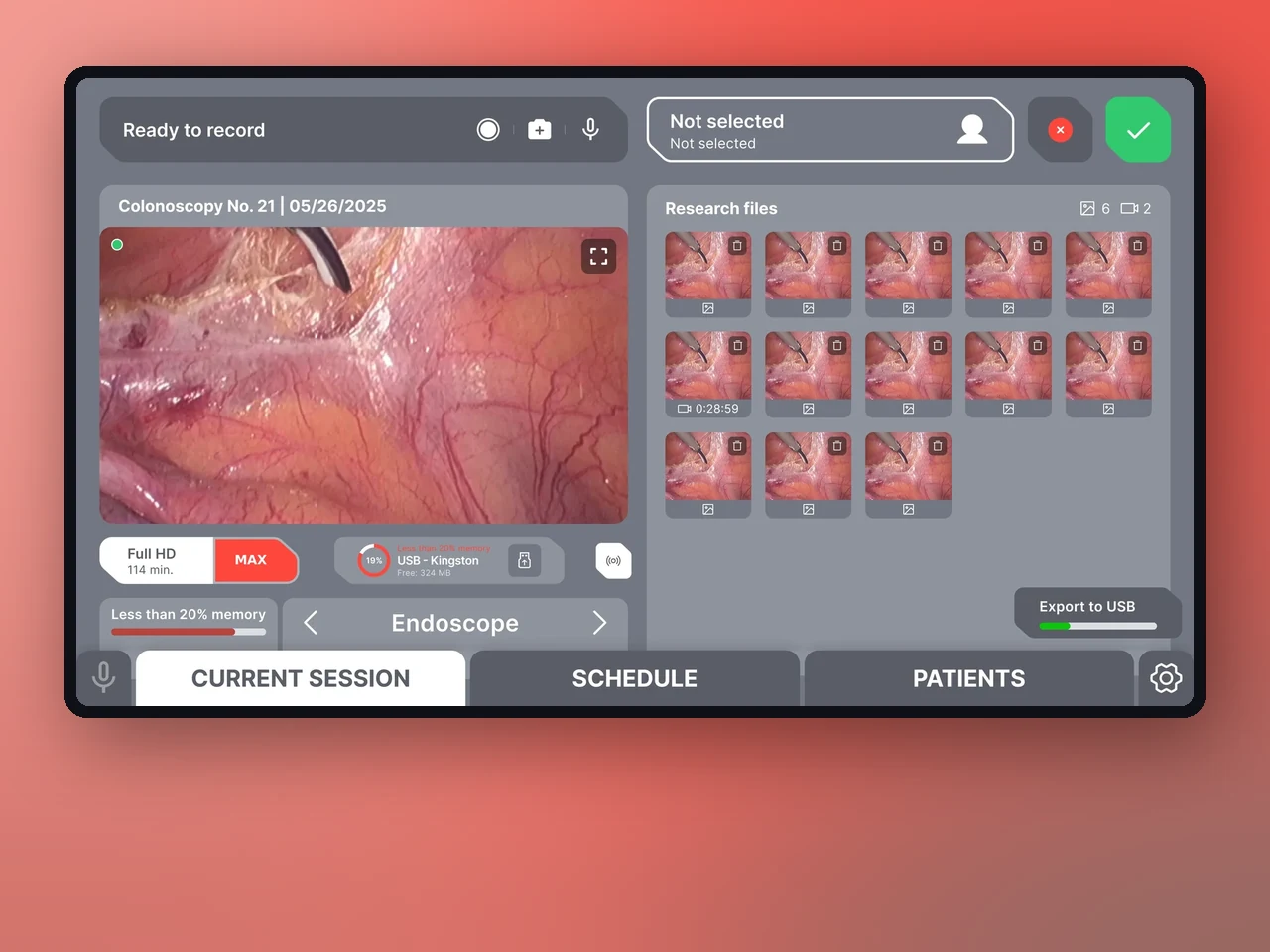
Tablet-first endoscopy recording, patient records, and DICOM/HL7 export — built on Laravel + React with browser-tier WebRTC capture for US & EU clinics.
View case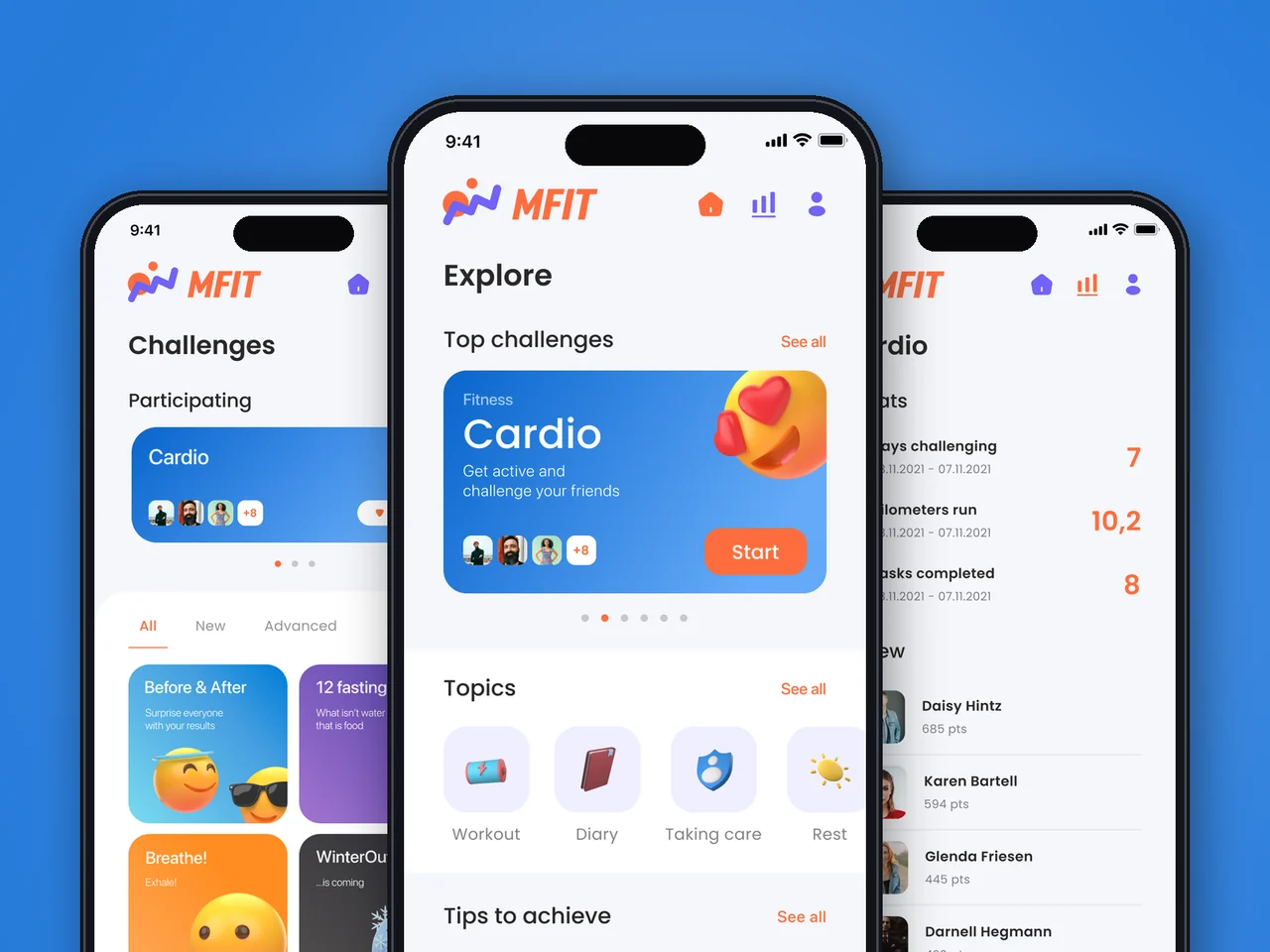
Native iOS & Android fitness-marathon and challenge app — programs, stats, and leaderboards on a Laravel backend, for the US & EU.
View case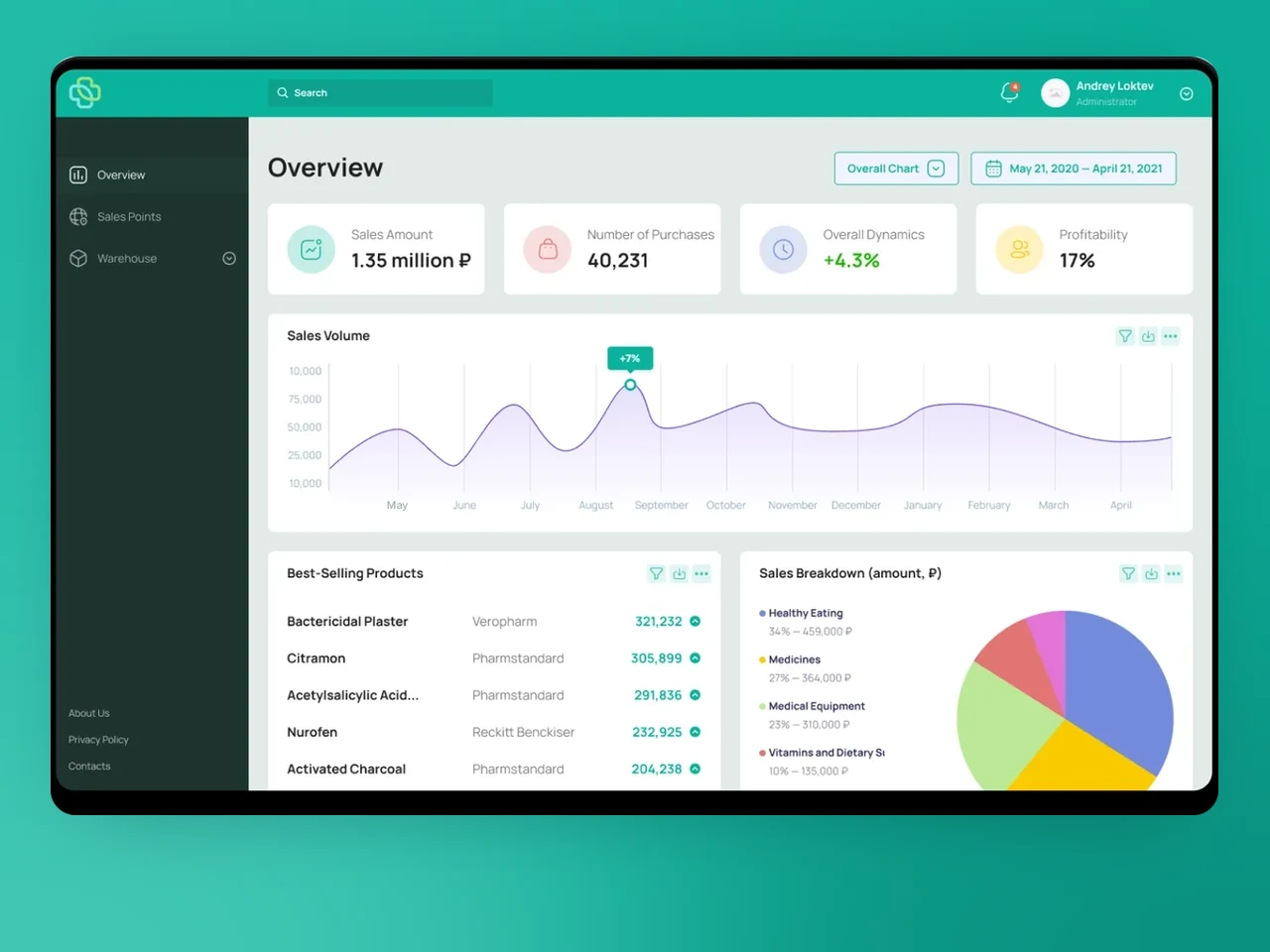
Multi-branch sales analytics, warehouse automation, and replenishment in one React + Laravel app — operational tooling for pharmacy chains in the US & EU.
View case20 articles across 5 categories — engineering-led guides on AI, SaaS, MVP, compliance and mobile for US and EU product teams.

Performance-tested comparison of RN (New Architecture) and Flutter (Impeller) across hiring, time-to-market and EU/US compliance.
Read article
Real cost ranges by region (US onshore, Western EU, EU nearshore), team and feature scope. With a worked fintech example.
Read article
Data-driven framework for choosing iOS-first or Android-first in 2026 — US & EU market share, ARPU, review timelines, EU DMA.
Read articleTell us about your device and the people who need to be monitored, and we will help you turn sensor data into a clear system with history, thresholds and alerts. Let’s discuss how a similar solution could work for your business.
Share a few details and a senior consultant will reply within one business day.
Email: sales@yusmpgroup.com
Phone: +374 44 871 811
Offices: KAMAR Business Center, Vazgen Sargsyan St. 2, Yerevan, Armenia · Remote — East-Coast US overlap (9 AM–1 PM ET)