Kubernetes audit
from $700
one-off · cluster + FinOps
Fixed-scope cluster, security and FinOps audit. Topology review, kube-bench/kubescape scan, Kubecost install, a written ADR pack with the top risks and cost wins.
Senior platform engineers who run EKS, GKE, AKS, and bare-metal clusters in production for a living — not a slide deck. We design cluster topology, build internal developer platforms, write the GitOps pipeline, harden security to CIS Benchmark, cut cloud bills by 30–45% with FinOps, and stand on-call with your team through the first three releases. Fixed-scope, all-in USD pricing: a Kubernetes audit from $700, a turnkey platform from $1,800, managed Kubernetes from $1,100/month, or a dedicated platform engineer from $100/hour. IP transferred on day one, no recruitment markup, no tool surcharges.
CKA/CKS-certified platform engineers · EKS, GKE, AKS & on-prem in production · CIS Kubernetes Benchmark hardening · GDPR-aligned · ISO 27001 ready · SOC 2 Type II in progress · HIPAA-capable · CET workday with 9 AM–1 PM ET overlap
Kubernetes is not the product — the paved road your engineers walk every day is. Most teams arrive with the same three problems: a cluster that grew organically and nobody fully owns, a cloud bill that doubled when traffic only grew 30%, and a deploy process that still requires a senior engineer holding the keyboard. We fix all three. Week 1 is an architecture and FinOps audit with a written ADR. Week 2 onwards we ship: GitOps with Argo CD, Karpenter or Autopilot for compute, Cilium for network and observability, Kyverno for policy, External Secrets for credentials, and Backstage for self-service. Your engineers stop writing YAML and start shipping features. Running a broader cloud estate? See our cloud & DevOps engagement, or the AWS, Azure and GCP practices for the platform underneath.
EKS, GKE, AKS, or on-prem (kubeadm, Talos, Rancher RKE2). Multi-AZ control plane, node-group strategy, namespace tenancy model, multi-cluster federation with Cluster API when scale demands it. Written ADRs against your SLOs.
Argo CD or Flux with App-of-Apps, Helm + Kustomize per environment, signed images via Cosign and Sigstore, Renovate for upstream bumps, progressive delivery with Argo Rollouts or Flagger (canary, blue/green, traffic-shifted).
Pod Security Standards restricted, Kyverno or OPA Gatekeeper admission, Cilium network policies default-deny, IRSA/Workload Identity, Falco runtime detection, External Secrets via Vault or AWS/GCP secret manager, CIS Benchmark v1.9 evidence pack.
Kubecost or OpenCost for chargeback, Karpenter or Autopilot for elastic compute, spot/preemptible adoption with PDBs, VPA-driven right-sizing, HPA with KEDA custom metrics. Typical first-quarter saving 30–45% on six-figure cluster bills.
OpenTelemetry collectors, Prometheus + Thanos or Grafana Mimir for long-term metrics, Loki or Elastic for logs, Tempo or Jaeger for traces, Grafana for dashboards, Alertmanager wired to PagerDuty/Opsgenie/Slack. SLO-driven alerts, not CPU spikes.
Backstage developer portal, Crossplane or Terraform-controller for self-service infra claims, golden-path templates per workload type, paved-road docs in Backstage TechDocs. Service onboarding drops from two weeks to one PR.
 GKE AutopilotInfrastructureAKSInfrastructure
 Argo CDDevOps / CI-CD
 TerraformInfrastructure
 PulumiInfrastructure
 HashiCorp VaultInfrastructure
 OpenTelemetryObservability
 Prometheus / ThanosObservability
 Grafana LokiObservability
Week 1: cluster topology review, kube-bench & kubescape scan, Kubecost install, IaC inventory, on-call interviews. We deliver a written ADR pack with the top 10 risks and the top 10 cost wins ranked by impact.
Weeks 2–4: GitOps pipeline live, Pod Security Standards restricted enforced, Kyverno policies merged, External Secrets cut over from plaintext, Karpenter or Autopilot rolled out behind a feature flag.
Weeks 5–12: IDP build — Backstage portal, golden-path templates, Crossplane claims for the five most-requested infra primitives, OpenTelemetry pipeline, SLO-based alerting. Co-built with your platform team, not over the wall.
90-day post-go-live support window. Weekly platform review, on-call rotation alongside your team, runbooks in Backstage TechDocs, monthly FinOps report with savings tracked against baseline.
Kubernetes audit
from $700
one-off · cluster + FinOps
Fixed-scope cluster, security and FinOps audit. Topology review, kube-bench/kubescape scan, Kubecost install, a written ADR pack with the top risks and cost wins.
Turnkey platform
from $1,800
one-off · GitOps + IDP
GitOps with Argo CD, Pod Security Standards, Kyverno policy, External Secrets, Karpenter/Autopilot and a Backstage internal developer platform — delivered as infrastructure as code you own.
Managed Kubernetes
from $1,100
per month · platform ops
Ongoing platform operation: SRE and on-call alongside your team, monthly FinOps and reliability reviews, cluster and pipeline upkeep against your SLOs.
Platform engineer
from $100
per hour · staff augmentation
A senior CKA/CKS-certified platform engineer embedded in your team on time-and-materials. No recruitment markup, no tool surcharges.
What moves the number: cluster count and fleet size, single-cloud vs multi-cloud/on-prem, migration scope, whether an internal developer platform is in scope, and compliance depth (CIS Benchmark evidence, SOC 2/ISO 27001, HIPAA, EU data residency). Cloud fees run on your own accounts, so you keep the cost lever. Prices are indicative and fixed in a written quote for your specific scope.
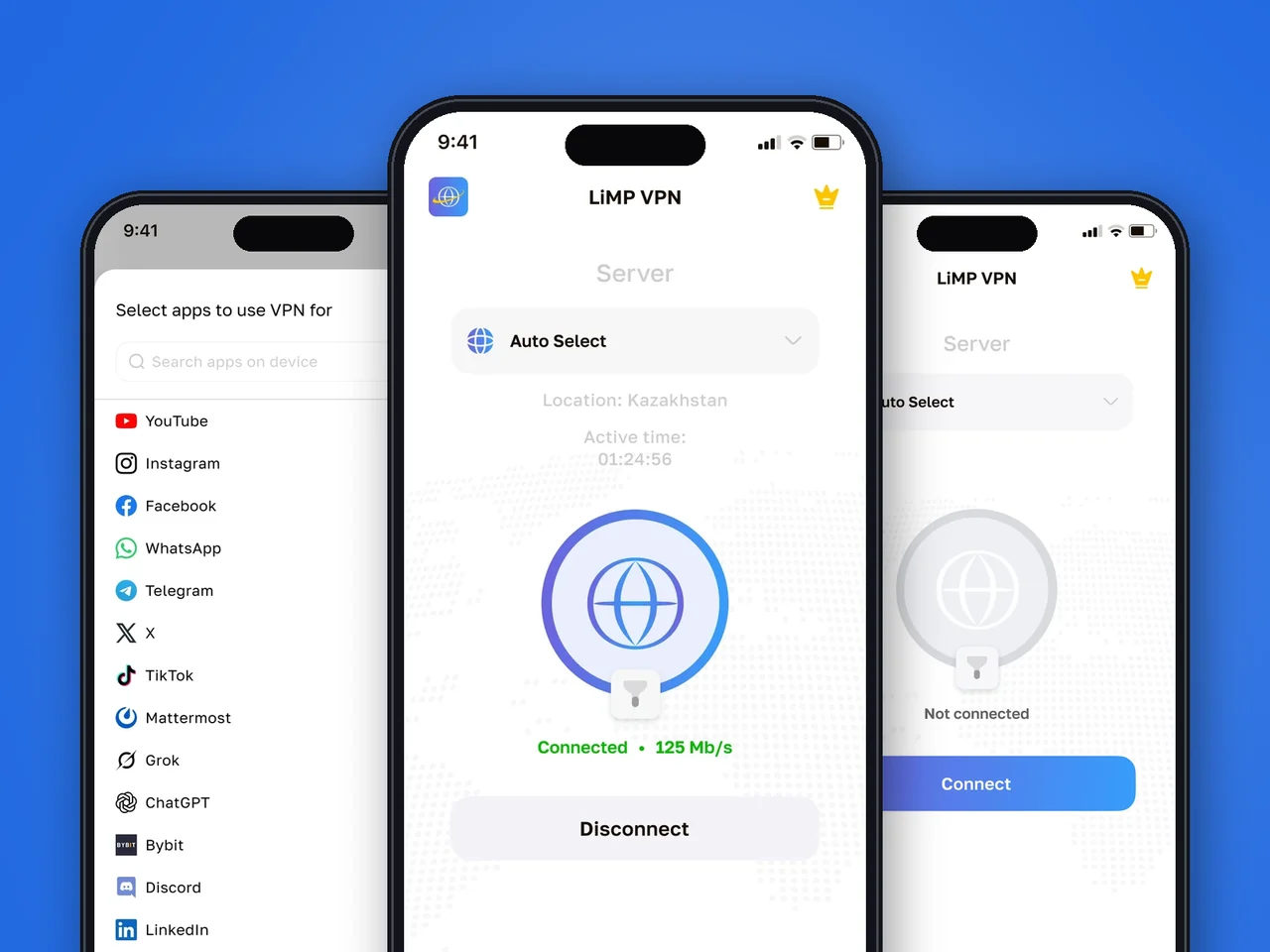
Consumer WireGuard VPN app for iOS and Android with zero-log architecture, launched across the US and EU.
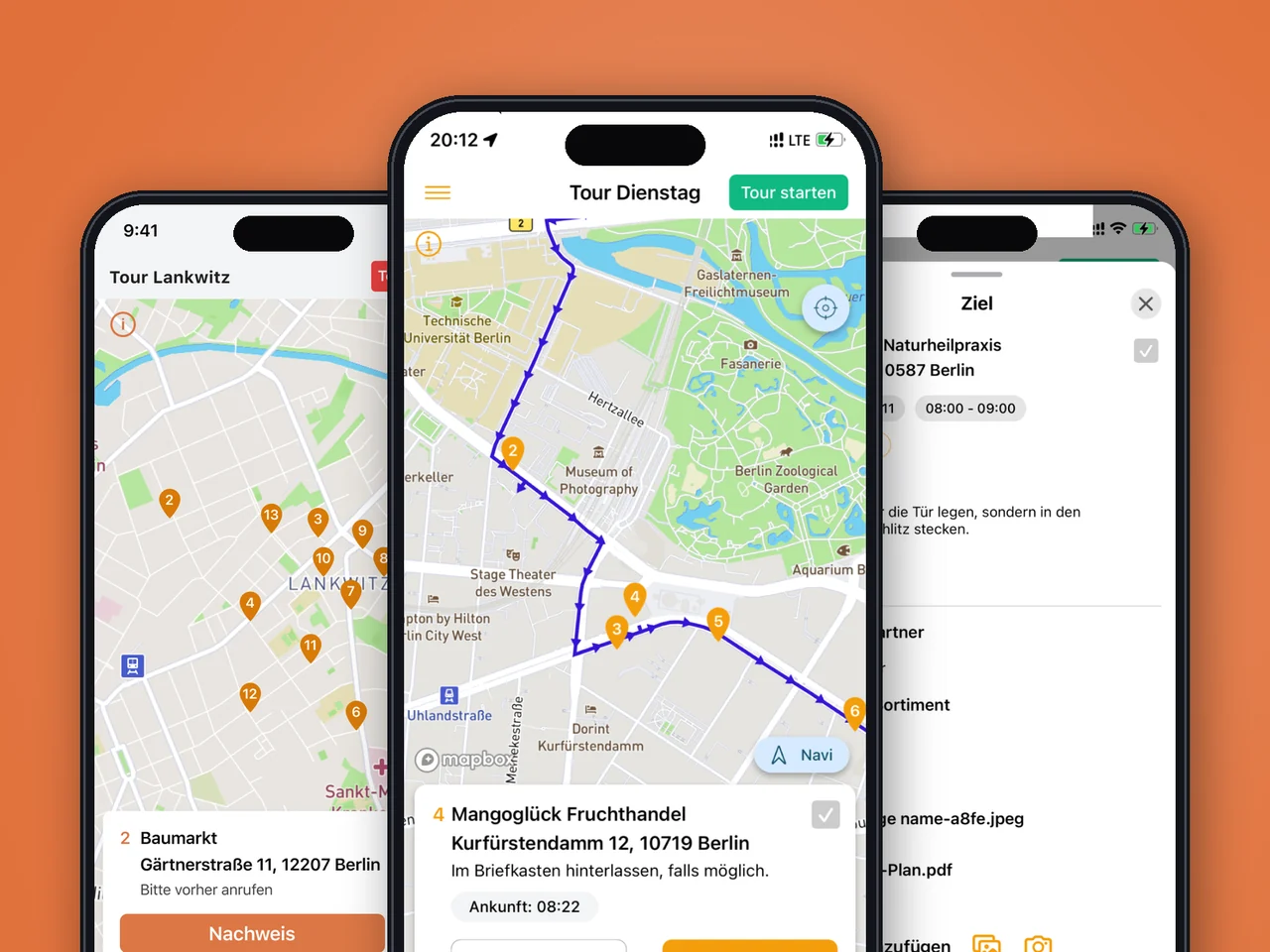
Android + iOS refactor and rebuild for a German last-mile logistics operator — multi-point route planning, real-time driver tracking and in-app invoicing live in the EU.
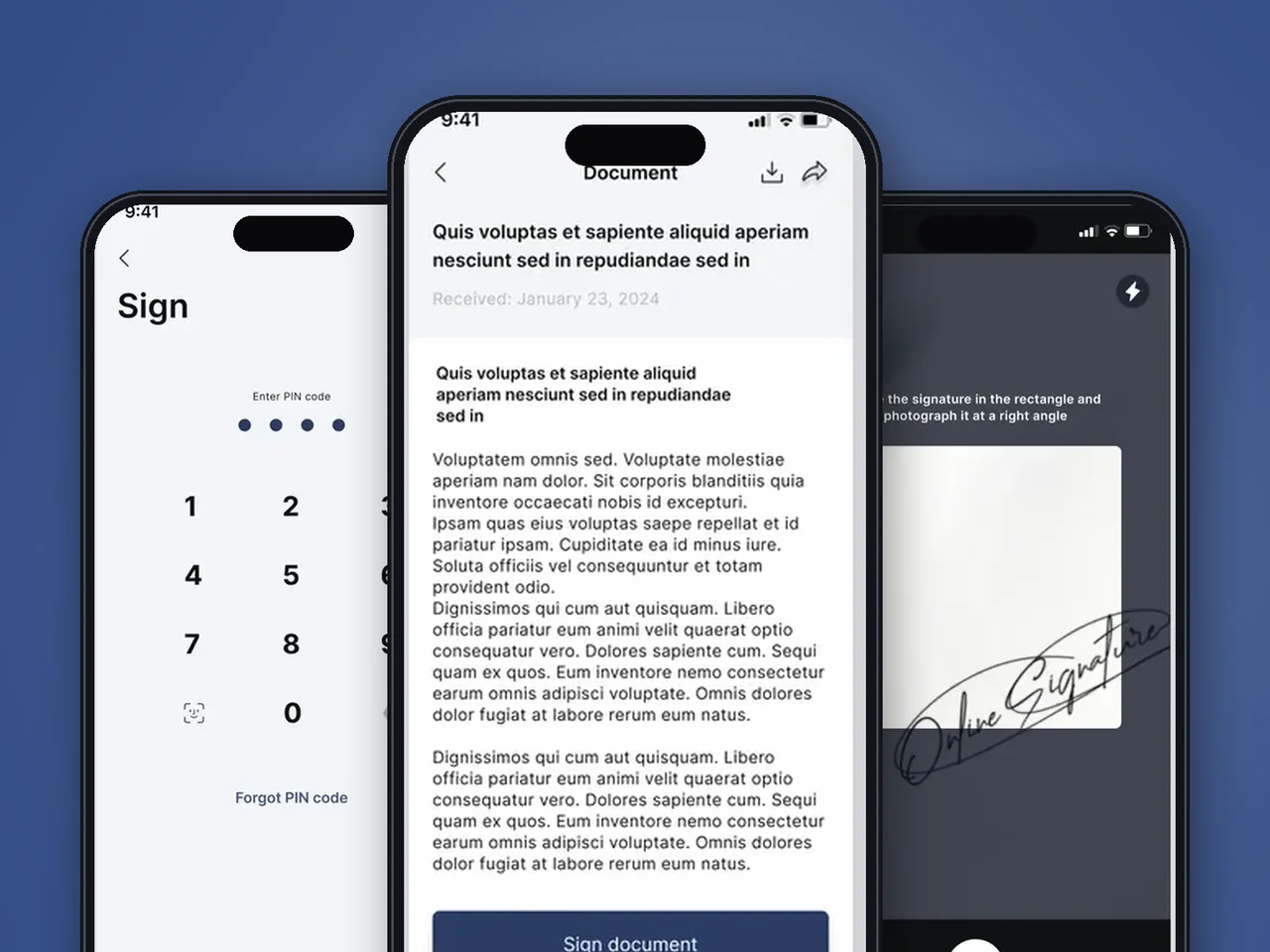
Native iOS and Android e-signature clients with a Symfony + React CRM for a cross-border law firm — KYC onboarding and a defensible evidence trail for US & EU matters.
Multi-tenancy, autoscaling and compliance mean different things in each sector. We pair the GitOps and security baseline above with industry-specific controls — data residency, PHI isolation, peak-traffic elasticity — across US & EU markets.
Financial services require 99.99%+ uptime for payment processing and trading systems. We design Kubernetes rolling updates, blue-green deployments, and circuit breaker patterns that eliminate downtime, while implementing PCI DSS-compliant namespace isolation and network policies that separate cardholder data workloads from other services.
Kubernetes RBAC hierarchies enforce least-privilege access to production namespaces, and OPA Gatekeeper policies enforce compliance constraints at admission time. We configure Pod Security Standards, encrypted secrets (Vault integration or Sealed Secrets), and audit logging at the API server level for SOC 2 and PCI DSS evidence. See FinTech.
Retail platforms experience 10x–100x traffic during peak sales events. Our Kubernetes engineers configure Horizontal Pod Autoscaler (HPA) with custom metrics (RPS, queue depth), cluster autoscaler with node pool pre-warming strategies, and load testing validation to ensure your platform scales without manual intervention during flash sales.
We design multi-AZ cluster topologies with pod topology spread constraints that keep replicas distributed across availability zones, ensuring a single AZ failure does not cause a service outage. KEDA lets catalog and checkout services scale from queue depth signals rather than lagging CPU metrics. See E-commerce.
SaaS platforms serving multiple customers on shared infrastructure need strict resource isolation and fair usage enforcement. We implement Kubernetes ResourceQuotas and LimitRanges per namespace, network policies for tenant isolation, and RBAC hierarchies that allow customer-specific admin access without cross-tenant risk.
Multi-tenant namespace architectures allow per-tenant resource billing visibility, independent deployment cadence for tenant-specific features, and isolation that satisfies enterprise procurement security questionnaires. We design GitOps pipelines that manage per-tenant configuration as code.
Kubernetes clusters processing ePHI must implement audit logging at the API server level, encrypt secrets at rest, and enforce pod security standards that prevent privilege escalation.
Our HIPAA-focused K8s implementations include Falco runtime security monitoring, Gatekeeper OPA policies, and automated compliance scanning with kube-bench.
We configure Kubernetes audit policies that log all CRUD operations on sensitive namespaces, integrate with SIEM platforms for real-time alerting, and implement pod-level encryption using CSI driver integration with cloud KMS. Backup strategies using Velero ensure RTO/RPO targets that satisfy HIPAA contingency planning requirements. See HealthTech.
Video transcoding and streaming workloads require access to GPU resources and are highly bursty in nature. We configure Kubernetes GPU node pools with NVIDIA device plugins, batch job schedulers (Argo Workflows), and priority classes that ensure user-facing streaming services always have resource priority over background transcoding jobs.
Spot/preemptible instance node pools reduce transcoding costs by 60–80% for batch workloads while on-demand node pools serve real-time streaming with guaranteed capacity. We implement PodDisruptionBudgets and draining policies that handle spot instance reclamation without disrupting active user sessions.
Large enterprises often need Kubernetes across on-premises data centers and multiple cloud providers, plus edge locations like factory floors. We architect multi-cluster federations using Cluster API, configure K3s for edge and IoT deployments, and implement GitOps pipelines that manage workload placement policies across the entire fleet.
Hybrid connectivity via Cilium Cluster Mesh enables cross-cluster service discovery and policy enforcement for workloads spanning on-prem and cloud. Edge K3s nodes at manufacturing sites run local ML inference for defect detection without cloud round-trip latency, syncing results to central clusters asynchronously. See Logistics.
GDPR-aligned · ISO 27001 ready · SOC 2 Type II in progress · GDPR Schrems II + SCC + EU data residency
Every senior on the engagement has been on-call for production Kubernetes for 5+ years — CKA/CKS certified, contributors to upstream CNCF projects, and the people who debug etcd at 3am, not the people who draw boxes on slides.
We run EKS, GKE, AKS, and on-prem in production and have no commercial preference. The ADR you get in week 1 is scored against your workload — not against whichever cloud rebated us last quarter.
CIS Kubernetes Benchmark v1.9, SOC 2 Type II evidence packs, ISO 27001 Annex A controls, HIPAA technical safeguards, EU data residency with Schrems II and SCC clauses written into the DPA — we have shipped all of them.
For regulated workloads (fintech, healthtech, govtech) we stand up clusters with EU-only data plane, customer-managed encryption keys (KMS BYOK), and an auditable Kyverno policy bundle ready for the next ISO or SOC 2 audit.
Aggregating live prices across multiple exchanges while keeping latency under 500 ms is genuinely hard engineering. YuSMP built the multi-exchange feed, real-time token charts, and listing workflow into a coherent platform. We have not had an outage since launch.
Process control in a reactor environment cannot afford connectivity gaps. YuSMP delivered an offline-first MES that captures every step reliably and syncs to the central server without data loss. Audit readiness that once took days now takes minutes.
1 / 2
Kubernetes adds operational complexity alongside its benefits. These are the decision points where migration makes engineering and business sense.
Signs include manual container restarts, inability to run multiple replicas, no automated health recovery, and deployment coordination across multiple servers.
When your team is spending more time on infrastructure reliability than on product features, it's time to evaluate Kubernetes.
We run a readiness assessment covering your containerization maturity, deployment frequency, and team capacity before recommending migration. For teams not yet ready, we implement intermediate steps like Docker Swarm or Nomad that reduce operational burden while preserving future migration optionality.
EKS, GKE, and AKS eliminate the burden of managing the Kubernetes control plane, handling upgrades, and ensuring API server availability. For most product companies, managed Kubernetes reduces operational overhead by 60–80%.
Self-hosted via kubeadm or Cluster API makes sense for strict data sovereignty, specialized hardware, or on-premises infrastructure.
We evaluate your workload requirements, compliance constraints, and team expertise to recommend the right hosting model. Managed clusters typically reach production-ready state 4–6 weeks faster than self-hosted, reducing the time your engineering team spends on control plane operations.
Serverless (AWS Lambda, Cloud Run, Azure Functions) is optimal for event-driven workloads with infrequent invocations, variable traffic, and stateless execution.
Kubernetes excels for long-running services, stateful workloads, custom runtimes, and applications needing fine-grained resource control and network topology.
We analyze your workload profile, concurrency requirements, cold-start sensitivity, and vendor lock-in tolerance to recommend the right compute model. Many production architectures combine both: Kubernetes for core services and serverless for event-driven extensions, with a shared observability stack across both.
It is rarely about the control plane (all three are conformant and stable) and almost always about what surrounds it. Pick EKS if your data plane already lives in AWS — VPC CNI, IRSA for IAM, ALB Ingress, Karpenter for autoscaling, and EBS CSI are first-class and integrate with the rest of the AWS estate. Pick GKE if you need the most opinionated experience: Autopilot removes node management entirely, Workload Identity is the cleanest service-account-to-IAM binding on the market, and the upgrade cadence is the most aggressive. Pick AKS if you are an enterprise on Entra ID and Azure Policy — the IAM and compliance story is the smoothest. For greenfield without an existing cloud bias we usually recommend GKE Autopilot. We do the eval as week one of every engagement and write up an ADR with concrete trade-offs scored against your workload.
We default to Argo CD for app delivery and Flux for cluster bootstrap, both with the App-of-Apps pattern. Cluster infrastructure (VPC, node groups, IAM, KMS keys, IRSA roles) is Terraform or Pulumi, stored in a separate repo with OPA/Conftest policy gates in CI. Application manifests live in Helm charts wrapped by Kustomize overlays per environment. Image promotion goes through a signed registry (Cosign + Sigstore) with a Renovate bot opening PRs against the GitOps repo. PR merged to main triggers Argo sync. Rollback is a git revert. We never let humans kubectl apply in production.
Six controls, non-negotiable. (1) Pod Security Standards set to restricted with Kyverno or OPA Gatekeeper enforcement. (2) Network policies default-deny with Cilium or Calico, traffic explicitly allowed per namespace. (3) IRSA on EKS or Workload Identity on GKE/AKS — never long-lived static credentials in secrets. (4) Image signing via Cosign with Kyverno verifyImages admission policy. (5) Runtime detection via Falco or Tetragon shipping to your SIEM. (6) Secrets via External Secrets Operator backed by AWS/GCP/Azure secret manager or HashiCorp Vault — no plaintext secrets in git, ever. We harden against CIS Kubernetes Benchmark v1.9 and provide the audit evidence pack for SOC 2 and ISO 27001.
Yes, and Kubernetes FinOps is most of where we save money on EKS and GKE clients. Standard play: install Kubecost or OpenCost for namespace-level chargeback, switch overprovisioned static node groups to Karpenter or GKE Autopilot, move stateless workloads to spot/preemptible with PodDisruptionBudgets and topology spread constraints, right-size requests and limits using Vertical Pod Autoscaler recommendations, and add HPA with custom metrics from KEDA rather than CPU-only. Typical first-quarter saving on a six-figure monthly EKS bill is 30 to 45 percent without touching reliability targets. We share the savings model with finance in a monthly written report.
Yes — this is most engagements that go past six months. A typical IDP stack: Backstage for the developer portal, Crossplane or Terraform-controller for self-service infrastructure claims, Argo CD for delivery, Argo Workflows for batch and ML, Tekton or GitHub Actions runners for CI, Istio or Linkerd for service mesh, Cilium Hubble for observability, OpenTelemetry collectors shipping to your APM. We do not invent abstractions — we glue best-of-breed CNCF projects into a paved road and document it in Backstage. Onboarding a new service drops from two weeks of YAML to a Backstage template + one PR.
Fixed-scope, all-in USD pricing across four engagement shapes. A Kubernetes audit (cluster, security and FinOps) runs from $700; a turnkey Kubernetes platform with GitOps, a security baseline and a Backstage internal developer platform from $1,800; managed Kubernetes and platform ops from $1,100 per month; and a senior CKA/CKS-certified platform engineer via staff augmentation from $100 per hour. You see the line-item budget at the end of discovery and sign off before any code is written. There is no recruitment markup, no tool surcharges, and cloud fees run on your own accounts, so you keep the cost lever.
Managed Kubernetes eliminates control plane operations: the cloud provider handles API server availability (99.95%+ SLA), etcd backups, Kubernetes version upgrades, and control plane security patching. EKS, GKE, and AKS all provide native cloud integration that reduces integration effort significantly. Self-hosted gives you full control over the control plane configuration, network topology, and hardware selection — important for air-gapped environments, specialized hardware (bare-metal GPU), or data sovereignty requirements where the control plane must remain on-premises. For most product companies under $50M ARR, managed Kubernetes is the right default and reaches production-ready state 4–6 weeks faster than self-hosted.
A production Kubernetes cluster on managed cloud with 3 availability zones, autoscaling node groups, and a staging environment typically runs $800–$2,500/month for small-to-medium workloads. Control plane costs are $72–$150/month on EKS/AKS; GKE offers one free Autopilot cluster per project. Beyond the cluster, costs include persistent storage, load balancers, monitoring (Prometheus/Grafana), and logging. Spot/preemptible instance strategies typically reduce compute costs by 40–70% for stateless workloads. We provide a cost estimate as part of our architecture assessment.
GitOps makes Git the single source of truth for cluster state: every configuration change goes through a pull request, gets reviewed, and the GitOps controller (ArgoCD or Flux) reconciles the cluster to match the declared state. ArgoCD provides a web UI and multi-cluster management that makes it easier for teams transitioning from manual deployments. Flux is lighter-weight, Kubernetes-native, and preferred for automated machine deployments without a UI dependency. We set up separate application repos (service code) and config repos (Kubernetes manifests/Helm values), configure sync policies with health checks, and implement promotion workflows from staging to production that require explicit approval.
Base64-encoded Kubernetes Secrets are not encrypted at rest by default. The three main approaches: HashiCorp Vault with the External Secrets Operator (best for fine-grained secret rotation and existing Vault deployments), Sealed Secrets (encrypts secrets with a cluster-specific key so encrypted manifests are safe to commit to Git — simplest GitOps-friendly option), and cloud provider secret managers via External Secrets Operator (best for cloud-native teams). We configure encryption at rest for the Kubernetes etcd datastore regardless of the secret management approach.
The kube-prometheus-stack Helm chart deploys Prometheus Operator, Alertmanager, Grafana, and pre-built Kubernetes dashboards in a single install. We configure service monitors for your application metrics, set up recording rules for commonly queried aggregations, and create alerting rules for CPU throttling, memory pressure, pod crash loops, and persistent volume pressure. Grafana dashboards cover cluster health, application performance (the RED method: Rate, Errors, Duration), and custom business metrics. We integrate Alertmanager with PagerDuty, OpsGenie, or Slack for production alerting.
Kubernetes disaster recovery has two components: cluster recovery and data recovery. For cluster recovery, we use Cluster API or infrastructure-as-code (Terraform/Pulumi) to define the cluster declaratively so it can be recreated in minutes. GitOps (ArgoCD/Flux) restores all application manifests automatically once the cluster is up. For data recovery, Velero backs up Kubernetes object manifests and persistent volume snapshots on a schedule, storing them in object storage with cross-region replication. RPO targets of 1 hour are achievable with hourly Velero snapshots; RTO targets of 30–60 minutes with pre-configured cluster-as-code and GitOps. We run quarterly DR drills to validate recovery time estimates.
Tell us where you want to be in twelve months. We’ll come back with a plan to get you there.
Practical guides on Kubernetes, microservices, and cloud-native architecture.
Share a few details and a senior consultant will reply within one business day.
Email: sales@yusmpgroup.com
Phone: +374 44 871 811
Offices: KAMAR Business Center, Vazgen Sargsyan St. 2, Yerevan, Armenia · Remote — East-Coast US overlap (9 AM–1 PM ET)