REST + GraphQL APIs
NestJS or Fastify backends with OpenAPI 3.1, GraphQL Yoga or Apollo Server, strict TypeScript, Zod or class-validator at the boundary. Multi-tenant SaaS schemas, RBAC, row-level security.

Services
Senior Node.js engineering for funded scale-ups: TypeScript-first NestJS and Fastify backends, event-driven services on AWS and GCP, real-time gateways for chat, trading and IoT, and LTS-track upgrades from Node 16/18 onto Node 20 and 22 without breaking your SLA. We ship production code from week one — not architecture decks. Fixed-scope, all-in USD pricing: a web app MVP from $4,100, a CRM or B2B portal from $8,100, a SaaS platform from $13,800.

GDPR-aligned · ISO 27001 ready · SOC 2 Type II in progress · HIPAA-capable · CCPA-acknowledged · CET workday with 9 AM–1 PM ET overlap
Node.js wins when your product is event-driven, latency-sensitive, or has to share a TypeScript type system between server and browser. We use it where it earns its place: SaaS APIs that need 5 to 50 ms p95, fintech orchestration sitting on top of Kafka and Postgres, real-time gateways (Socket.IO, Server-Sent Events, native WebSocket) for chat, trading dashboards and connected hardware, and BFF layers in front of Next.js, React Native or Flutter clients. Our engineers average 8+ years on the V8 runtime and have shipped Node services that survived peak loads of 40k req/s — including the cold-start optimisation on AWS Lambda and Cloud Run that the docs never mention. We are GDPR-aligned · ISO 27001 ready · SOC 2 Type II in progress. Evaluating the stack first? See our Node.js backend & API capabilities and architecture patterns.
NestJS or Fastify backends with OpenAPI 3.1, GraphQL Yoga or Apollo Server, strict TypeScript, Zod or class-validator at the boundary. Multi-tenant SaaS schemas, RBAC, row-level security.
Kafka, Redis Streams, RabbitMQ, AWS SQS/SNS and EventBridge consumers and producers. Idempotent handlers, outbox pattern, exactly-once semantics where the business needs it.
Socket.IO clusters with Redis adapter, native WebSocket on uWS, SSE for one-way feeds. Horizontal scaling on Kubernetes with sticky sessions and graceful shutdown.
Auth0, WorkOS, Clerk or Keycloak integration. JWT and PASETO, refresh-token rotation, OAuth 2.1, SAML for enterprise, OIDC for B2B SSO. SCIM provisioning when the customer asks.
BullMQ on Redis, Temporal, AWS Step Functions, Inngest. Long-running jobs, scheduled tasks, retries with backoff, dead-letter queues and observable progress.
Migrating Node 14/16/18 to LTS 20/22, CommonJS to ESM, Express to Fastify or NestJS, plain JS to TypeScript strict, and on-prem to AWS Fargate or Cloud Run without rewriting the world.
1–2 weeks: read the existing repo, map traffic and latency requirements, decide on Fastify vs NestJS, decide on Prisma vs Drizzle, and produce a written architecture decision record before any code lands.
Sprint 1–2: monorepo scaffold (pnpm + Turborepo or Nx), CI/CD on GitHub Actions, OpenTelemetry, structured logging with pino, Datadog or Grafana stack, blue/green deploys.
Two-week sprints, trunk-based, feature flags via Unleash or LaunchDarkly, contract tests against your existing services, load tests with k6 against agreed SLOs before each release.
On-call rotation handoff (PagerDuty / Opsgenie), SLO dashboards, error-budget burn-rate alerts, quarterly cost review of AWS / GCP spend with concrete cut recommendations.
Every build is priced all-in in USD and tiered by product complexity — from a $4,100 web app MVP to a $28,700 marketplace. Scope and budget are signed off at the end of discovery, before a line of code is written.
A product engineer, a Node.js lead and QA, embedded around your roadmap in your repo, your CI and your channel. No recruitment markup, no tool surcharge — every seat ships from week one.
Keep the same team after go-live on a rolling backlog, or add staff augmentation to plug a specific gap. Product knowledge stays in the team, not in a slide deck.
IP transfers to your entity on day one. NDA, DPA and IP assignment signed before kickoff. CET workday with a 9 AM–1 PM ET overlap for US clients.
Most agencies keep the number for a sales call. Below are reference tiers for different levels of product complexity — we name the exact quote after a free scope assessment. Node.js builds are fixed-scope and all-in, quoted in USD, with no recruitment markup, no tool surcharges and no hidden fees. You see the line-item budget before any code is written and sign off on it.
Web app MVP / dashboard
from $4,100
4–8 weeks
A first working web app or client dashboard. A NestJS or Fastify API, authentication, a core data model, event analytics and a clean deploy for early users.
CRM / B2B portal
from $8,100
8–12 weeks
A multi-role CRM or B2B portal. Roles and permissions, an admin panel, third-party integrations and reporting on a TypeScript-first Node.js backend.
SaaS platform
from $13,800
12+ weeks
A multi-tenant SaaS platform. Billing and subscriptions, event-driven services, background workers and observability built for scale — a natural path into SaaS product development.
Marketplace / highload
from $28,700
scoped per build
A marketplace or highload real-time system. 50k+ concurrent WebSocket gateways, Redis-adapter clustering, Kafka pipelines and region-pinned EU data residency.
What moves the number: the concurrency and real-time profile (a plain REST API vs a 50k+ concurrent WebSocket gateway that needs Redis-adapter clustering and a Go or uWebSockets.js front); the scope shape (a greenfield service vs a strangler-fig Express-to-NestJS migration behind feature flags); the compliance scope (EU data-residency with region-pinned Terraform, application-layer PII encryption, GDPR DPAs, HIPAA controls for US healthtech); and the depth of each core flow. Cloud and third-party tooling run on your own accounts, so you keep the cost lever. Anything outside the signed scope goes on a post-launch roadmap with sized estimates rather than a silent budget extension. Prices are indicative and fixed in a written quote for your specific scope. Node.js is one strand of our wider web application development practice.

Production social platform — App Store + Google Play, live across the US and EU — with geo Radar, encrypted messaging and a virtual economy.

Native iOS and Android e-signature clients with a Symfony + React CRM for a cross-border law firm — KYC onboarding and a defensible evidence trail for US & EU matters.
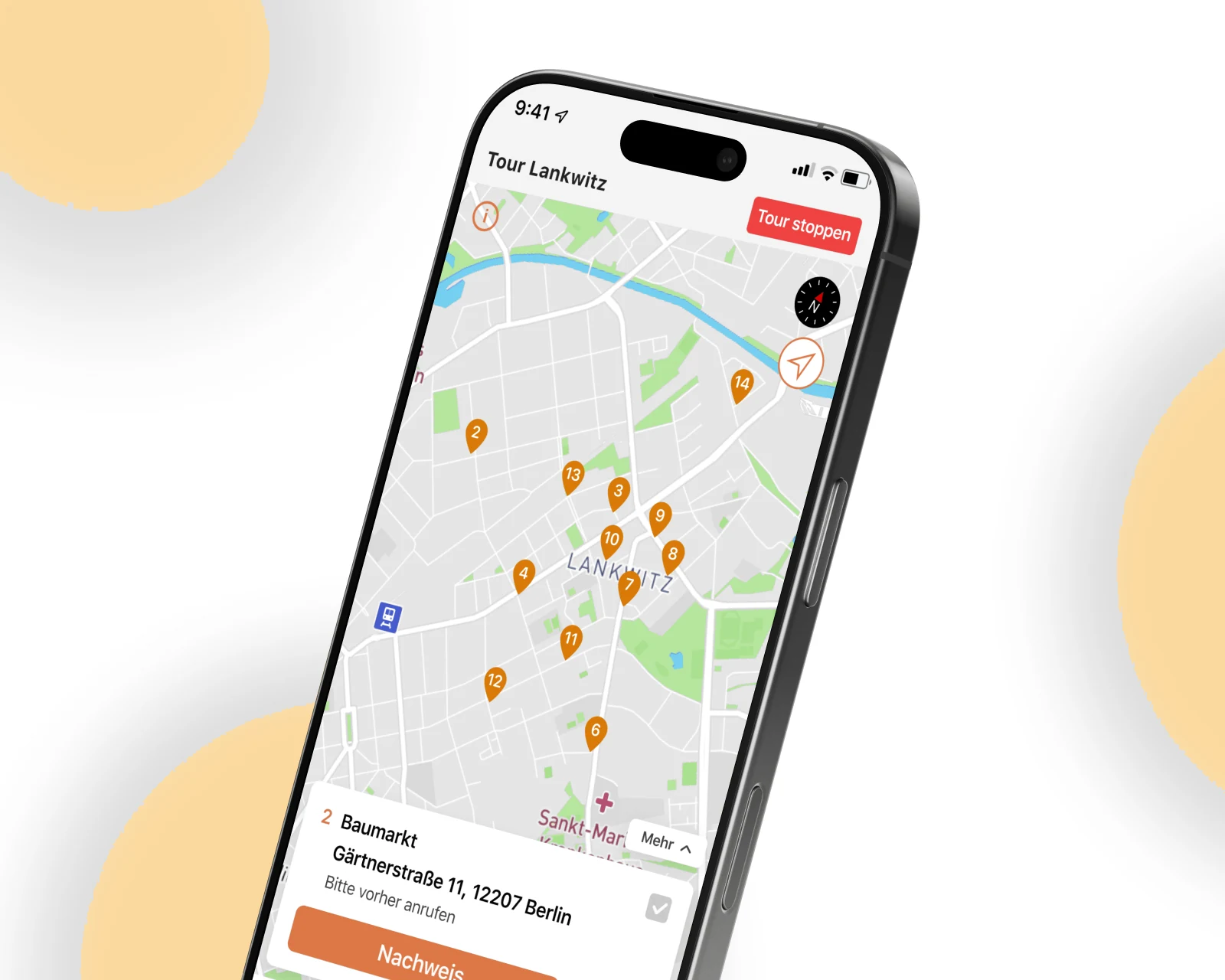
Android + iOS refactor and rebuild for a German last-mile logistics operator — multi-point route planning, real-time driver tracking and in-app invoicing live in the EU.
GDPR-aligned · ISO 27001 ready · SOC 2 Type II in progress · HIPAA-capable · CCPA-acknowledged
Every engineer on your account has 6+ years of production Node.js experience. No bait-and-switch from the senior who sold the deal to a junior who actually ships.
CET-aligned squads with a guaranteed 9 AM–1 PM ET overlap for US clients — four hours of synchronous work per day, async docs for the rest. No 3 AM standups for anyone.
GDPR DPAs, SOC 2 Type I/II readiness, HIPAA controls for US healthtech, CCPA notices, EU AI Act for AI features. The compliance work is built into the sprint, not bolted on at audit time.
For regulated workloads we work directly with your auditor or fund's technical advisor and prepare evidence to the standard the reviewer expects — not the standard a generalist consultant assumes.
We publish dozens of sports articles a day. YuSMP built an editorial pipeline using a Telegram bot as the CMS — editors post once, content lands on web, iOS, and Android instantly. The architecture requires zero daily maintenance.
Real-time ERP sync for an auto-parts catalog is harder than it looks — prices shift hourly and the catalog changes constantly. YuSMP built a bidirectional 1C integration that just works, with a clean storefront customers navigate without friction.
Industries
Node.js's non-blocking event loop is exceptionally well suited to the real-time collaboration features, notification pipelines and multi-tenant API layers that define modern SaaS products. We use NestJS microservices with modular architecture to keep large multi-team codebases navigable as the product grows from MVP to enterprise tier.
Multi-tenancy is engineered at the data layer from day one — row-level security or schema-per-tenant PostgreSQL isolation, tenant provisioning pipelines and usage metering that feeds into billing. WebSocket-based presence indicators, in-app notifications and live dashboard updates are built as first-class features rather than bolt-ons.
High-throughput transaction processing requires a runtime that handles thousands of concurrent I/O-bound operations without thread-per-request overhead. Node.js's single-threaded event loop excels here, and we pair it with Fastify for low-latency REST APIs and uWebSockets.js for WebSocket order books and live rate streaming.
PCI DSS scope is managed through PSP tokenisation, hosted payment fields and a minimal cardholder data environment. We integrate Stripe, Adyen, Braintree and regional payment rails, building idempotent payment flows with dead-letter queues for failed transactions and reconciliation pipelines that close end-of-day positions without gaps.
E-commerce backends demand high read throughput for catalog search, low-latency cart operations and reliable webhook delivery for inventory and order events. We build REST and GraphQL catalog APIs on Node.js with Redis caching for hot product data, Elasticsearch for full-text and faceted search, and event-driven inventory webhooks that keep warehouse and storefront in sync.
Marketplace architectures add seller onboarding, commission calculation, payout splitting via Stripe Connect or Adyen Marketplace, and dispute management workflows. Cart persistence across sessions and devices uses a distributed session store with optimistic locking to prevent oversell on limited-inventory items during flash sales.
Media platforms handle large binary transfers, adaptive bitrate streaming and real-time comment and reaction systems simultaneously. Node.js Streams API is purpose-built for this: we pipe FFmpeg transcoding jobs, chunk HLS and DASH manifests, and deliver origin APIs that feed CDN edge nodes without buffering entire files in memory.
Transcoding pipelines run as worker threads or AWS Lambda functions triggered by S3 upload events, keeping the main API process free for user requests. Real-time comment feeds, live viewer counts and reaction systems use Redis pub/sub or Kafka consumer groups to fan out updates to thousands of simultaneous WebSocket subscribers with sub-100 ms delivery latency.
IoT deployments generate continuous high-frequency data streams that need efficient ingestion, storage and real-time visualisation. We build MQTT broker bridges (Mosquitto, EMQX) on Node.js that normalise device payloads from heterogeneous hardware vendors into a canonical event schema before writing to time-series stores like InfluxDB or TimescaleDB.
WebSocket dashboards for sensor fleet monitoring deliver sub-second updates to operator screens and mobile apps. Alert pipelines with configurable thresholds and escalation workflows fire within seconds of a sensor reading exceeding bounds, with circuit breakers that prevent alert storms when an entire device group malfunctions simultaneously.
Healthcare interoperability standards require precise implementation. We build HL7 FHIR R4 compliant REST APIs on Node.js — covering resource validation, capability statements, search parameter chains and subscription notifications — that allow EHRs, patient apps and clinical decision support tools to exchange data without bespoke point-to-point integrations.
HIPAA-compliant audit logging captures every read and write of PHI with user identity, timestamp and business justification, stored in an append-only log that satisfies Security Rule audit control requirements. OAuth 2.0 patient-facing scopes with SMART on FHIR profiles enable patients to authorise third-party apps to access their own records without sharing credentials.
Architecture decisions made early in a Node.js project are expensive to reverse. These are the decisions that matter most.
Node.js outperforms Python (Django/FastAPI) in I/O-bound scenarios like API aggregation, WebSocket handling, and file streaming, where its non-blocking event loop sustains 3–5x more concurrent connections per instance. Python excels for CPU-bound data processing, ML model inference, and scientific computing where NumPy, pandas, and PyTorch integrations are needed.
For pure REST API services with heavy database interaction, both perform comparably when properly optimized. Team expertise and ecosystem requirements often tip the decision. Full-stack JavaScript teams benefit from code sharing between Node.js backends and React/Next.js frontends, reducing context switching and enabling shared TypeScript types across the entire stack.
Express is the minimal, unopinionated framework with the largest middleware ecosystem — ideal for teams that want full control over architecture decisions and have experience structuring Node.js applications. Fastify delivers 2x the throughput of Express through its schema-based request validation and optimized routing, making it the right choice for high-throughput API services where response time matters.
NestJS provides a full Angular-inspired architecture with decorators, dependency injection, and module system that imposes structure on larger teams. NestJS is particularly effective for enterprise projects where onboarding new engineers quickly and enforcing architectural conventions outweigh the learning curve. We recommend NestJS for teams of 5+ engineers building complex domain-driven APIs.
A Node.js monolith with clear module boundaries is appropriate for teams under 15 engineers and products with fewer than 10,000 daily active users. Microservices become justified when independent deployability, team autonomy, and service-level scaling differentiation outweigh the operational overhead of service discovery, distributed tracing, and inter-service communication.
We help teams design modular monoliths that can be split into services when genuine complexity demands it — starting with a single Node.js process, clearly bounded modules communicating through in-process event emitters, and TypeScript interfaces that serve as future service contracts. This approach ships product features immediately while preserving the option to decompose later without a full rewrite.
Node.js wins when your team already writes TypeScript on the frontend and you want one type system end-to-end, when you have heavy I/O concurrency (thousands of WebSocket clients, lots of fan-out HTTP), and when developer velocity matters more than raw CPU throughput. Pick Go for CPU-bound services and binaries you want to ship statically. Pick Python or .NET when the ecosystem (ML, Office, Windows enterprise) decides for you. We will tell you honestly during discovery if Node is the wrong call — we run polyglot teams and have no incentive to push you the wrong way.
Node.js 22 LTS is our default for new builds (active LTS until October 2027), with Node 20 LTS for clients still on it. We use TypeScript 5.6+ in strict mode with noUncheckedIndexedAccess. Framework default is NestJS for opinionated multi-team monorepos and Fastify for high-throughput stand-alone services. Express still ships for legacy maintenance — we do not force migration unless there is a real reason. ORM default is Prisma for product teams and Drizzle for performance-critical paths.
Yes. Default region is AWS eu-central-1 or eu-west-1, GCP europe-west3 or europe-west1, Azure germany-westcentral on request. We deploy with Terraform modules that pin region and forbid replication outside the EU. PII columns are encrypted at the application layer with AWS KMS / GCP KMS keys held in the customer's account. We sign DPAs aligned to GDPR Article 28, run DPIAs for high-risk processing, and document Article 30 records of processing. For US customers we mirror the same stack in us-east-1 / us-west-2 with CCPA notices and HIPAA controls when needed.
Socket.IO with the Redis adapter on Kubernetes is our default up to ~50k concurrent connections per cluster, sticky sessions on the ingress, graceful shutdown, and a custom heartbeat that catches dead NAT'd mobile clients in under 30 seconds. Past 50k concurrent we move to uWebSockets.js or a Go gateway in front of the Node business logic. We have shipped a 120k-concurrent live-trading dashboard on this pattern with p95 broadcast latency under 80 ms across EU and US edge.
Yes, this is one of our most common engagements. We run the strangler-fig pattern: stand up a NestJS app behind the same load balancer, move one module at a time, share the database during transition, and use feature flags to cut traffic over per endpoint. We add TypeScript incrementally (allowJs, then strict per directory). Typical 80k-LOC monolith takes 4 to 6 months to fully migrate with no customer-visible downtime and no feature freeze.
Node.js builds are fixed-scope and all-in, quoted in USD and tiered by product complexity. A web app MVP or client dashboard runs from $4,100 (4–8 weeks); a CRM or B2B portal from $8,100 (8–12 weeks); a multi-tenant SaaS platform from $13,800 (12+ weeks); and a marketplace or highload real-time system from $28,700. The exact number depends on the concurrency and real-time profile, the number of integrations, the depth of each core flow and the compliance scope (EU data residency, HIPAA for US healthtech). You see the line-item budget before any code is written and sign off on it. All engagements include a CET workday with a 9 AM–1 PM ET overlap for US clients and NDA + DPA + IP assignment signed before kickoff.
Choose Node.js when your team writes TypeScript on the frontend and wants one type system end-to-end, when the workload is I/O-bound with high concurrency (thousands of WebSocket clients, many simultaneous API fan-outs), or when time-to-market matters and your team already knows the ecosystem. Node.js's NPM ecosystem is the largest in any runtime and covers most integration use cases without custom adapters. Choose Go when you need a statically compiled binary with sub-millisecond cold start and CPU-bound throughput — gRPC service meshes and CLI tooling are common Go wins. Choose Python when the task is ML/data-heavy and the ecosystem (PyTorch, Pandas, scikit-learn) is the deciding factor. We will tell you honestly during discovery if Node is the wrong call for your use case — we run polyglot teams and have no vendor incentive to push you in the wrong direction.
Node.js's single-threaded event loop blocks on CPU-intensive synchronous work, so the pattern matters. For moderate CPU tasks (image resizing, PDF generation, JSON processing of large payloads) we use worker threads, which run on separate V8 isolates and communicate via structured-clone messages without blocking the main event loop. For heavy, sustained CPU work (video transcoding, ML inference, cryptographic operations at scale) we offload to dedicated microservices written in Go, Python or Rust and call them via gRPC or a message queue — keeping the Node.js API layer thin and I/O-focused. Task queues (BullMQ on Redis, or AWS SQS with a Node.js consumer) handle bursty workloads by decoupling ingestion from processing and providing backpressure automatically.
Express is a minimal, unopinionated HTTP layer that gives you routing, middleware and nothing else — every architectural decision (directory structure, dependency injection, validation, serialisation) is left to the developer. This is fast to start but expensive to maintain on multi-team codebases because conventions diverge over time. NestJS is an opinionated framework built on top of Express (or Fastify) that enforces module boundaries, dependency injection, decorator-based metadata and a standardised project structure. It trades a higher initial learning curve for dramatically lower cognitive overhead as the codebase grows past 30,000 lines of TypeScript. Our default for product builds is NestJS for its testability, OpenAPI auto-generation and CLI scaffolding. We use Fastify directly for high-throughput microservices where the NestJS overhead would be measurable, and we maintain Express monoliths for clients already on that stack.
Scaling to millions of concurrent connections requires horizontal scaling rather than vertical, because a single Node.js process tops out at roughly 50,000–100,000 concurrent WebSocket connections before memory becomes the binding constraint. We scale out with Kubernetes horizontal pod autoscaling, sticky sessions at the ingress layer for WebSocket affinity, and the Socket.IO Redis adapter for cross-pod event broadcasting. Past 100,000 concurrent connections per cluster we move the WebSocket gateway to uWebSockets.js, which handles 500,000+ connections per process with significantly lower memory footprint than Socket.IO, while keeping the business logic in NestJS services called over a lightweight internal bus. The largest deployment we have run on this pattern handled 1.2 million concurrent WebSocket clients across a three-region active-active cluster with p99 message latency under 120 ms.
Yes. We implement GraphQL subscriptions using the graphql-ws protocol (the successor to subscriptions-transport-ws, which is now unmaintained) over WebSocket connections managed by the Apollo Server or Mercurius stack. Subscription resolvers publish to a Redis pub/sub channel or a Kafka topic for horizontal scaling, so subscription events are delivered to the correct client pod regardless of which node established the WebSocket connection. For high-throughput subscription use cases — live order books, collaborative document editing, multiplayer game state — we profile resolver overhead carefully, using DataLoader for batched database lookups and filtering subscriptions at the resolver level to prevent broadcasting full dataset updates when only a small delta changed. We also implement subscription field-level complexity limits to prevent denial-of-service via expensive subscription chains.
Node.js is a poor fit for CPU-intensive workloads that block the event loop: ML model training, video transcoding, complex image processing, heavy mathematical computation, and large-dataset ETL operations. A single long-running CPU-bound operation blocks all other requests on that Node.js process, causing latency spikes that autoscaling cannot address. For CPU-intensive work, use Python with NumPy/PyTorch, Go for high-throughput computation, or offload to worker threads (Node.js worker_threads module) or a separate language-specific service. Node.js is also not ideal for applications with heavy in-process state (use Redis externally), or for very small scripts where startup time matters and a shell script would suffice.
Practical guides on Node.js, backend architecture, and web application development.




Share a few details and a senior consultant will reply within one business day.