


24/7 online booking
Patients book a doctor at any time from the mobile app.
MedTech · iOS + Android + Web
An ecosystem for managing private clinics that brings patients and staff into one digital space. Four independent clinics commissioned shared software to replace scattered Excel sheets and paperwork: a patient app and two staff versions, mobile and web. Stack: Laravel, React, Kotlin, Swift.
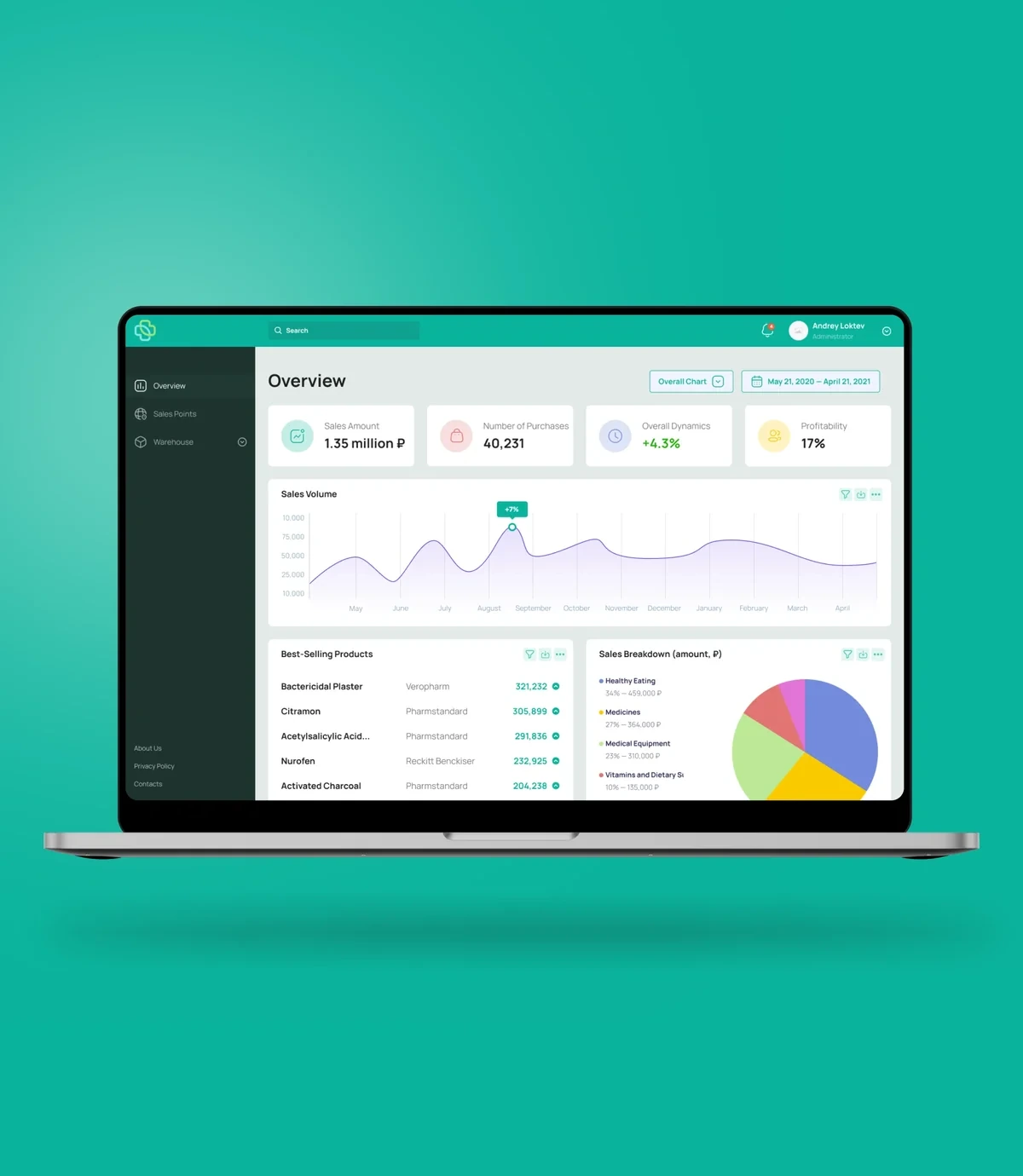
In short: what the product is and who we built it for.
Four independent private medical clinics joined forces to commission custom software of their own. They needed a universal tool that could streamline organizational processes across all four participating facilities and connect patients and staff in a single digital environment.
The solution is built as an ecosystem of three apps: a patient version and two staff versions, mobile and web, for employees’ internal work. The project took about 11 months in total.
Before the project, the clinics worked in scattered Excel sheets and paper documents. The four facilities had no shared information system: schedules, patient bookings, visit history and reporting existed separately and were not synchronized.
The goal was to build a unified IT infrastructure that would replace spreadsheets and paper, automate booking and scheduling, give patients a convenient online channel and give management transparent reporting, all while meeting personal data protection requirements.
How we built the product, from architecture to process.
The ecosystem consists of three apps around a shared back end: the patient client and two staff versions, mobile and web. The mobile clients are built natively in Swift (iOS) and Kotlin (Android), the web panel in React, and the server logic and API in Laravel.
The foundation is a role-based access model: administrators, doctors and management see different interfaces and different amounts of data. Schedules sync in real time, so a booking made in the patient app immediately appears in the staff versions, and changes to a doctor’s schedule are reflected in bookings. Personal data handling follows the requirements of the client’s jurisdiction, with data stored on locally hosted servers.
Tools chosen to fit the product’s goals.
For patients who interact with the clinic from a smartphone, a mobile app offers a better experience than an adapted website: native notifications, quick access to visit history and offline viewing of documents. For clinic staff, a mobile interface means they can work with schedules without being tied to a desk.
Building one product for iOS, Android and web covered the whole audience without developing three independent products. A PWA was considered, but it fell short on push notifications on iOS and on smooth animations when picking an appointment time.
Key capabilities that solved the business problem.
Patients book a doctor at any time from the mobile app.
Visit history, documents and verified reviews.
Creating and adjusting schedules, with real-time updates.
Separate permissions for administrators, doctors and management.
Doctor workload and visit statistics by clinic.
Reminders about upcoming appointments and request statuses.
Key product screens, step by step.
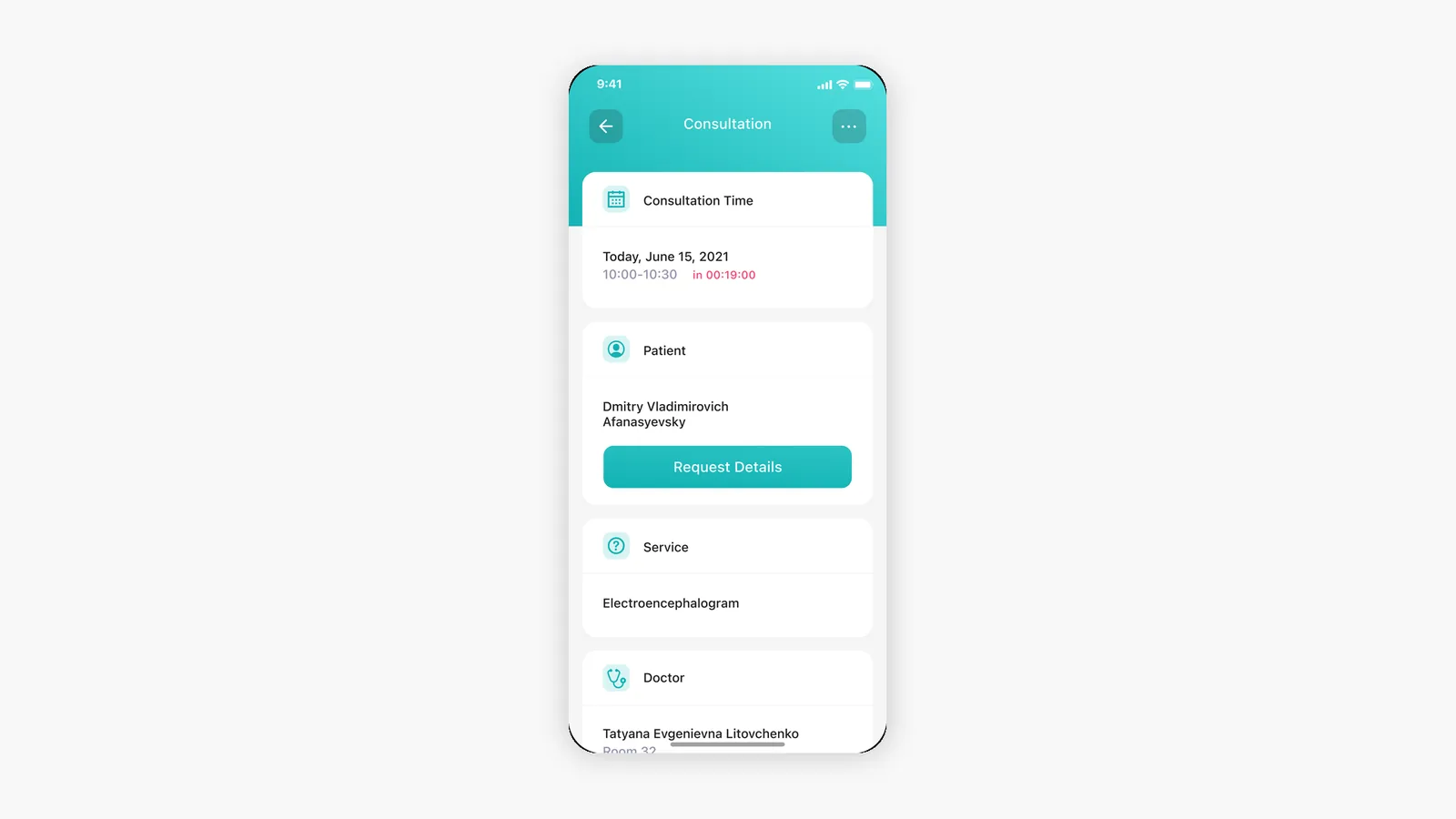
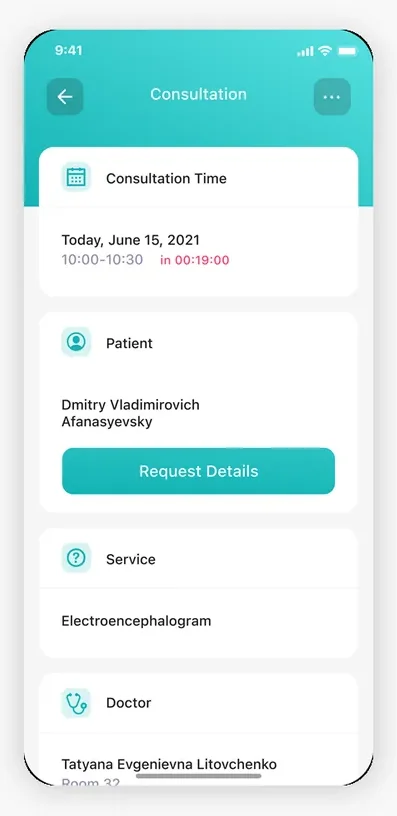
The consultation screen in the staff app brings everything about an appointment into one card: the consultation time with a countdown to the start, the patient with a “Request details” button, the selected service (for example, a general practitioner consultation) and the assigned doctor with their room number.
This format helps staff and doctors instantly understand the context of the next appointment and prepare for it.
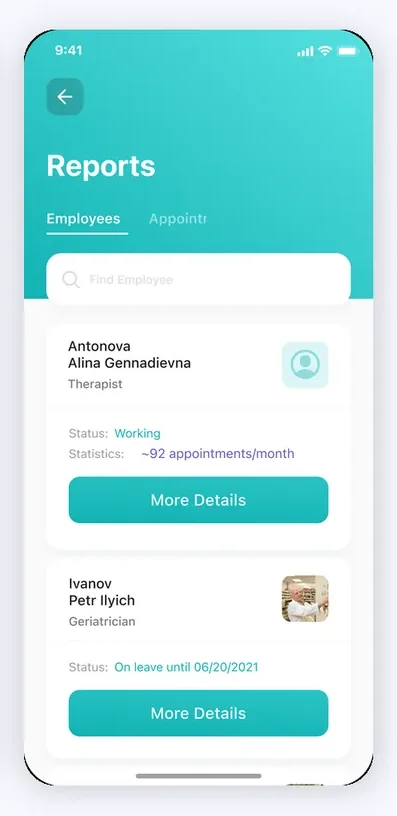
The staff web version shows a table of referrals with filters by medical facility, status, date and patient name, plus search and printable forms, with navigation through the admin sections and the employee’s role profile on the left.
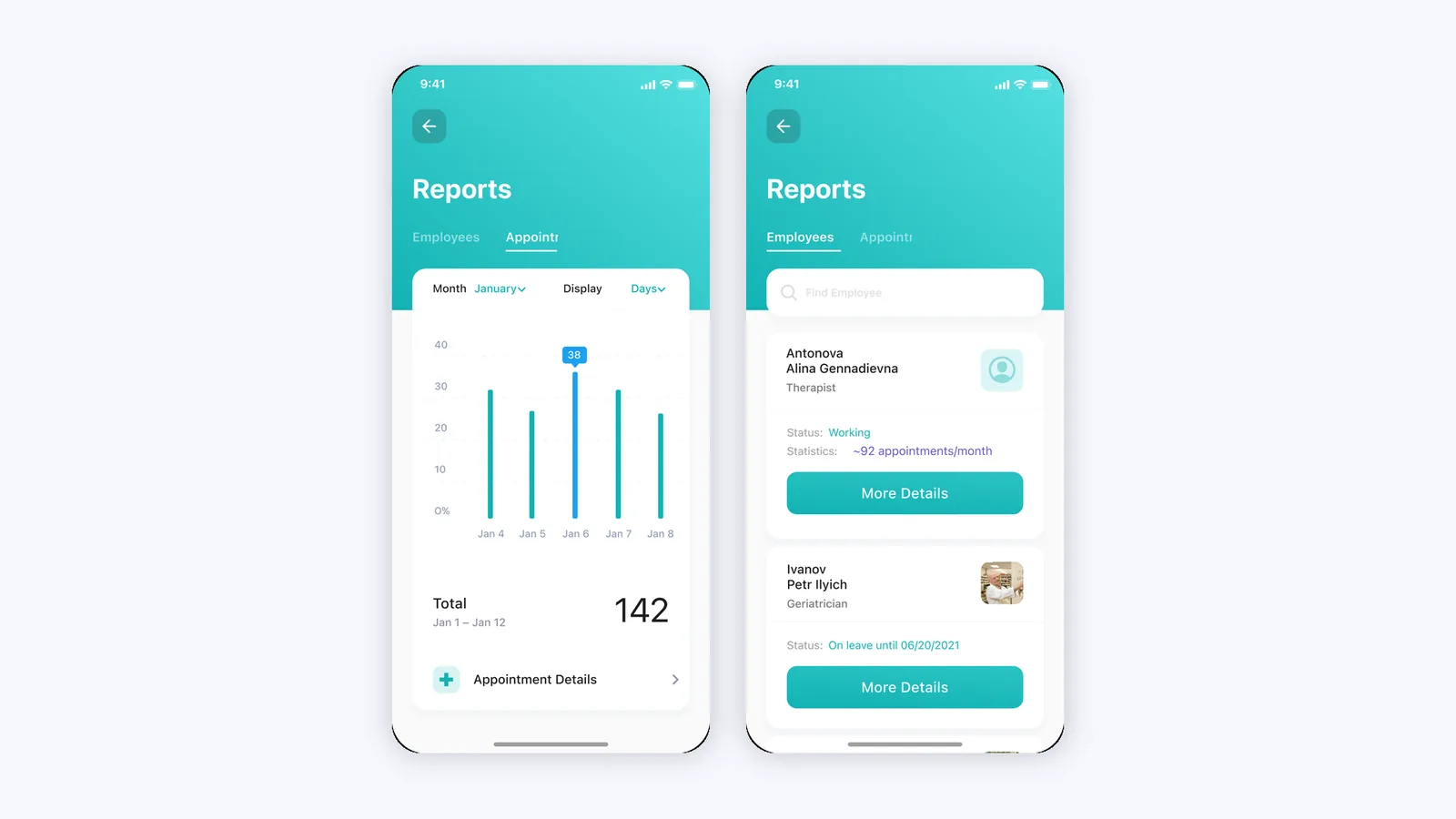
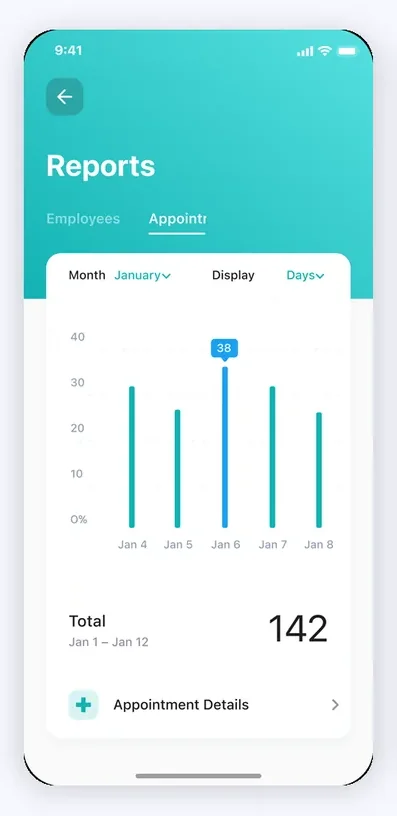
Next to it, the mobile “Reports” screen gives management a chart of appointments by day with a total for the period and a drill-down, so management reporting is always at hand.
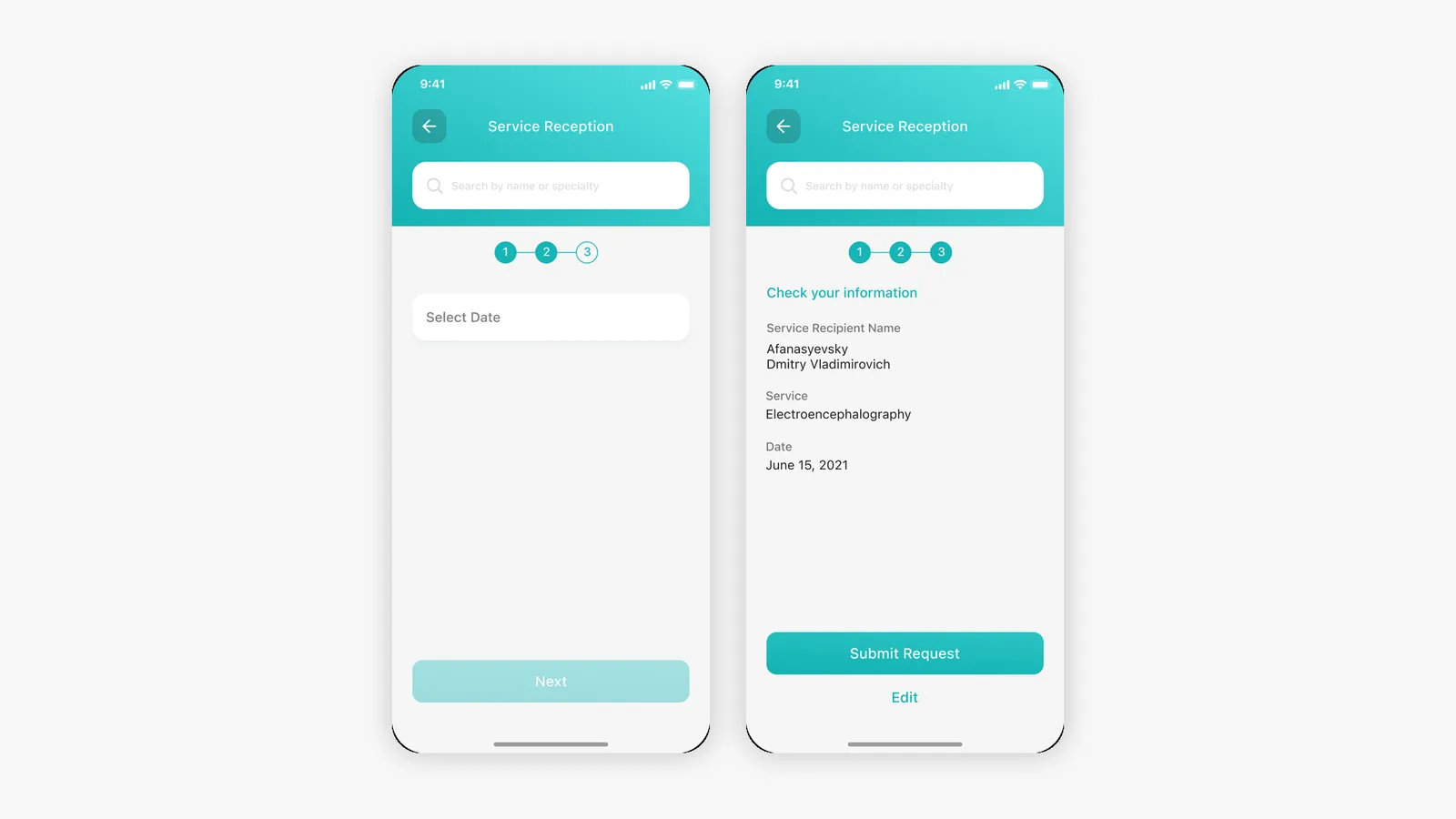
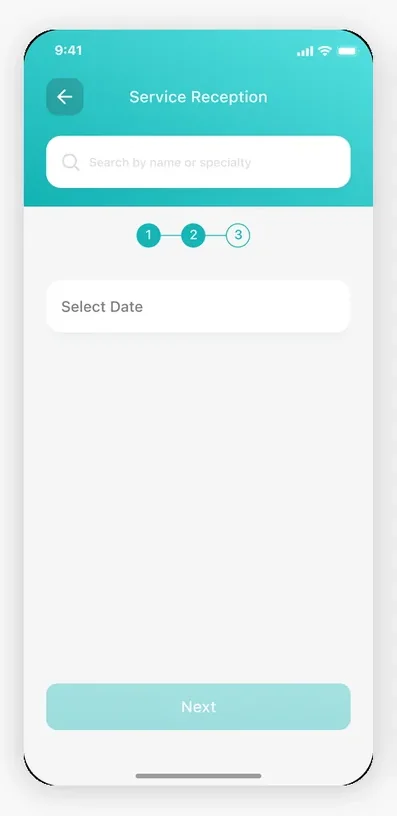
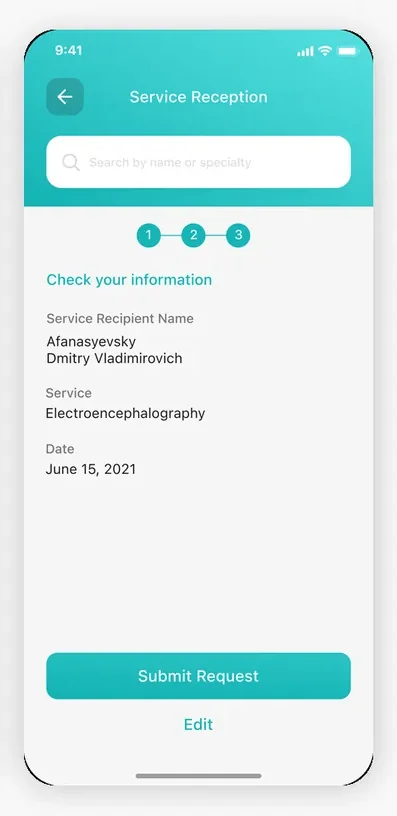
Booking a service in the patient app is a clear three-step wizard with a progress indicator: first, search for a doctor by name or specialty and pick a date; then confirm the selected date; and in the final step, review the details (recipient name, service, date) and tap “Submit request”.
Patients can go back and change any step, so booking stays transparent and mistakes are avoided.
The app works with patients’ medical personal data, so data protection is built into its foundation. The role-based access model limits the data available to each role: administrators, doctors and management see only what they are meant to, and the single information system does not create uncontrolled copies of data outside it.
The app automates the clinics’ organizational processes: booking, scheduling, role-based access and reporting. The system does not perform diagnostic, treatment or prescribing functions.
Patient data belongs to special categories of personal data (health data), and the architecture accounts for the stricter requirements for processing it.
Patient and staff data is processed under the requirements of the client’s jurisdiction and stored on locally hosted servers, with role-restricted access.
4 clinics: the app is used across a network of four medical centers (names are not disclosed under the agreement).
3 roles in the app: administrator, doctor and patient, each with restricted access to data.
Online doctor booking is available 24/7: patients choose a specialist and a slot without calling the front desk.
Doctor schedules are shown in real time, and changes are instantly reflected for patients.
Management reporting: doctor workload, booking flow and visit statistics for clinic administration.
The typical delivery window for an MVP of this class is 12–20 weeks (an industry range, not a guarantee for a specific project).
The cost depends on the number of roles (patient, doctor, administrator), the features (scheduling, notifications, reporting) and the requirements for protecting medical personal data. It falls within the standard range for custom mobile development; we give an exact estimate after discovery.
A doctor or administrator sets the available slots in their account; patients see the current schedule and book through the app. When a time changes, everyone booked receives a push notification. The schedule updates in real time without reloading the page.
There are three roles with independent permissions: the administrator manages the clinic and all doctors’ schedules, a doctor sees only their own schedule and patients, and a patient sees only their own data and bookings. It is a standard role-based access control (RBAC) model implemented at both the API and interface level.
Health data is a special category of personal data that requires stronger safeguards, and the system is built with this in mind: locally hosted storage, a secure data channel and role-based minimization of access. Data is processed under the requirements of the client’s jurisdiction, and the specific setup is agreed at the design stage.
iOS, Android and web: three platforms within one project. This covered the clinics’ entire audience (patients on different devices, staff at their computers) without developing three independent products.
Companies from retail, medtech, logistics and e-commerce that we helped build digital products.









The full spectrum of development — from native mobile apps to web platforms, AI and cloud. Pick a direction or order a turnkey project.
Native iOS & Android plus cross-platform Flutter and React Native — from MVPs to apps with millions of installs.
Learn moreNative Swift / SwiftUI iOS apps — with Apple Pay, Sign in with Apple, App Store Connect deployment pipelines.
Learn moreNative Kotlin / Jetpack Compose Android apps — Material 3, Google Play release pipelines, Firebase integration.
Learn moreSingle Dart codebase across iOS, Android, web and desktop — with native modules where needed.
Learn moreProduction web apps on React, Next.js, Vue and Node — SaaS dashboards, B2B portals, marketing-conversion stacks.
Learn moreREST, GraphQL and gRPC APIs — designed for partners, mobile clients and internal microservices.
Learn moreBespoke platforms for mid-market and enterprise teams — internal tools, vertical SaaS, mission-critical backends. Discovery to launch in 12–36 weeks.
Learn moreFocused MVPs in 12–20 weeks — one or two integrations, real users on day one, telemetry built-in.
Learn moreEnd-to-end ownership of a digital product — design, build, ship and continuous evolution.
Learn moreTool-using agents that plan, retrieve, act and self-evaluate — in customer service, ops automation, internal copilots.
Learn moreAWS, Azure and GCP architecture, Kubernetes, Terraform/Pulumi, CI/CD and observability — SRE-grade operations for product teams.
Learn moreTechnical SEO, Core Web Vitals, structured data, internal-link architecture — built into your engineering process.
Learn moreRelated cases
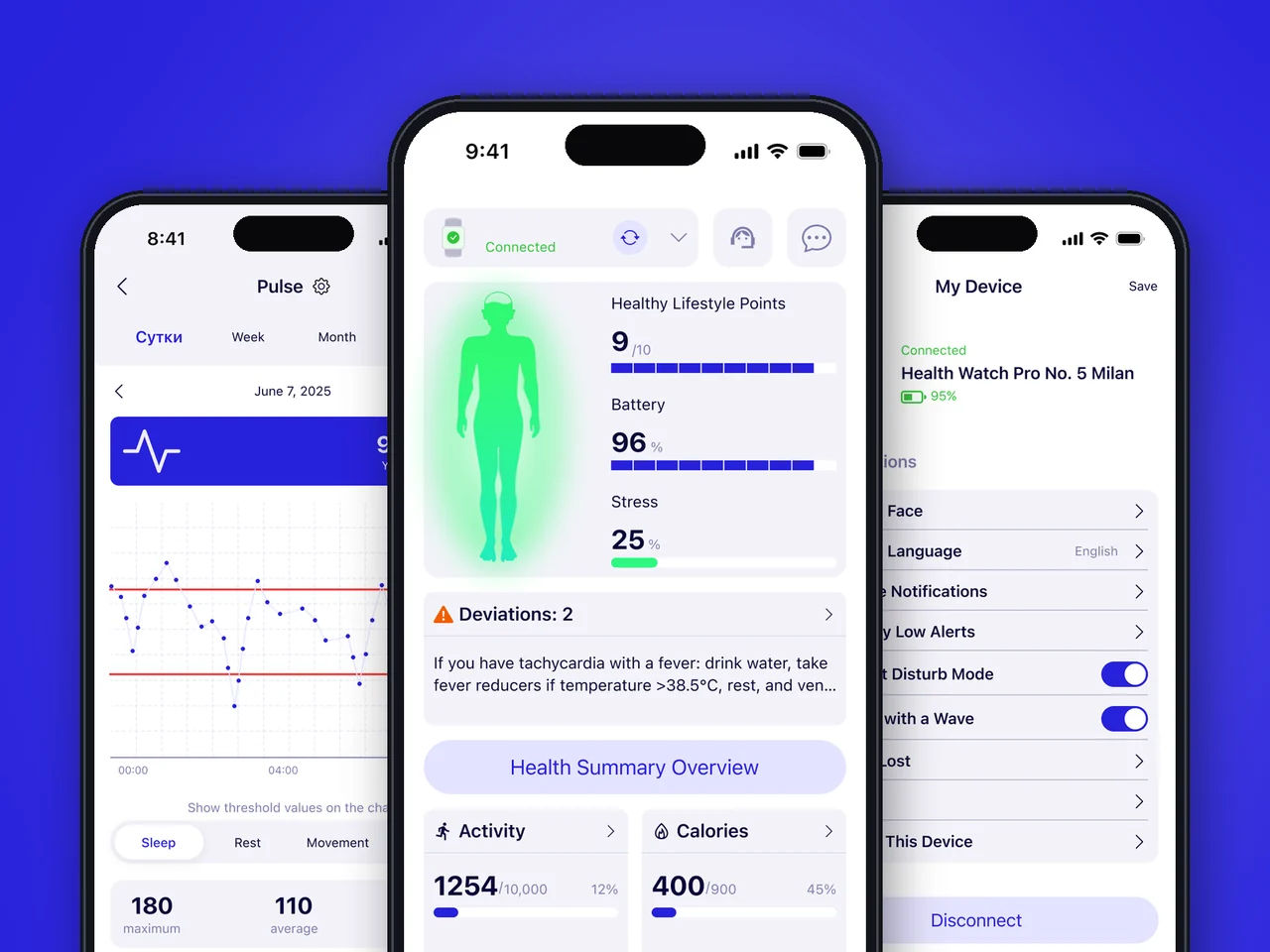
Healthband
Native iOS, Android & web app that reads smart-watch vitals, stores history, alerts on per-user thresholds, and adds AI guidance — remote monitoring for the US & EU.
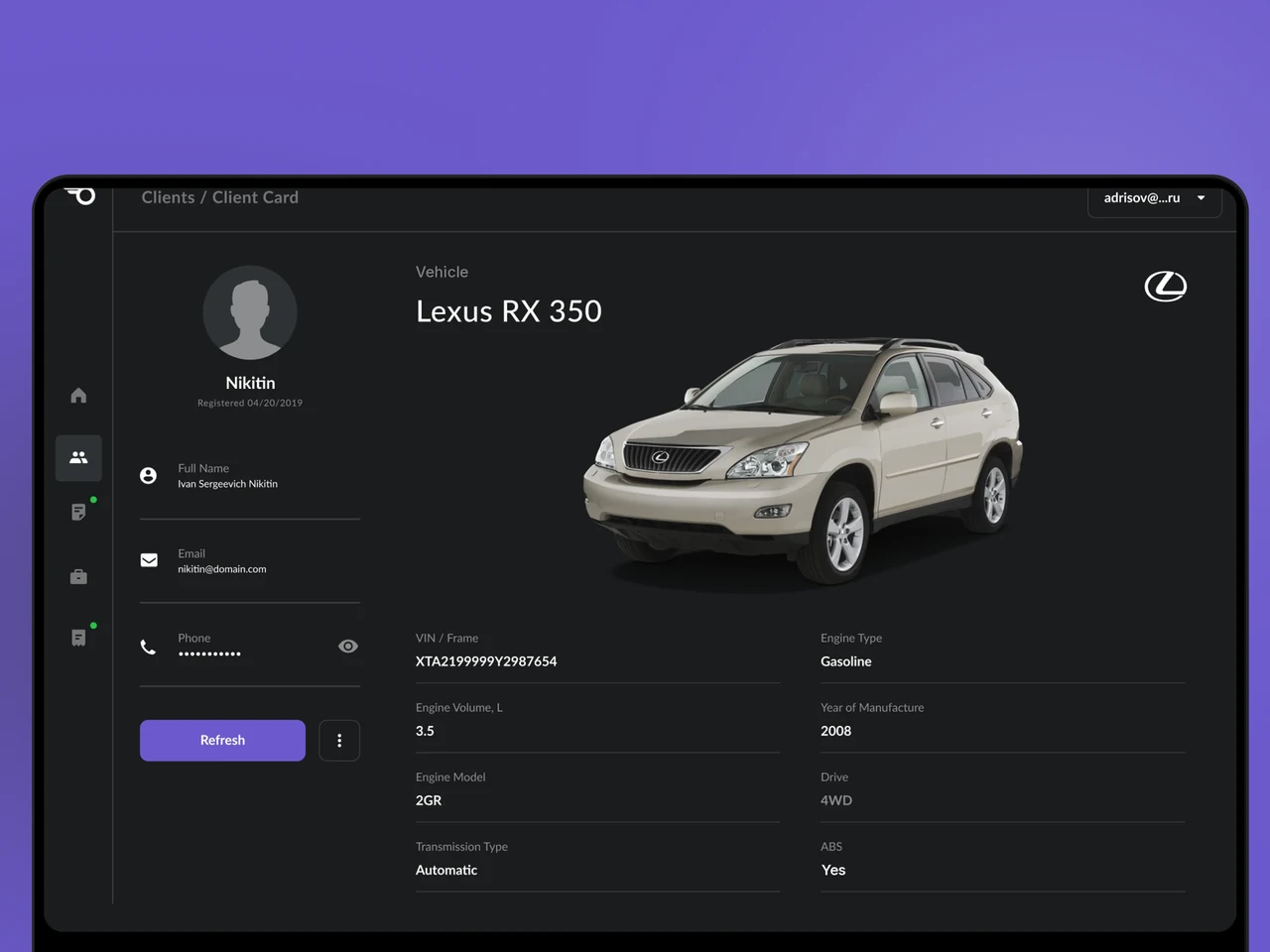
A web platform for auto parts: VIN search, a parts catalog, operator request handling, role-based access, subscriptions and integrated payments.
View case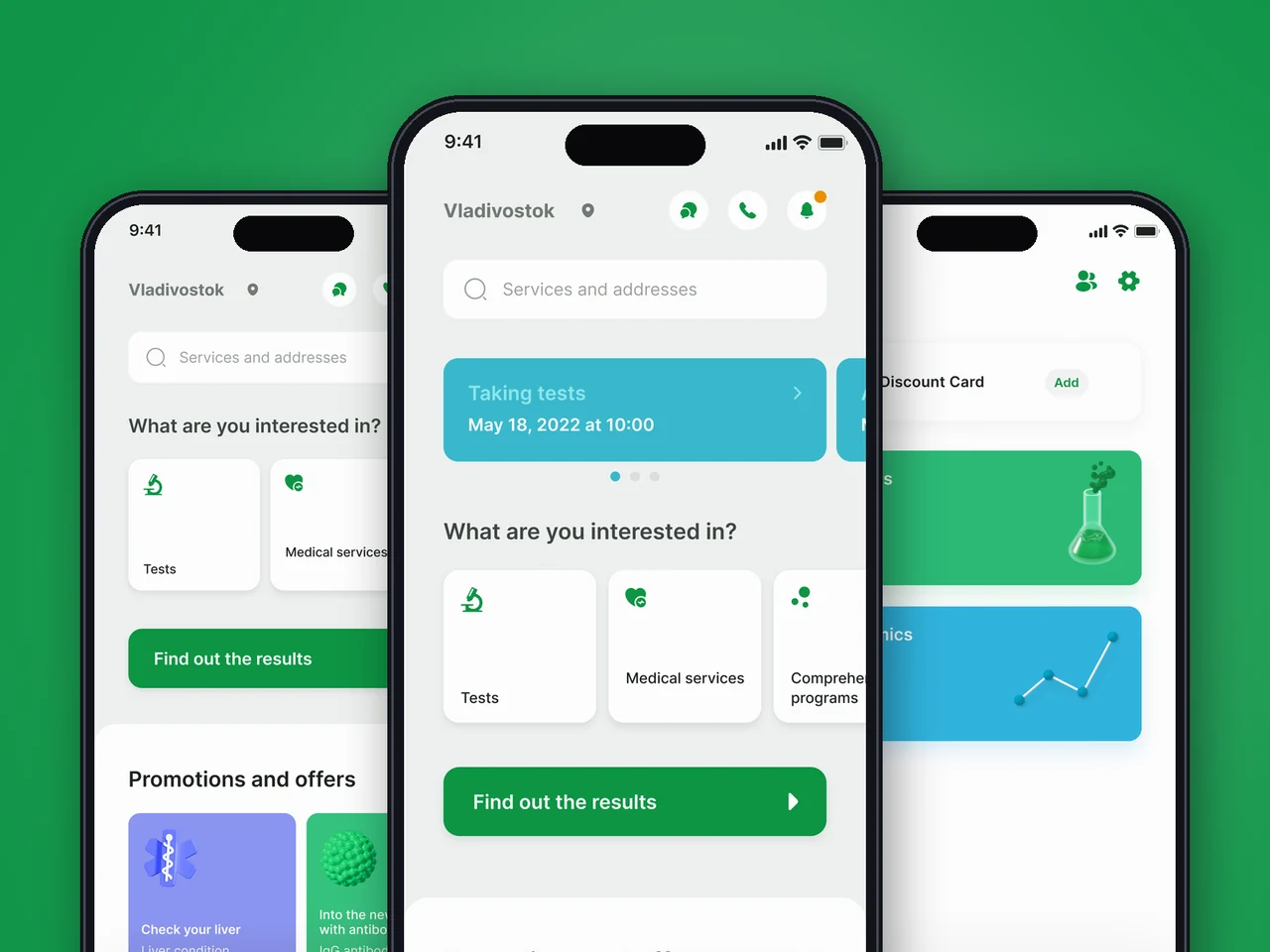
Patient app for a 40-city lab network — appointment booking, digital results, 2,500+ tests, scheduling and accounting integrations.
View case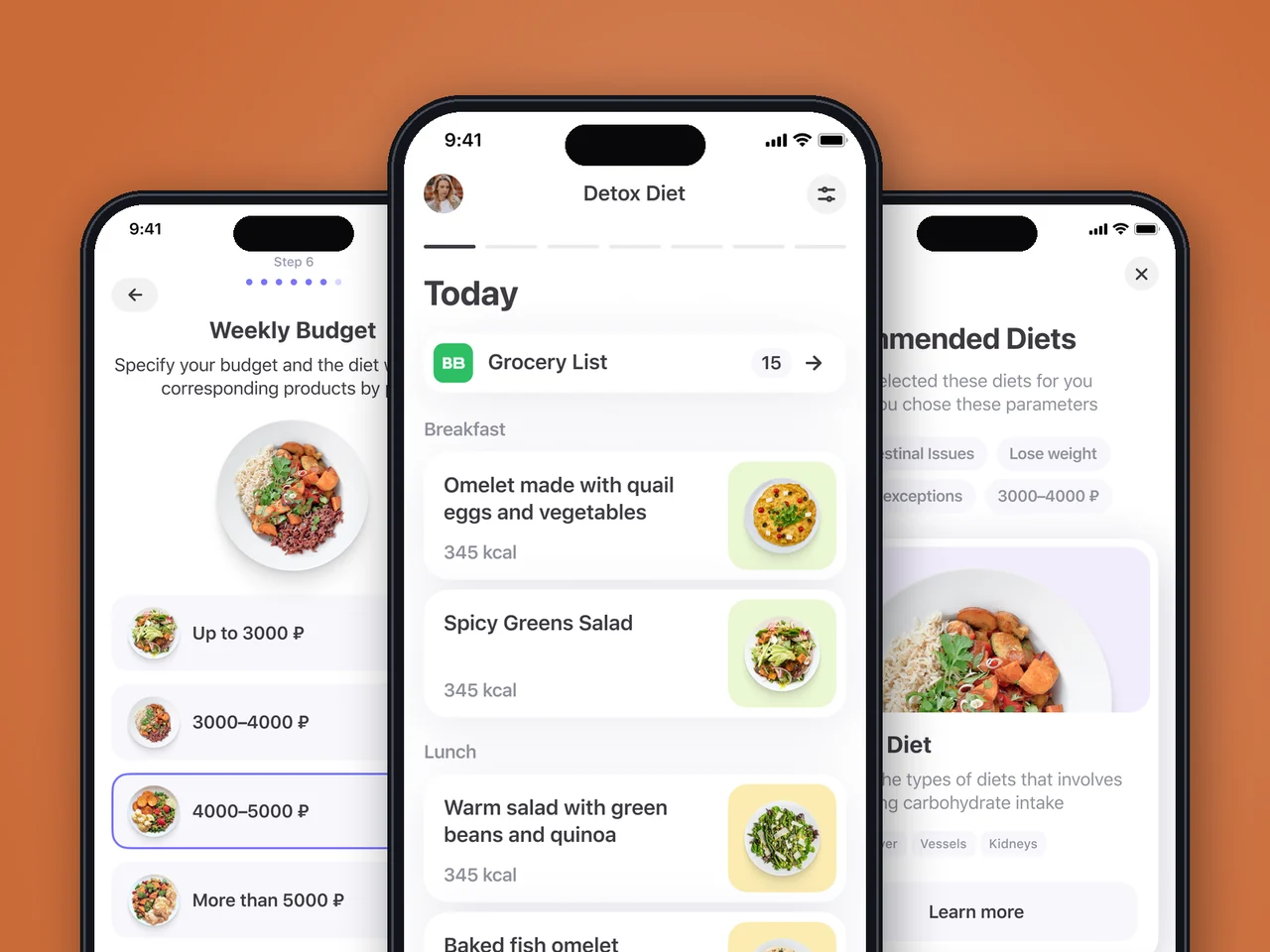
Cross-platform diet and meal-planning app on Flutter — calorie engine, recipe library, weekly meal-plan, grocery ordering.
View case20 articles across 5 categories — engineering-led guides on AI, SaaS, MVP, compliance and mobile for US and EU product teams.

Performance-tested comparison of RN (New Architecture) and Flutter (Impeller) across hiring, time-to-market and EU/US compliance.
Read article
Real cost ranges by region (US onshore, Western EU, EU nearshore), team and feature scope. With a worked fintech example.
Read article
Data-driven framework for choosing iOS-first or Android-first in 2026 — US & EU market share, ARPU, review timelines, EU DMA.
Read articleTell us how booking, schedules and reporting work in your clinics today, and we will help you replace spreadsheets and paperwork with one connected system. Let’s discuss how a similar solution could work for your practice.
Share a few details and a senior consultant will reply within one business day.
Email: sales@yusmpgroup.com
Phone: +374 44 871 811
Offices: KAMAR Business Center, Vazgen Sargsyan St. 2, Yerevan, Armenia · Remote — East-Coast US overlap (9 AM–1 PM ET)